


May 12, 2026, 5:09 am | Read time: 5 minutes
According to the Federal Statistical Office, nearly every household in Germany owns a refrigerator. However, knowledge about how the appliance works best while consuming as little energy as possible is significantly lower. That’s why myHOMEBOOK inquired about how a refrigerator can efficiently and freshly store the food inside.
Generally, people are only interested in their refrigerator’s energy consumption when buying a new one. After that, this topic is almost entirely ignored. The main thing is that the appliance cools. However, the average energy consumption listed on the energy label is based on certain assumptions. Those who are unaware of these or do not follow them pay for this ignorance or behavior with a higher electricity bill at the end of the year.
Fill Level Affects Energy Consumption
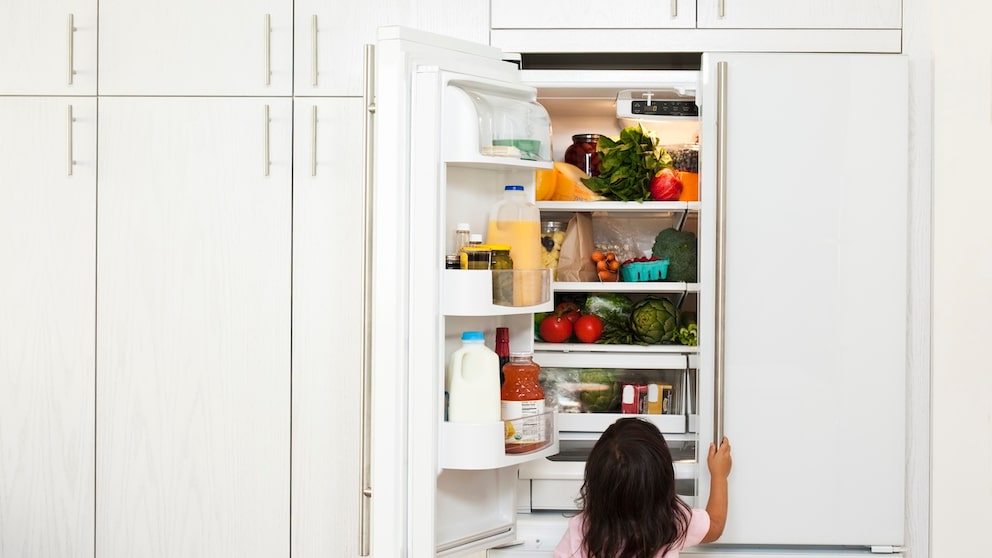
Many people believe that once connected, the refrigerator’s energy consumption remains stable, without significant fluctuations up or down. In reality, energy consumption varies, such as when the door is opened or due to different fill levels. This also plays a crucial role: While the refrigerator initially cools the air inside, the food stored within retains the cold and stabilizes the temperature. Therefore, a well-stocked refrigerator needs to cool less after opening than an empty one.
To understand this, Claudia Oberascher from the Association for Efficient Energy Use (HEA) explains the cooling process to myHOMEBOOK. “Cooling devices operate either with static or more modern dynamic cooling.” This means: “In static cooling, an evaporator on the back wall of the interior provides cooling. Cold air sinks due to its greater density. Warmer air located there rises to the evaporator and is cooled there. This creates natural air circulation. At the same time, different temperature zones form within the appliance.”
Food as a Natural Cooling Pack
If the appliance door is frequently opened, warmer air repeatedly enters the interior. As a result, the evaporator has more work to do to cool the air inside. If the refrigerator is then only half full or nearly empty, the amount of air to be cooled increases.
On the other hand, if the refrigerator is well-stocked, the stored products act like a natural cooling pack. They retain the cold. As a result, the evaporator has less work to do with static cooling. It’s a bit different with dynamic cooling.
However, the cooling pack effect only works up to a certain fill level. “To not hinder the cold distribution and natural air circulation in the appliance, the interior should not be completely stuffed,” emphasizes Oberascher.
Tips to Keep Food Fresh Longer
Many modern refrigerators have special cooling functions that help save electricity. For example, some appliances can quickly cool the interior for a while. This makes sense when larger quantities are stored for cooling after the weekly shopping. “The temperature in the cooling compartment is lowered by up to two degrees Celsius. A return to normal operation occurs, depending on the manufacturer, by pressing a button or automatically after a few hours,” explains Claudia Oberascher about this useful feature.
To keep stored goods as fresh and enjoyable as possible, the refrigerator should be filled in an organized manner, recommends the energy expert from HEA. “Perishable foods like fish, meat products, and fresh dairy products belong in the coldest zone, on the lowest shelf, but in the compartment above the vegetable drawer. All other items, such as cheese, cake, smoked meats, and cooked foods, can tolerate a slightly higher temperature and can be placed higher up. Butter that should remain spreadable, as well as drinks that only need light cooling, are best stored in the designated side door compartments.”

Why the Right Spot for Your Dryer Is Crucial

5 Common Mistakes When Cleaning the Refrigerator
Modern Appliances Cool Dynamically
With dynamic cooling, the above rules apply only to a limited extent or not at all. The cooling of modern appliances works differently: “Here, a fan in the interior ensures a consistent temperature and humidity throughout the cooling compartment. Therefore, owners of such a device do not need to follow special storage rules and can place food anywhere,” explains the expert.
These devices usually also have specific cooling zones, such as zero-degree compartments. “In these cold storage compartments, the temperature is just above zero degrees. This keeps food fresh longer.” To understand the exact function of such special compartments, be sure to read the manufacturer’s manual carefully.
By the way: Whether static or dynamic cooling, it’s not a question of good or bad. It’s just a different way to cool the air inside.
Changed Conditions Save Electricity
Regardless of the refrigerator’s energy consumption itself, changed conditions can also reduce the device’s electricity costs.
- If you’re already considering buying a new refrigerator, you should also think about the size. A smaller appliance fills up faster. This brings the cooling pack effect mentioned earlier into play more quickly.
- Cooked foods should only be placed in the refrigerator once they have cooled down.
- This applies at least to the ambient temperature. If you constantly keep your kitchen heated like summer, don’t be surprised if the refrigerator struggles to keep up with cooling.
In general, refrigerators that have been in service for 20 years or more should be replaced with a newer model. With old appliances, even the best energy-saving tips eventually become ineffective. Then it’s worth investing a bit more money in a more modern device.