


July 19, 2023, 3:42 pm | Read time: 3 minutes
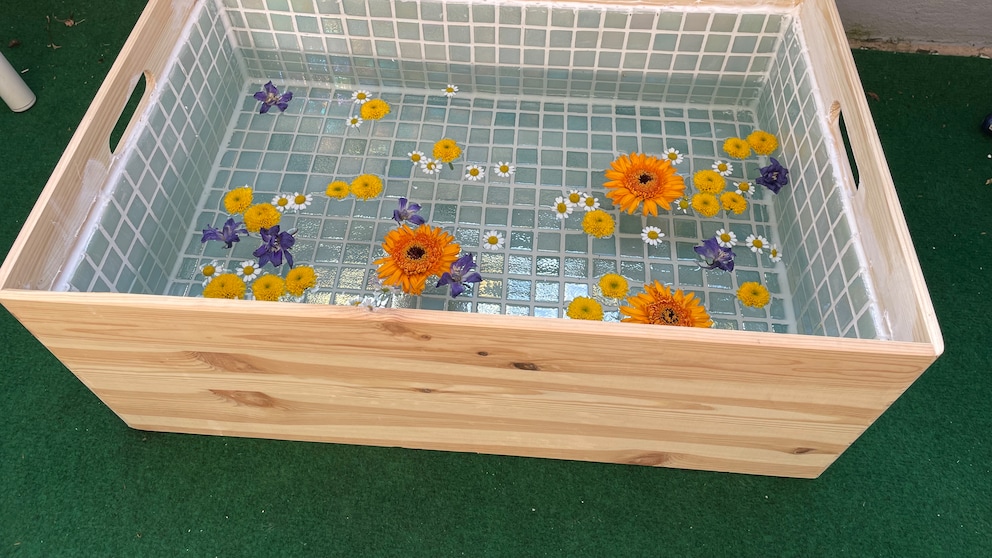
In summer, dipping your feet into cool water is a treat–but if you don’t have a kiddie pool or swimming pool, you’ll have to make do with a simple bowl. But there’s a more elegant solution: In the video, we show you how to build a simple footbath with tiles.
Summers here are getting hotter and drier. To cope with these temperatures, it’s important to cool down regularly. How about a refreshing footbath? That’s what we at myHOMEBOOK thought, so we decided to take matters into our own hands. Here, you’ll learn how to best build the footbath DIY and what to consider when it comes to the tiles.
Build Your Own Footbath–What You Need
There are different approaches to building a footbath. You can assemble the entire box yourself and adjust the size accordingly. We opted for a pre-made wooden box to save some time and then tiled it.
Materials & Tools
- Wooden box
- Tile mats
- Tile adhesive
- Grout
- Utility knife
- Spatula
- Silicone
Related (via FITBOOK): The Benefits of Footbaths for Health and Well-being
Footbath DIY–Step-by-Step Guide
Once you have all the materials for the footbath DIY, there aren’t many steps left to the final result. Due to drying times, you’ll just need a bit of patience. Here’s how it goes:
- First, arrange the tile mats in the box. This way, you can see where you need to trim the tile mats to fit. This can be easily done with a utility knife or scissors.
- Next, apply the tile adhesive–preferably with a notched spatula. If you don’t have one on hand, a regular spatula will do.
- Then, carefully place the tiles onto the adhesive. Important: Make sure the spacing with the trimmed pieces is correct, so it won’t be noticeable that multiple tile mats were used. Allow the tile adhesive to dry according to the manufacturer’s instructions.
- Afterward, apply the grout. Again, follow the manufacturer’s instructions. After applying, gently wipe over the tiles with a damp sponge to smooth the grout and remove any residue.
- Once everything is dry, seal the corners and edges with silicone. Finally, just add water–and you’re done!
Also interesting: 8 Sustainable DIY Decor Ideas
DIY Tip from myHOMEBOOK Editor Katharina Regenthal:
If you want to be absolutely sure everything is watertight and don’t want to rely solely on silicone, you can add extra protection to the basin. Use pond or sealing foil or sealing corners, which are laid in the box before the tiles. Sealing compound can also provide additional protection.