


March 10, 2026, 9:46 am | Read time: 4 minutes
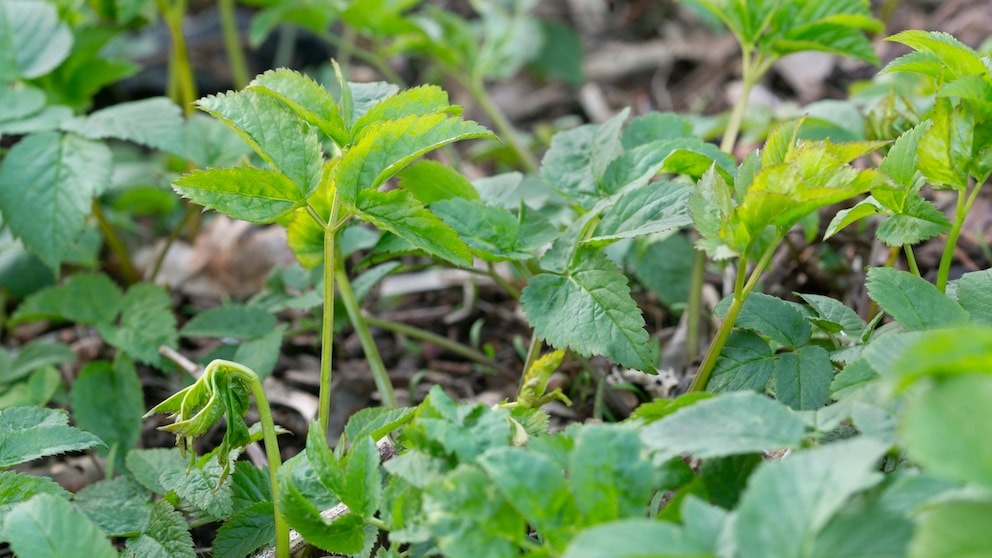
Ground Elder spreads in the garden as if it has a master plan—and once it’s there, it’s hard to get rid of. This rampant weed is one of the most persistent in the garden. With its underground runners, it quickly takes over beds, even displacing robust plants. Many hobby gardeners battle this persistent green year after year, often with moderate success.
Instead of repeatedly removing only the visible shoots of ground elder, the right strategy is crucial. myHOMEBOOK gardening expert Franka Kruse-Gering explains three methods to successfully prevent goutweed.
Preventing Ground Elder Is Better Than Fighting It
Those who only start fighting ground elder once it has spread through the bed often face a long-term task. The plant forms a dense network of underground rhizomes, from which even the smallest root pieces can sprout again. Any overlooked spot quickly becomes a starting point for the next wave of spread.
While young ground elder can be harvested and used in the kitchen, what initially seems like a practical wild herb can quickly overrun other plants and take over the bed. Early prevention means less effort, less frustration, and significantly better chances of keeping the bed under control in the long run.
1. Root Barriers
A root barrier is one of the most effective preventive measures against ground elder because it consistently stops its underground runners. For this, a trench about 12 to 16 inches deep is dug along the edge of the bed, and a sturdy rhizome barrier—ideally made of durable plastic—is inserted vertically. It’s important that the barrier extends a few inches above the ground. Additionally, the transitions should be seamlessly closed so that the rhizomes cannot grow underneath or over them.
Installing it undoubtedly involves effort and initially means earthwork—especially in existing beds. But those who make this effort once prevent lateral invasion from lawns or neighboring properties and save themselves significantly more work in the long run when combating it.
However, a root barrier alone is not enough if ground elder is already in the bed. Without thorough soil cleaning, you would only “trap” the existing rhizomes in the bed—the problem would persist. Therefore, during installation, the soil should be loosened with a digging fork and carefully freed from all white root strands, ideally even sieved in case of heavy infestation. Only the combination of clean soil and clear boundaries ensures that the effort is truly worthwhile in the long term.

5 Tips to Propagate Perennials in Early Fall

How to Get Rid of Horsetail in Your Garden
2. Competitive Plants
Another measure to prevent ground elder is to counter it with strong plant competition from the start. The principle is simple: Robust, ground-covering species claim light, space, and nutrients for themselves, preventing the unwanted weed from spreading unchecked. If they quickly develop into a closed plant cover, their leaves permanently shade the ground, and this lack of light makes it difficult for ground elder to grow and spread. This way, the pressure to spread can be significantly reduced before bigger problems arise.
In traditional vegetable beds or areas that are regularly redesigned, this principle can only be applied to a limited extent. Since the soil is repeatedly worked and lies open between crops, gaps arise that ground elder quickly exploits. Those pursuing other planting plans there should therefore also pay attention to clear bed boundaries, consistently mulch, and remove new shoots early. This keeps the bed flexibly usable without giving ground elder permanent room to spread.
3. Regular Monitoring
In addition to root barriers and competitive plants, consistency plays a crucial role. Ground elder should not be allowed to become an established plant. Those who regularly check beds—especially in spring—and immediately remove individual shoots along with root pieces, prevent the formation of a dense rhizome network in the soil. It’s important not just to tear off above the ground, but to carefully loosen the soil with a digging fork and pull out the white runners as completely as possible. The earlier you intervene, the less effort is required—and the better you can prevent a larger spread.