


December 7, 2022, 1:54 pm | Read time: 5 minutes
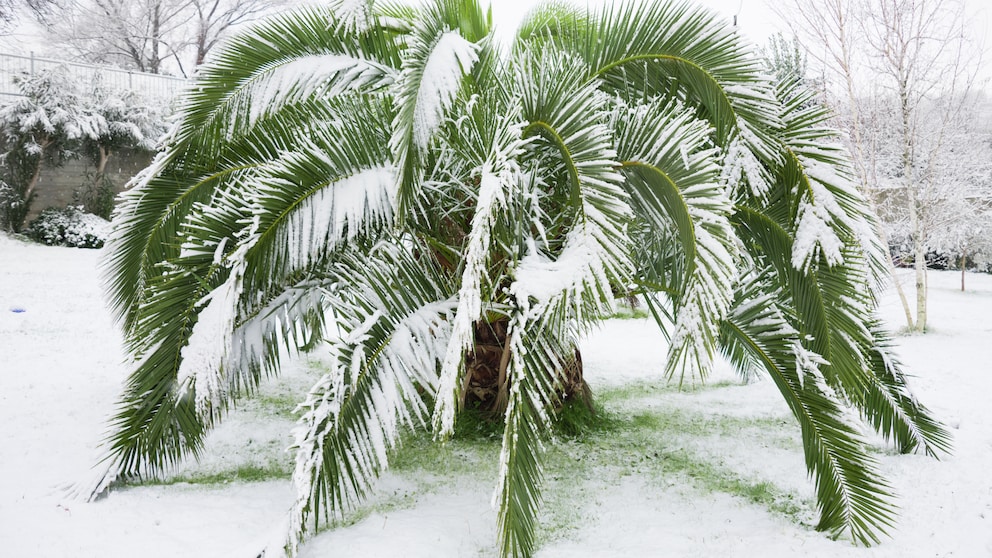
Palms are the epitome of summer, evoking an indescribable vacation feeling. In recent years, it has become increasingly trendy to place or plant palms in one’s own garden. But what to do when winter brings frost and snow?
We still see palms rather rarely in these parts, as they are more at home in warmer regions. However, garden trends are increasingly moving in their direction, and some garden owners are already considering planting a palm in their own garden. In the future, palms are likely to become even more popular here due to climate change and the milder temperatures that come with it. But when winter comes, the question arises: Where to put the palm? How does it survive frosty subzero temperatures? This question doesn’t always need to be asked, as there are also some winter-hardy palms.
1. Chinese Windmill Palm (Trachycarpus fortunei)
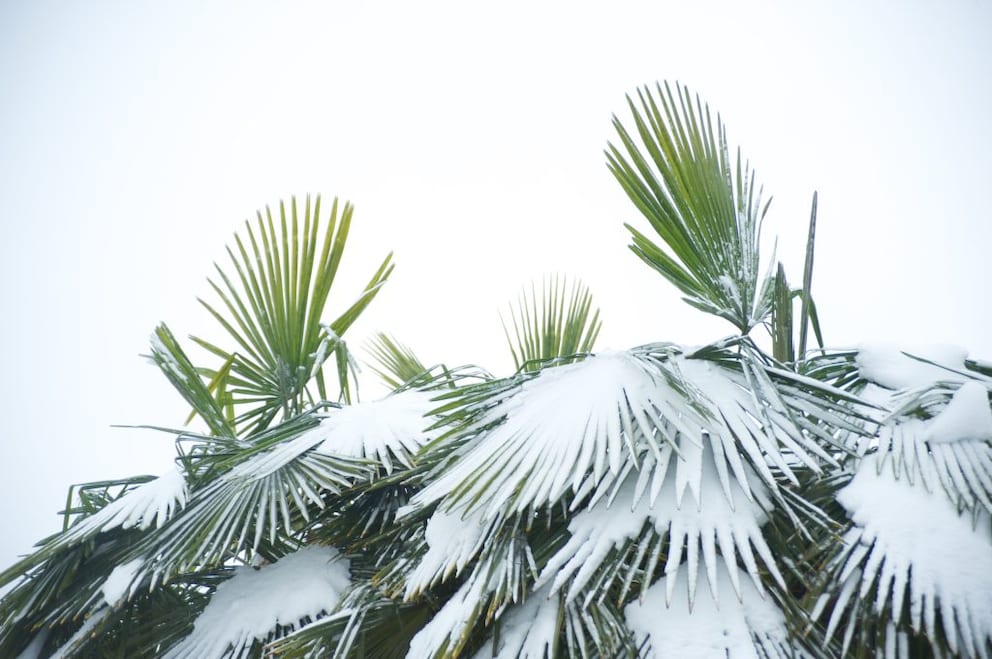
The Chinese Windmill Palm is one of the more robust varieties. It grows almost everywhere. Originally, it came from Burma through China to Japan, but it now thrives in Europe and the Himalayan region as well. If you want to plant it in the garden, you should ensure well-drained soil. It feels most comfortable in loamy-sandy substrate. Its location should be bright and sunny to partially shaded and, above all, wind-protected. This palm is conditionally winter-hardy. It withstands temperatures down to minus 10 degrees. However, during prolonged frost, it should be additionally protected.
2. Canary Island Date Palm (Phoenix canariensis)
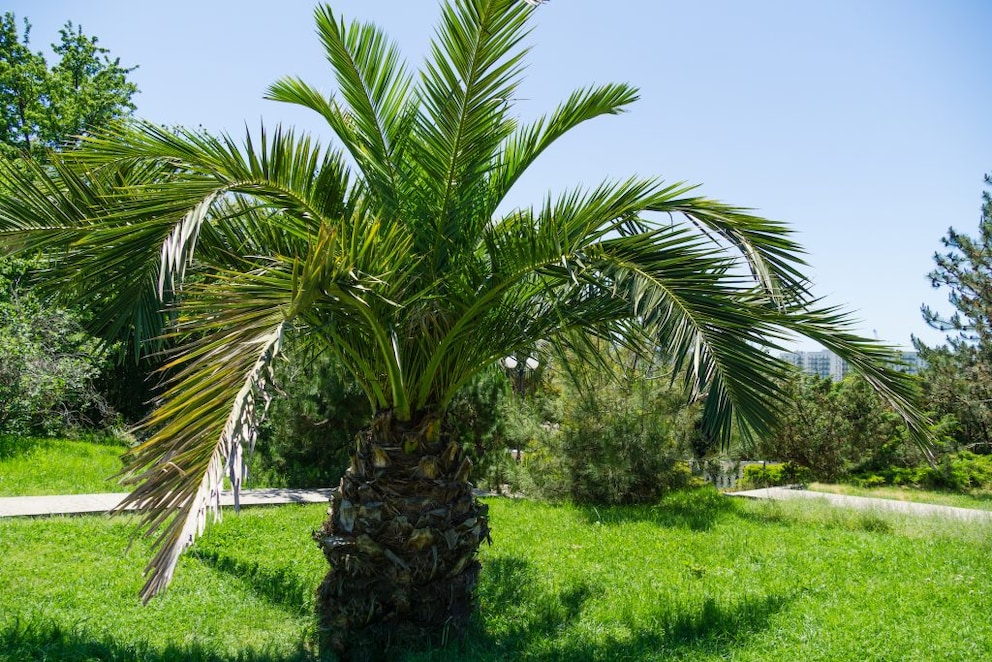
The epitome of a typical palm that evokes memories of vacation and relaxation is likely the Canary Island Date Palm. It can be planted both in a container and in the garden. In its natural environment, it can grow up to 15 meters tall, but here it is considerably smaller.
The Canary Island Date Palm is somewhat demanding, but the effort is worth it. It prefers a sunny and warm location, but partial shade doesn’t bother it. The soil should be well-drained and slightly acidic. It is one of the palms that handle cold and frost the least well. It tolerates temperatures down to minus 5 degrees, but it should be supported. Ideally, it grows in a container that can be placed in a greenhouse over the winter.
Also interesting: How to Protect Your Plants from Frost
3. Dwarf Palmetto (Sabal minor)
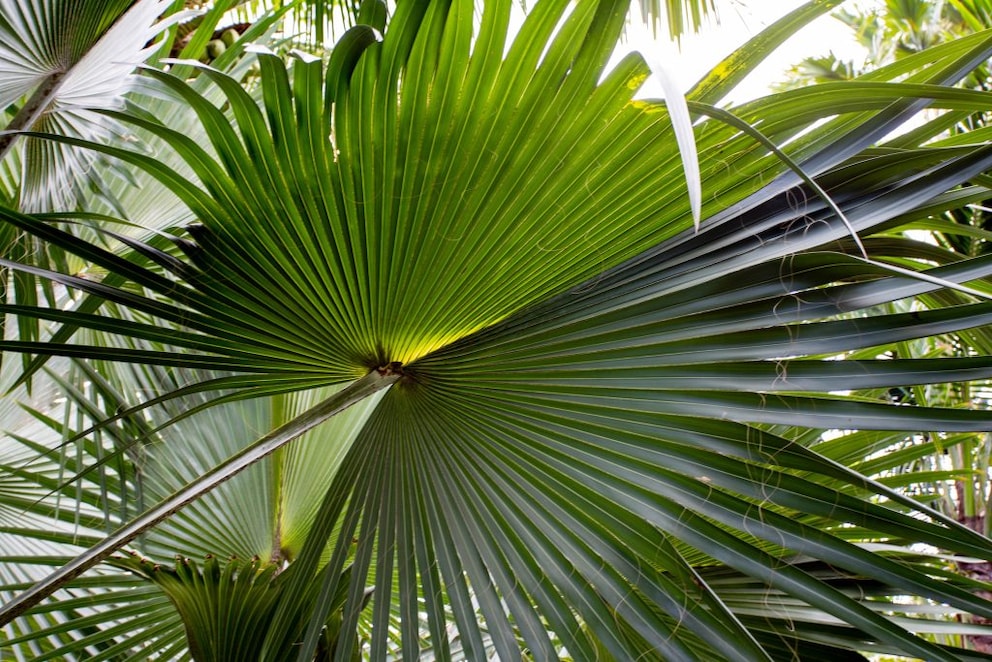
The Dwarf Palmetto is the smallest variety among the Sabal palms, making it very popular for gardens with limited space. It usually doesn’t grow taller than two meters. Originally, it comes from the southeastern United States. Typically, with this winter-hardy palm, only the fronds are visible, as the trunk is underground. However, in some cases, it can grow up to a meter above the ground. In summer, it even produces small, creamy, fragrant flowers, and a little later, edible, berry-like fruits grow. These are edible raw, but they don’t taste very good.
The Dwarf Palmetto is quite low-maintenance. Its location is less important, but it prefers slightly acidic soil with a pH of around 6. It likes a sunny spot to replenish its reserves and compensate for the light-poor months in winter. When watering, it’s important to get the right amount. It should never be too wet, but also not too dry. In the summer months, the palm appreciates some palm fertilizer every 14 days.
The Dwarf Palmetto is considered a conditionally winter-hardy palm. It can withstand temperatures down to minus 16 degrees, but only for a few days. If the frost persists, the plant needs help and extra protection. If the palm is in a container, it should be moved to a winter location at 5 to 15 degrees.

7 Colorful and Hardy Plants for Your Garden and Balcony

6 hardy potted plants for the garden and balcony
4. Yucca
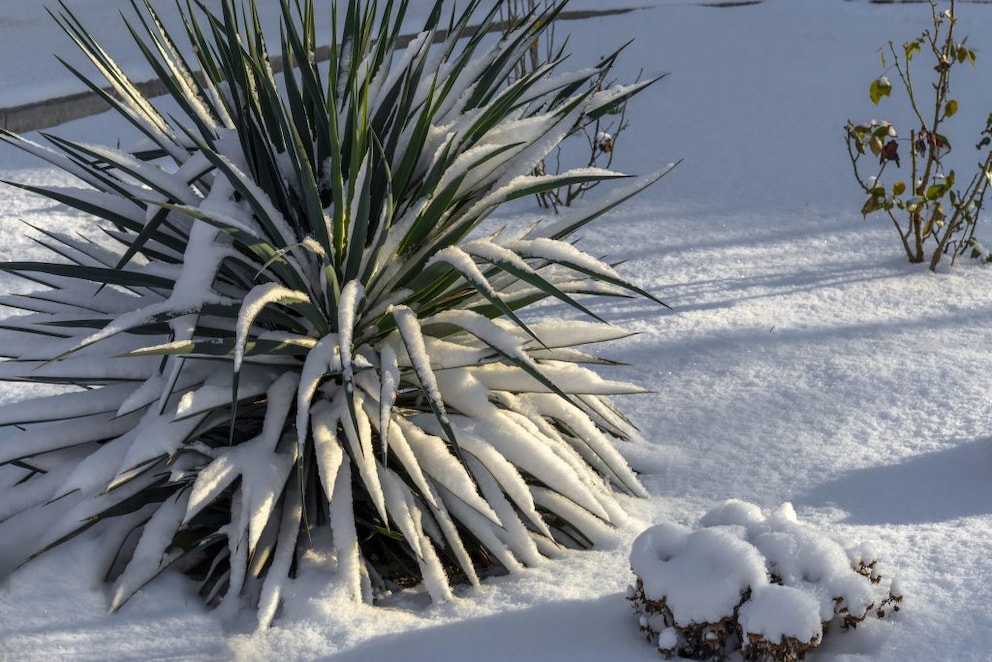
The Yucca is a rather undemanding plant that bears beautiful flowers in summer. Strictly speaking, the Yucca is not a true palm but belongs to the agave family. However, it is often treated as a palm here. The plant has no trunk; it forms dense clumps from its fleshy rhizomes. It grows to a maximum of one meter in height and width and is considered an evergreen palm.
Its location should be sunny and wind-protected and not too wet in winter. The ideal soil is well-drained, nutrient-rich, slightly dry, and has a pH of over 5.5. Yuccas are generally winter-hardy, but young plants should be provided with winter protection.
How to Provide Additional Frost Protection for Winter-Hardy Palms
Every winter here is different, sometimes bitterly cold and the next year rather mild. If it’s a very harsh winter and temperatures fall below minus 5 degrees for an extended period, even winter-hardy palms should be given additional protection.
A fleece is ideal for wrapping around the trunk. During prolonged frost, the fronds should also be tied together and wrapped in fleece. It is advisable to use light-colored fleece, as it allows more light to pass through. Since palm roots are particularly sensitive to cold, it helps to spread a thick layer of mulch around the trunk. If double-digit subzero temperatures persist for an extended period, a heating or frost protection cable is recommended.