


August 29, 2025, 3:58 am | Read time: 3 minutes
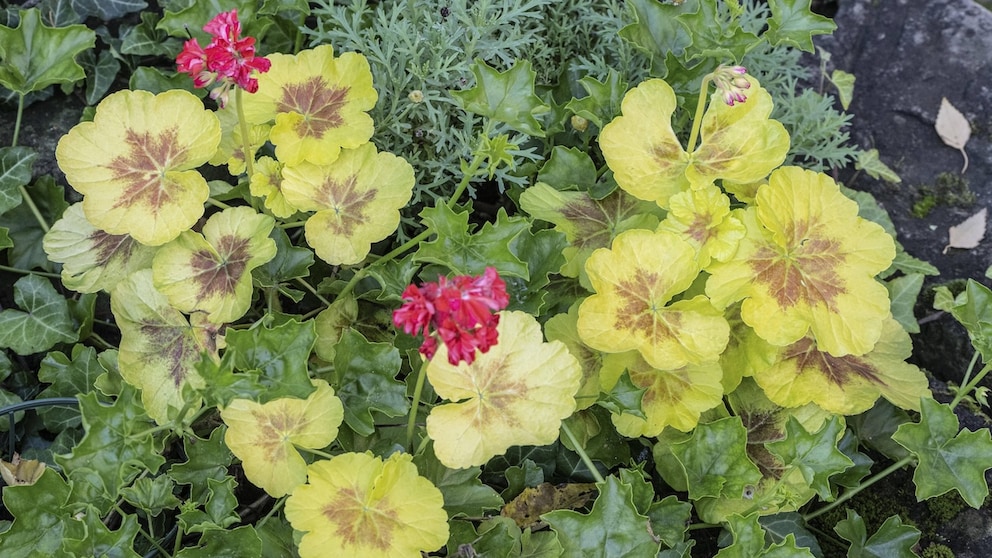
If you notice yellow leaves on geraniums, you should remove them. There can be various reasons why they turn yellow. Often, care mistakes are responsible for the color change. Thus, they are not merely cosmetic issues but can be seen as a warning signal that the plant is not doing well.
1. Mistakes in Watering
Water is vital for plants. Hobby gardeners should ensure that geraniums are adequately watered. Only then can they produce their blooms. However, too much water can cause the leaves of geraniums to turn yellow. Waterlogging occurs, which promotes root rot. This so-called root rot prevents the plant from absorbing enough nutrients to sustain itself. If the pot smells musty and the soil is heavy and wet, you should repot the plant immediately.
On the other hand, too little water is also not good and can cause yellow leaves. If moisture is lacking, the leaves dry out, and the edges of the leaves discolor.
2. Mistakes in Location
The location of the geranium should not be too dark and cold. The plants originally come from South Africa. They need sufficient light and warmth to thrive. If the location is too cold, the leaves of the geranium turn red and then yellow. If the location is too dark, the plant cannot produce enough chlorophyll, the green plant pigment.
An ideal location is sunny and sheltered. However, you should not surprise the plant with the sun. If you place geraniums that were previously in a dark spot in direct sunlight, it can lead to sunburn.

4 Reasons Why Tomato Leaves Curl
Yellow Leaves on Your Orchid? Here’s What It Means
3. Mistakes in Fertilizing
Producing blooms requires a lot of strength and energy from geraniums. Therefore, they should be fertilized regularly. However, you should not overdo it. Too much fertilizer leads to oversalting of the substrate. The roots can no longer absorb water, causing the leaves of the geranium to become soft, wilted, and yellow.
As heavy feeders, too little fertilizer also leads to deficiency symptoms in geraniums in the form of yellow leaves. A lack of nitrogen, potassium, or iron particularly causes this damage.
Hobby gardeners are best off using a balanced fertilizer. Nitrogen-rich fertilizer would lead to soft, lush leaf growth.
4. Mistakes That Promote Diseases
Care mistakes weaken geraniums and make them more susceptible to diseases. This includes leaf spot disease, which can be recognized by soft, glassy-looking spots. These spots later turn yellow and then brown-black.
Round, yellowish to light green spots, on the other hand, indicate geranium rust. The rust fungus also causes rust-brown pustules on the underside of the leaves. Affected leaves should be removed.
If you notice an unusual mosaic-like pattern on the leaves of the geranium, the mosaic virus may be responsible. The leaves appear deformed and soft. The blooms remain small and are lighter than usual. Especially stressed plants, caused by improper care, are susceptible to the virus. Affected plants cannot be saved and must be disposed of.