


July 31, 2025, 2:01 pm | Read time: 4 minutes
According to a myHOMEBOOK analysis, cucumbers are among the most popular vegetables in home gardens, and for good reason. They are refreshing, healthy, and, with proper care, highly productive. However, many hobby gardeners often make small but consequential mistakes during harvest. myHOMEBOOK gardening expert Franka Kruse-Gering explains what to watch out for when harvesting cucumbers and which mistakes can easily occur.
Why Mistakes in Cucumber Harvesting Are So Critical
Proper cucumber harvesting plays a central role in the quality of the fruit, the health of the plants, and the overall yield throughout the season. Only those who consider the optimal timing, the right technique, and a gentle approach will get crisp, flavorful cucumbers and simultaneously promote the formation of new fruits. Mistakes during harvest, on the other hand, can lead to yield loss, disease infestation, or premature plant decline.
1. Mistake: Wrong Timing in Cucumber Harvesting
For cucumbers, it’s important to hit the right timing. They should be harvested neither too early nor too late. Inappropriate timing in cucumber harvesting can significantly affect quality and yield. Harvesting too early often results in small, unripe cucumbers with weak flavor.
On the other hand, if harvested too late, the fruits quickly become overripe, develop bitter compounds, a thick skin, and often a spongy flesh. Additionally, overripe cucumbers inhibit the formation of new fruits, as the plant no longer channels its energy into fresh shoots. Therefore, a regularly monitored and well-timed harvest is crucial for taste, quality, and yield.
Note: Not all cucumbers are the same: pickling cucumbers, salad cucumbers, and slicing cucumbers differ in size, shape, and ripening behavior. Knowing which variety was planted can help better estimate the right harvest time—and thus optimize flavor, texture, and yield.
Also interesting: What Happens When You Water Cucumbers with Saltwater
2. Mistake: Harvesting Cucumbers in Wet Weather
Harvesting cucumbers in rain, dew, or generally wet plant conditions poses several risks. Wet surfaces promote the spread of pathogens, especially fungal spores like powdery mildew and downy mildew or gray mold. These pathogens can easily be transferred from plant to plant through contact with hands or tools.
Moreover, cut or broken areas on the plant are particularly susceptible to infections when wet, as fungi and bacteria can settle and spread more quickly in moist tissue. Wound healing is significantly slower under such conditions. It’s better to harvest in dry weather, ideally in the late morning or early afternoon, when the dew has dried, but the plants are not yet heat-stressed.

Common Mistakes When Harvesting Tomatoes

6 Common Cucumber Diseases to Recognize, Prevent, and Treat
3. Mistake: Harvesting with Unclean Tools
Using dirty or non-disinfected tools when harvesting cucumbers carries a high risk of spreading plant diseases. Residues of soil, plant juices, or already infected plant parts on knives or shears can easily transfer pathogens like bacteria, fungal spores, or viruses to healthy plants. Clean tools are especially crucial when removing diseased or damaged fruits to break infection chains.
Therefore, tools should be cleaned regularly and ideally disinfected with alcohol-based disinfectant or hot water before and after work. For professional cultivation, it’s also advisable to wear gloves, which should also be kept clean.
4. Mistake: Damaging the Cucumber Plant During Harvest
Care is particularly important when harvesting cucumbers. Simply tearing off the fruit or roughly breaking it from the vine can significantly damage the plant. Such mechanical injuries affect not only the fruit attachment itself but often also neighboring shoots, leaves, or flowers. Young vines are particularly sensitive and can easily tear or break when the cucumber is pulled.
These injuries are not only structurally problematic but also provide an entry point for pathogens. Fungi, bacteria, and viruses can easily enter the plant through open tissue areas. The risk of infections like stem rot or bacterial wilt increases significantly, especially in wet weather.
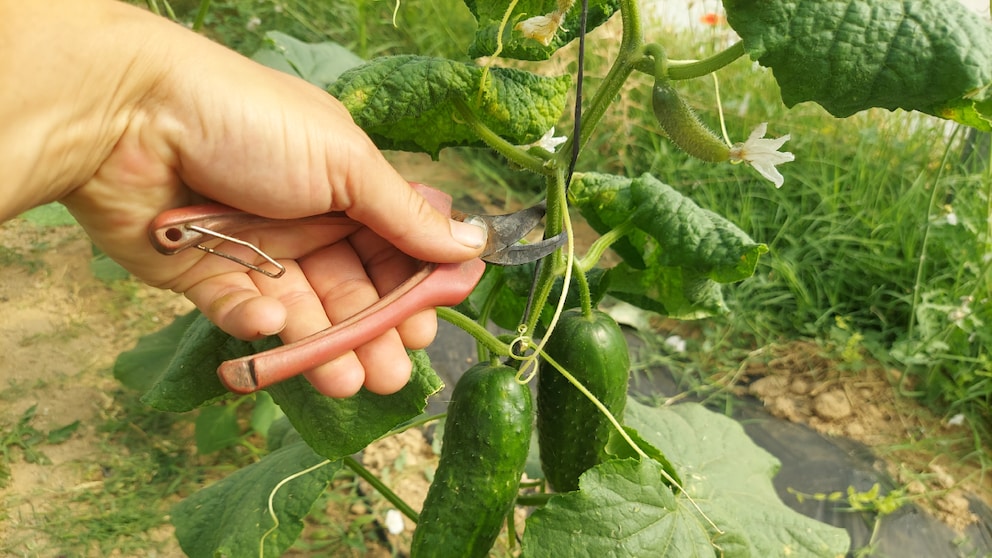
Instead of tearing or pulling, cucumbers should always be cut with a sharp knife or garden shears. As close to the stem base as possible, without touching or squeezing the surrounding plant parts. A clean cut promotes quick wound healing and protects the plant from further damage.