


November 6, 2026, 5:04 am | Read time: 3 minutes
Trimming the hedge is probably not a favorite task for most garden owners. However, if you want a dense and well-maintained hedge, regular trimming is essential. Especially with longer and taller hedges, the work can quickly become tiring. With a few simple tricks, hedge trimming can be made significantly more pleasant. myHOMEBOOK shares four tips to make hedge trimming easier.
1. Lay a tarp under the hedge
Often, cleaning up after trimming the hedge takes almost as long as the trimming itself. This step can be simplified beforehand. By spreading a tarp, an old bedsheet, or a large garden fleece under the hedge, you can catch most of the cut branches and leaves directly.
For long hedges, you don’t need to cover the entire ground. Instead, work in sections and move the tarp along every few meters. Then, gather the corners together, and the clippings can be easily transported away.
Related: When you can trim the hedge in the garden–and when you can’t
2. Plan disposal before trimming the hedge
After trimming the hedge, a surprisingly large amount of branches, twigs, and leaves can accumulate. Therefore, it’s worth considering where to dispose of the clippings before you start. If you only realize after the work is done that the compost bin is full or the green waste can’t be easily transported, you’re creating unnecessary extra work.
Depending on the amount, the clippings can be shredded and reused in the garden, disposed of via the compost bin, or taken to a municipal collection point. For larger hedges, it’s also advisable to have suitable containers, garden bags, or a means of transport ready before trimming. This way, the clippings don’t have to be temporarily stored and handled a second time later.

The Best Cordless Grass Trimmers in Practical Tests
How to Properly Store Garden Tools for Winter
3. Use a string for a straight cut
Especially with a long hedge, it’s difficult to judge during trimming whether the top edge is actually straight. A taut string can serve as a simple guide. For this, insert a stake into the ground at each end of the hedge and stretch a clearly visible string at the desired height between them.
When trimming, make sure to keep enough distance from the string so it doesn’t accidentally get caught in the hedge trimmer blades. It’s also worthwhile to step back occasionally. This way, you can better spot unevenness than when standing directly in front of the hedge.
4. Work in several stages
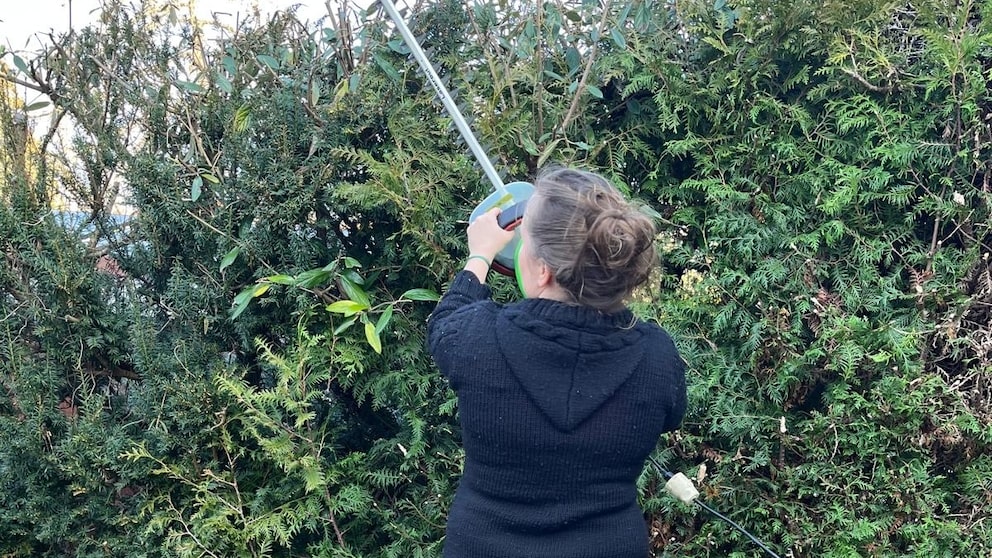
A hedge trimmer becomes surprisingly heavy over time. Especially when the tool is held with raised arms for an extended period, shoulders and arms can tire. This can eventually affect the result: Movements become less controlled, and the cutting line less even.
For a larger hedge, it’s therefore sensible to divide the work into several sections and take short breaks in between. This can relieve arms and shoulders. When using a motorized hedge trimmer, try not to hold the tool unnecessarily far from your body.

With the right cordless hedge trimmer, it’s easier
“Anyone who regularly trims their hedge should consider a cordless hedge trimmer. It significantly eases the work, ensures clean cuts with sharp blades, and saves time. Choosing the right battery system is also important. If you already own other garden tools from a manufacturer, you can often use the batteries interchangeably. For smaller hedges, a battery with 2 ampere-hours (Ah) is usually sufficient. For longer hedges, a 4-Ah battery is worthwhile, offering more endurance. However, the higher capacity often comes with more weight–which is noticeable during longer tasks.”