


April 8, 2024, 1:03 pm | Read time: 6 minutes
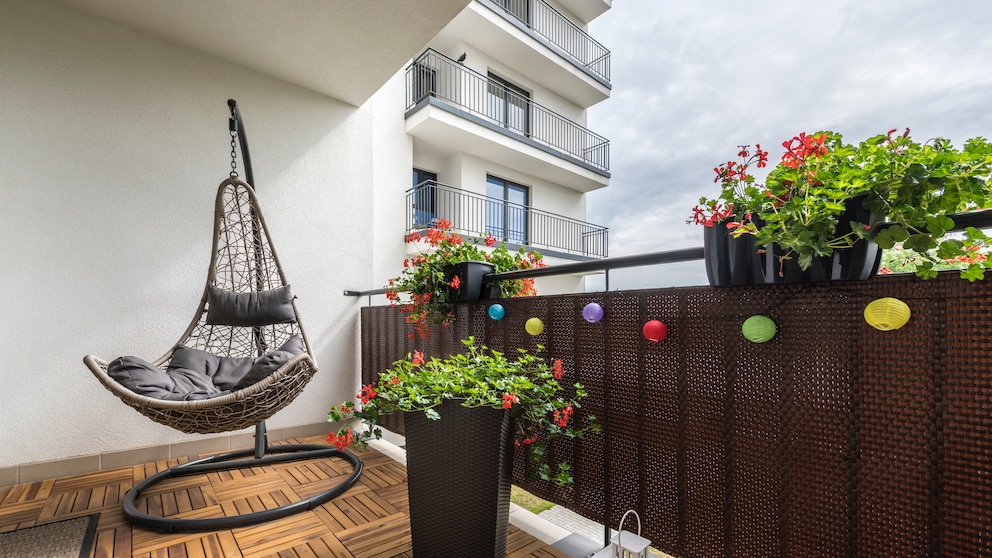
Old, unattractive, or even damaged–balcony floors show signs of regular use over time. To restore the surface to an appealing condition, there are several flooring options available on the market. myHOMEBOOK presents five in detail and explains their advantages and disadvantages.
If a balcony has become visually worn over the years, a new and attractive flooring can be the solution. There are various options to choose from. However, when purchasing, aesthetics should not be the only consideration.
Overview
What to Consider When Choosing Balcony Flooring
Before installing new flooring for the balcony, several factors need to be checked. The balcony floor should have a slight slope of about two to three percent to ensure rainwater drains properly.
It is also important to ensure that the drain is not accidentally sealed. Accumulated rainwater can eventually lead to mold. Therefore, a small gap in the installation is advisable. The weight of the flooring is also relevant: stone tiles in large quantities may exceed the permissible load capacity of a balcony.
Which Flooring Is Suitable for the Balcony?
In addition to the mentioned requirements, personal taste primarily determines which flooring is suitable for one’s balcony.
1. Wood Tiles
Wood tiles are popular as balcony flooring for a reason. As a natural material, they give the outdoor area a natural touch. They also create a cozy atmosphere, and thanks to their pleasant texture, they feel warm and comfortable even when barefoot.
But those are not all the advantages: The flooring is considered very easy to install, not least because hardly any tools are needed. The individual square tiles can be easily laid over the existing balcony floor using a click system. They can be just as easily removed when moving out. Since the individual wooden slats of the tiles are mounted on a weather-resistant plastic base, there is no direct contact with the ground, minimizing the risk of mold. The gaps between the tiles also allow rainwater to drain optimally.
A wide range of wood types is available–from domestic to tropical and from softwood to hardwood: oak, larch, acacia, pine, Douglas fir, or even bamboo. However, tropical woods are not necessarily sustainable, so it’s important to look for the FSC seal when choosing such flooring.
2. Outdoor Rug
No other flooring makes a balcony feel more like an open-air living room than an outdoor rug. Soft in texture, this flooring is also extremely durable and weather-resistant. Its light weight makes installation easy. As summer ends, this flooring can be quickly and easily moved indoors. This flexibility shows that the outdoor rug is more of a decorative solution than a full-coverage flooring, which may not suit everyone’s taste.
In terms of design, there is something for almost every taste, as outdoor rugs now come in a wide range. However, many models are made from synthetic fibers. Often, variants are available that, due to their names, such as “sisal-look,” suggest a different texture than they actually have. For those who want to act sustainably, it’s important to read the product description carefully. Recommended are models without PVC, made from coconut fibers, or those manufactured from recycled PET bottles.
Related: What You Need to Know About Outdoor Rugs
3. Artificial Grass

Similar in softness and warmth underfoot to the outdoor rug, artificial grass is also a popular balcony flooring. However, it requires a bit more effort to install. Since it is usually laid in full coverage, it must be cut to size beforehand.
For many years, artificial grass was considered low-quality and had little reputation. The market has since improved, offering many high-quality models. These are available in various sizes, colors, and with UV resistance. Direct, intense sunlight over the years does not affect good artificial grass models. Additionally, the underside of this lightweight flooring is often equipped with studs, allowing rainwater to drain well. However, artificial grass is more complicated to clean, as dirt and debris are not as easily removed.
4. WPC
WPC, short for “Wood Plastic Composites,” is a composite material. This flooring consists mainly of wood and a small portion of plastic. Those who think WPC is a sustainable alternative due to its high wood content are mistaken. It is more about a wood look that, due to its artificial composition, is extremely durable and very low-maintenance. WPC planks are also weather-resistant, slip-resistant, and do not splinter. However, due to the plastic content, this flooring heats up significantly under intense sunlight.
The mostly gray-brown, longitudinally grooved planks are easy to install but require a substructure. This can compensate for an uneven balcony floor if necessary. Some effort is required in any case. WPC is also available as a click system, in various colors and surface textures. However, it comes at a price, which is significantly higher compared to other flooring options.
5. Stone Tiles
Undoubtedly, natural stone tiles provide a highly charismatic to Mediterranean look. The balcony flooring appears neutral but also somewhat cool. However, stone tiles also have some disadvantages: the sensitive tiles rarely forgive stains. On the other hand, stone tiles are considered a very durable flooring due to their composition.
Installation is more complex. Additionally, stone tiles have a lot of weight. When installing, it is crucial to ensure that the permissible load capacity of the balcony is not exceeded. Outdoor tiles should also be slip-resistant and frost-resistant to avoid unpleasant surprises. A good alternative to natural stone tiles are tiles with a stone look. These can often also be laid using the proven click system and are correspondingly lighter in weight.

What Renters Should Consider
“When renters install new flooring on the balcony, they do not necessarily have to inform the landlord. Many floorings, such as wood tiles, can be laid ‘floating’ and removed without leaving a trace. Other floorings, such as stone tiles, are permanently glued. In this case, renters should definitely ask the landlord in advance.”