


May 17, 2021, 11:58 am | Read time: 9 minutes
The importance of insect protection has now reached hobby gardeners as well. But how do you do it right? What tools and methods truly promote biodiversity in your own garden? myHOMEBOOK spoke with an expert who offers valuable tips and explains which mistakes to avoid.
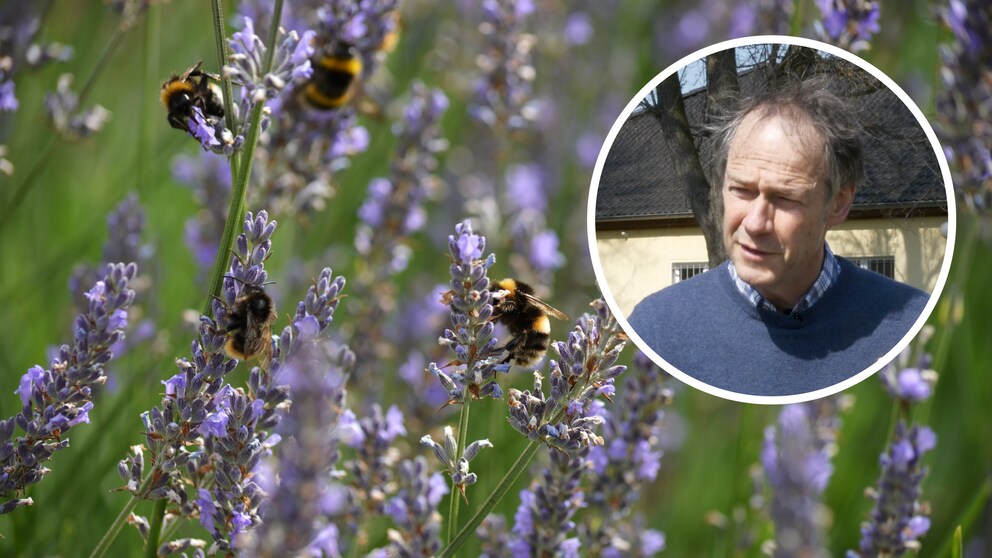
“The opposite of good is well-intentioned,” goes an old saying—and this applies to insect-friendly gardening too. Many supposed measures—such as bee-friendly seed mixes or insect hotels—often do not achieve the desired effect. myHOMEBOOK met with Cornelis Hemmer from the Foundation for People and the Environment and the “Germany Buzzes!” initiative to discuss insect protection, natural plant protection products, and gravel gardens.
Insect-Friendly Gardening – Why Is It So Important?
Hemmer: “Insect-friendly gardening is so important because it creates gardens that provide habitats. Habitats for us, where we feel comfortable and can relax, but especially for our insects and other living creatures. This includes plants, birdlife, and the insect world.”
There Are 35 Million Gardens in Germany. What Role Do They Play in Protecting Insects?
Hemmer: “We can plant bee-friendly plants, such as unfilled, native, and regionally native species. Then we can create structures. We’re sitting on one right now—a dry stone wall. But it could also be a retaining wall, a pile of deadwood, or a heap of stones. And then we can ensure that this diversity is preserved—and can also be passed on to other gardens.”

Which Plants Are Important for Insect Protection?
Hemmer: “We should make sure to plant regional plants—whether in our gardens or on our balconies. For shrubs, if we think about our garden, there are privet, serviceberry, or cornelian cherry, which bloom in early March. These are fantastic shrubs that can be planted in the garden because they don’t grow too large.”
“When we think of perennials, the small plants we get as potted goods—crocus, winter aconite, snowdrops, grape hyacinths, wood anemones—these are bee-friendly plants. When it comes to perennials, we can plant herbs and vegetables such as oregano, dill, parsley, and even lettuces. These are crops we want to eat ourselves, and they are excellent and should be allowed to bloom.”

Also interesting: 10 bee-friendly herbs for your balcony
Mr. Hemmer, I have two seed mixes here that I plan to sow on the balcony soon. How good are these seed mixes for wild bees?
Hemmer: “The packets don’t reveal exactly what’s inside. They provide general tips. But in principle, it’s commendable that we spread seed mixes in our gardens and on our balconies. But beware! We should ideally plant native varieties and species. Also, those that have been grown locally for the area. Ideally, it should be regional and native seed. So, it’s beneficial, but we can only provide a small portion of the large group of wild bees with pollen and nectar.”
Related: Why Bees Are Driving Increased Demand for Seeds
Which Plant Protection Products Are Suitable for Insect-Friendly Gardening?
Hemmer: “Plant protection products is a broad term that tries to cover many things. Plant protection products—as the name suggests—are meant to serve and protect plants. But from what? From fungi, bacteria, but also sap-sucking insects. Essentially, the products aren’t harmful—the amount makes the difference. To maintain balance, plant protection products should only be used sparingly, in emergencies. Prophylactically, that is, in advance, it’s not sensible.”
“We can, of course, prepare brews, such as nettle or horsetail brews, and they actually help to curb aphids or other pests. But we will never eradicate them. For that, we need the balance between the protagonists—between those that are useful and those that essentially control pests. Ladybug larvae or hoverfly larvae, for example, eat aphids, which can be controlled in this way. We achieve this balance by planting as many native species as possible, side by side or in salad or vegetable crops, separated by onions or garlic, which we know also tend to repel pests. It’s a wide field, and I have to find the best way for my garden.”
Are There Good and Bad Insects?
Hemmer: “Fundamentally, there aren’t. But we naturally divide the insect world into good and bad. Those that annoy us, maybe sting us, and those we like and love, like butterflies or ladybugs. Overall, every living being has its significance and its place on Earth—and belongs there. Of course, we can try to lure away those we like a little less, maybe hornets or wasps, which try to snatch meat from us at the grill, with attractive alternatives.”
“A small piece of meat near the grill should lure the insects away, allowing them to scrape off their meat and fly home. I also know that certain essential oils smell unpleasant to some insects and keep them away. During the peak wasp season, you might choose a time to grill when they are less prevalent. Don’t swat at them, because they remember! They can recognize faces. Otherwise, be glad that every insect that is there is for us. For the environment, for pollination—it helps.”
How Can I Make My Lawn Insect-Friendly?
Hemmer: “A lawn area is a thing in itself. I would suggest we simply cut out parts of this area, about one meter by one meter, to remove a square. This grass sod could be removed and perhaps composted, and then sand could be introduced to deplete the soil. Then we can spread a packet of seeds and see how herbs or perennials grow there. In the first year, annuals like poppies, and in the next year, biennials, to have a patch that looks attractive and colorful.”
“And if we only mow the lawn every three or four weeks, we’ll also find that suddenly cuckoo flowers, daisies, or maybe even dandelions grow. These are plants that belong there, that lie dormant in the lawn but are never allowed to emerge because they are constantly being mowed down.”
What Is Important About Soil Composition for Insects?
Hemmer: “Many species, especially wild bee species, don’t live above ground. They need bare soil, without any mulch, to dig their nests. If the ground is covered, they can’t get in to dig their holes. We can also create balance by planting as many native species as possible, alongside each other or in salad or vegetable crops, separated by onions or garlic, which we know also help repel pests. It’s a broad field, and I have to find the best way for my garden.”
What Is the Biggest Mistake When Trying to Garden Insect-Friendly?
Hemmer: “Constant watering and mowing are the biggest mistakes. I’d suggest we cut back on mowing, water less in some areas, and not flood everything. Of course, if extreme droughts like those in 2018 or 2019 occur, we should water to prevent everything from drying out. And above all, we shouldn’t rush to the hardware store thinking we need to buy everything there. Instead, mow less, water less in some areas, and don’t overwater. It’s about finding the best way for your garden.”
How Do I Know if My Garden Is Insect-Friendly?
Hemmer: “There isn’t a single answer to that. But we can recognize an insect-friendly garden if it’s full of native shrubs and plants, and if it has structures I like to call the ‘furniture’ of the garden. I’m sitting on a dry stone wall that isn’t mortared, so the crevices can be used by insects, reptiles, and even as perches for birds. On the other hand, we can also incorporate deadwood piles, which provide habitats for many species. Reptiles also like to bask on them, like the sand lizard.”

“And then we can also create water features, even if they’re small. Depressions that we periodically fill with water. When it rains a lot, it fills up, and when it doesn’t, it evaporates. But it’s a habitat for many creatures. We can also plant loosestrife or purple loosestrife on the edges, creating a sea of yellow and red flowering plants.”
Are Insect Hotels Really Recommendable?
Hemmer: “An insect hotel or a nesting aid is suitable if we want to introduce people to the topic of insects and their nesting behavior. We can safely watch how wild bees crawl into these holes. Usually, they fly in, check where they can nest, and eventually seal these holes. These nesting aids are suitable in that they give us a good feeling that we are doing something for bees. They are really only beneficial on a second look—or maybe not at all.”
What Do You Mean by That?
“We only support a specific selection of insects with them. For wild bees, we know that one-third live above ground, and only about half of them use this type of insect nesting aid. So, it’s about 30 to 40 species that seek shelter here. These nesting aids are good for providing nature education, giving us a good feeling that we’re doing something for bees. But they’re really only beneficial at second glance—or maybe not at all.”
What Do You Think About Gravel Gardens?
Hemmer: “I think it’s madness, especially in today’s world. And it also has real disadvantages for residents. In summer temperatures of 30 degrees, it’s 50 degrees there. There’s a high heat radiation, and I have to cool it down because I don’t want to sit there at 50 degrees and get grilled. Nothing grows there, maybe a few algae after three to four years. It creates such a hostile environment that we need to counter it with something attractive, and that can only be perennials, herbs, and native shrubs.”