


September 2, 2022, 1:02 pm | Read time: 3 minutes
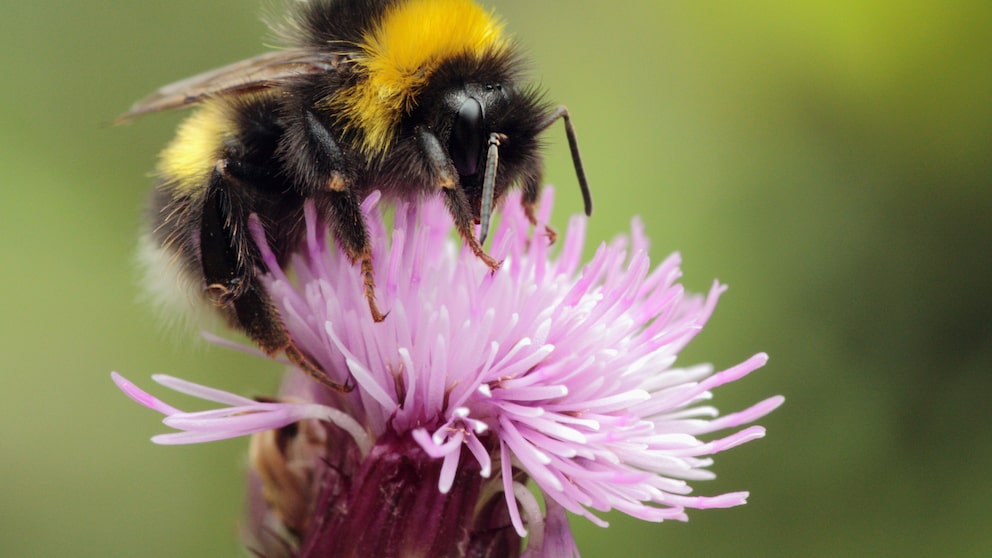
Whether in the garden or on the balcony, bumblebees are usually welcome guests. With the right plants, you can specifically attract these fluffy buzzers. This has several advantages, as they are extremely useful insects.
With their long tongues, bumblebees are experts at pollinating plants. Although they don’t produce honey like bees, they are still very beneficial creatures. Bumblebees belong to the Aculeata, a group of stinging insects, and are a welcome sight in gardens. Their presence indicates that the garden is insect-friendly. To attract bumblebees to your garden, hobby gardeners can follow these tips.
Overview
How do bumblebees actually live?
There are about 30 native bumblebee species in this country. Like honeybees, they live in colonies, but only for a few months in the summer, according to Nabu. In spring, young queens awaken and search for a suitable nesting site, such as piles of stones or dead wood, or holes in the ground. The queen starts building the first comb and lays her eggs. If the larvae are provided with enough pollen, they pupate and become workers. These workers then care for the offspring, expand the nest, and defend it if necessary. Over time, the population grows to 50 to several hundred bumblebees.
In summer, drones, which are male bumblebees that hatch from unfertilized eggs, join the workers. If fertilized, they develop into larger, fertile females–the new queens. After mating, they search for a place to overwinter in the fall, often underground, while the rest of the colony, including the old queen, dies. Only young queens survive to start a new colony the following year.
Related: What’s really behind the prejudices against wasps and hornets?
Why are bumblebees so important for the garden?
Whether for crops or ornamental plants, bumblebees visit all flowering plants for pollination. They are very skilled at pollinating each individual bloom. The result: evenly grown tomato or zucchini plants with symmetrical fruits. Bumblebees also have longer proboscises, allowing them to reach deeper into flowers. Another advantage of these larger insects over their smaller relatives is that they can fly at lower temperatures because they can warm up their flight muscles. For these reasons, bumblebees are also specifically used as pollinators in agriculture.
In an interview with myHOMEBOOK, insect researcher Cornelis Hemmer explains why insect-friendly gardens are important and what to consider:
Why Wasps Are Useful
The “Black Hornet” Is Actually Called the Violet Carpenter Bee
How can you attract bumblebees to the garden?
Bumblebees–and also wild bees–are naturally drawn to a garden that is close to nature. Hobby gardeners should avoid using chemicals in the garden, both for pest control and fertilizers. Native wild perennials and herbs also attract these insects. Natural areas in the garden, such as piles of stones or dry stone walls, serve as nesting sites for bumblebees.
Related: Glyphosate reportedly affects bumblebee brood care, according to a study
Can bumblebees sting?
Many people say bumblebees can’t sting–but that’s not entirely true. According to Nabu Niedersachsen, they can sting, but only the females. Males do not have a stinger. Even experts can’t always distinguish between the sexes. However, there’s no need to fear a bumblebee sting: Females only sting when they feel threatened, such as when they are trapped. Additionally, their venom is less painful compared to that of bees or wasps.