


March 18, 2026, 9:33 am | Read time: 4 minutes
Even if their appearance doesn’t immediately suggest it, grubs aren’t necessarily bad for your garden. Among beetle larvae, there are “good” and “bad” types. While some nibble on live grass roots, others only process dead wood into compost. However, it’s possible to distinguish between the two.
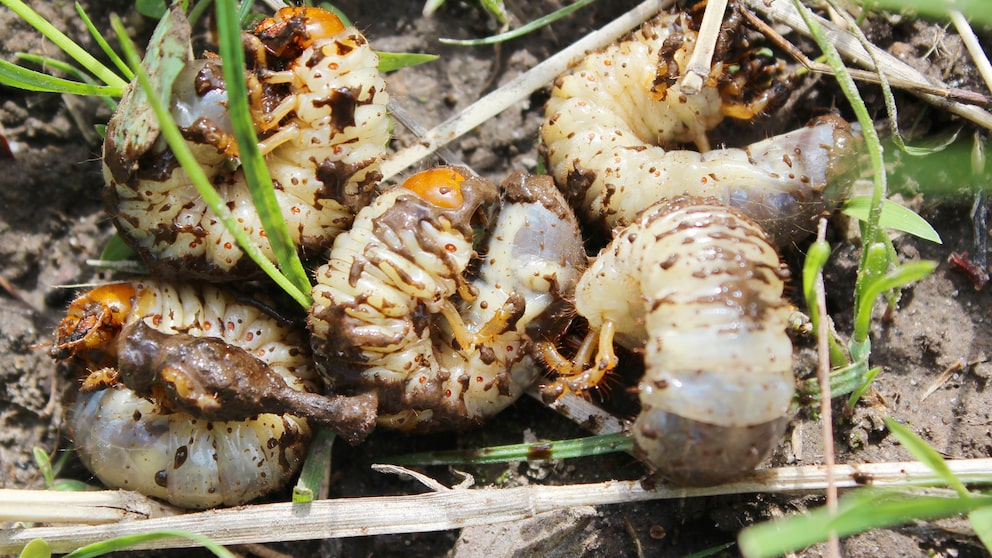
Grubs are the larvae of various beetle species, including May and June beetles, rose chafers, rhinoceros beetles, and garden chafers. These belong to the superfamily Scarabaeoidea. When the time is right, the roughly two to three inches long grubs pupate for a few weeks and develop into beetles. During this time, the larvae look very similar.
What Do Grubs Look Like?
The fleshy body ranges from light gray to brown to black. At the head are strong feeding tools, which they can use to work on live plant roots. With their six little legs, grubs burrow through the soil on their way to the next food source. They are mainly found in planting beds or compost heaps.
Are Grubs Harmful or Beneficial?
Not all grubs are pests; some even help with composting. However, the damage to plants is usually limited. Often, you can identify the pests by brown patches in the lawn. They stay underneath and feed on the roots. But they also enjoy the roots of flowers, potted plants, or fruit trees.
The Larvae of the Following Are Considered Harmful Grubs:
- May beetles
- June beetles
- Garden chafers
The May beetle is considered the most harmful grub among the listed species. Other beetle larvae, however, are beneficial for the garden and are even listed as “specially protected species” in the Federal Species Protection Ordinance. They help with composting and destroy dead wood.
The Larvae of the Following Are Considered Beneficial Grubs:
- Rose chafers
- Rhinoceros beetles
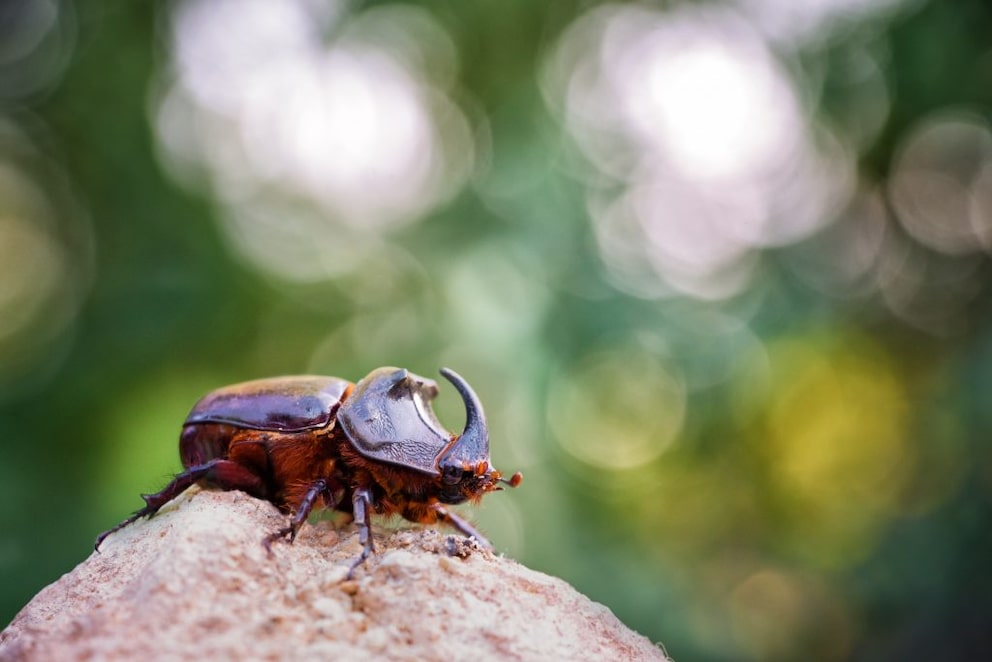
Tip: If you find a beneficial grub, you should quickly bury it back in the soil. They don’t fare well in bright daylight. Then they can continue to feed on dead wood there.
How Do You Recognize Beneficial Grubs?
Even though the adult beetles are quite distinct due to their coloring, the larvae have few distinguishing features. The grubs of the harmful May and June beetles are generally larger than those of the beneficial rose chafer. However, size comparison is not enough if you only have a single specimen in front of you.
Online, there are suggestions that grubs can be distinguished by their mode of movement. Some are said to move sideways or even crawl on their backs. But insect researcher Dr. Damir Kovac from the Senckenberg Research Institute Frankfurt warns myHOMEBOOK against this method: “Movement is not a reliable criterion for distinguishing rose chafers from May beetles.” Instead, the entomologist suggests taking a closer look.
Characteristics of the May Beetle Grub:
- equally thick at the front and back
- long, strong legs with a “kink”
- distinct, strong mandibles
- not found in compost (feeds on live roots)
Characteristics of the Rose Chafer Grub:
- thicker at the back than the front
- small stubby legs without a “kink”
- small mandibles
- mostly found in compost

How Harmful Is the Strawberry Blossom Weevil?
Is the black fungus beetle harmful in the home?
What to do with Harmful Grubs?
Since some of the types described above are protected, you are not allowed to catch, injure, or even kill the grubs of rose and rhinoceros beetles according to the Federal Nature Conservation Act. It is also forbidden to “remove, damage, or destroy their developmental forms from nature.” Their breeding and resting places must not be damaged or destroyed. Furthermore, you may not buy or sell them. All other species, however, are not protected.
What Helps Against Harmful Grubs in the Garden?
Even though grubs usually don’t pose a significant threat to the plant world in the garden, there are some measures to curb infestation. However, don’t immediately resort to chemical insecticides. There are also biological solutions:
- Lay out insect protection nets: If you place an insect protection net over the planting bed or compost heap during the beetles’ flight time from May to June, the beetles cannot lay eggs there.
- Use nematodes: These roundworms naturally combat grubs and use them as hosts for their own population.
- Encourage beneficial insects: The natural predators of grubs, such as hedgehogs, shrews, moles, and birds, keep the grubs in check.
- Verticut the lawn: Verticutting chops up and loosens the top layer of soil, which grubs don’t like.
- Avoid lighting: If you have set up a nighttime lighting system in the garden, it encourages beetle egg-laying.
- Certain plants: Geraniums and delphiniums are toxic to grubs. Additionally, garlic is said to repel them.