


July 29, 2025, 3:57 am | Read time: 4 minutes
Black, dried-up fruits and brown spots on the leaves: If you observe this on grapevines, black rot might be the cause. Over time, mummified berries often appear. At this point, the disease is already advanced. This fungal disease is a serious problem in viticulture and can destroy entire harvests. But grapevines in gardens can also be affected by black rot. myHOMEBOOK explains how to identify black rot in grapes and what preventive measures can be taken.
What Exactly Is Black Rot?
Black rot in grapevines is caused by the fungus “Guignardia bidwellii.” The pathogen primarily affects grapevines, rarely other plants. Especially in warm, humid summers, the fungus can spread quickly and cause significant damage.
Recognizing Black Rot on Grapevines
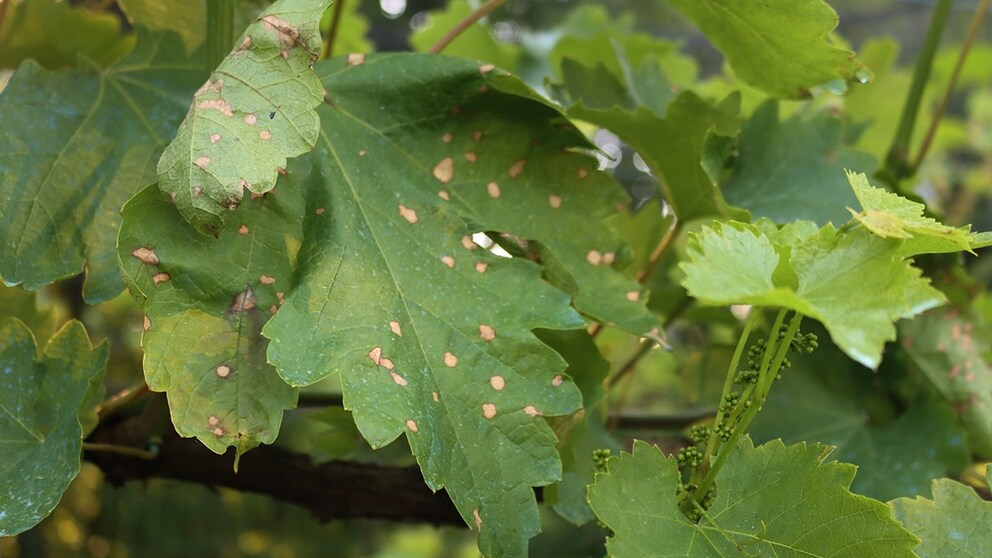
- On the leaves: Round, brown to beige spots with a dark edge, often with small black dots (fruiting bodies of the fungus).
- On young shoots: Black longitudinal spots and sunken areas.
- On the berries: Initially, brown spots; later, the berries shrivel, become hard, black, and mummified (“black rot berries”).
- Overall, the vine appears weakened, and leaves may fall off prematurely.
Which Plants Can Be Affected by the Pathogen?
Even though black rot in the strict sense only affects grapevines, similar symptoms in other plants are often also referred to as black rot. For example, cabbage varieties, carrots, or tomatoes may show blackened, rotten spots due to various fungal diseases that resemble the typical symptoms of black rot.
However, these appearances are caused by other pathogens, such as “Alternaria brassicicola” (causing black spot disease or cabbage black rot) in cabbage plants or Alternaria radicina (black rot in carrots). Even certain bacteria like “Xanthomonas campestris” can cause such black discolorations. Some ornamental plants like chrysanthemums, hydrangeas, or roses are occasionally affected by fungal infections that lead to dark, rotten spots.
Important: True black rot caused by the pathogen Guignardia bidwellii is mostly limited to grapevines. However, the preventive and control measures are often similar, but always require precise identification of the respective pathogen.
When Does Black Rot Occur Most Frequently on Vines?
Warm, humid weather in spring and summer promotes infestation. Poor ventilation and high humidity in a vineyard also increase the risk.
Why Is Black Rot So Dangerous?
The disease can render most of a grape harvest unusable if not detected and treated early. Particularly frustrating: The fungus overwinters in the so-called “mummy berries” and on old shoots and can strike again the following year. Even hobby gardeners may have to forgo the grape harvest if black rot is not contained.
The 5 Most Common Tomato Diseases and How to Combat Them
Recognizing, Preventing, and Combating Rose Rust
How Can Black Rot in Vines Be Prevented?
- Carefully remove and destroy old, infested berries and shoots
- Regularly inspect vines and promptly cut off infested plant parts
- Ensure good ventilation: Thin out shoots and avoid planting too closely
- Choose disease-resistant grape varieties, if possible
- Use of fungicides: In professional viticulture, preventive plant protection products are often used. In home gardens, please seek professional advice first.
What to Do in Case of Acute Infestation?
- Generously remove all affected berries and plant parts
- Thoroughly clean cutting tools afterward
- Never put infested material in the compost
- Consider using approved fungicides in case of severe infestation
Extra Tip: In your own garden, regular thinning of the vines is often enough to improve air circulation and reduce fungal infestation. It is important to completely remove old “mummy berries” by winter at the latest.

Tool Tip for Plant Diseases
“If you’re unsure whether discolorations on plants are black rot or another disease, plant identification apps might help. Tools like ‘Plantix’ with the so-called plant doctor, ‘Flora Incognita,’ or ‘PictureThis’ offer the possibility to upload photos of affected leaves or fruits. This allows for an initial assessment.”