


February 26, 2026, 9:08 am | Read time: 5 minutes
With mild temperatures and the first warm rays of sunshine, spring invites you to spend more time in the garden or on the balcony. But just like in the house, a spring cleaning is also due here–for example, to remove green deposits on stones and wood. myHOMEBOOK explains the best way to do this in this article.
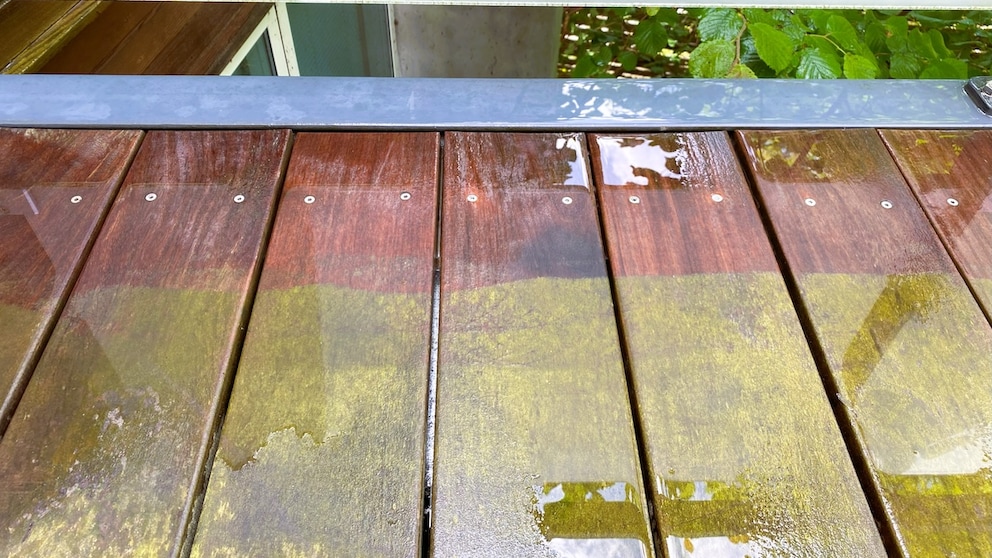
When the cold season is over and the garden or balcony is used more frequently again, an unwelcome remnant of winter often catches the eye: green deposits. The inconspicuous green layer spreads on terraces, paths, or facades and not only affects the appearance–it can also become slippery and therefore dangerous. The green carpet on terrace floors, roofs, stones, wooden floors, and house facades consists of various plant microorganisms, algae, mosses, and lichens. With the right methods, green deposits can be effectively removed, bringing the garden, terrace, or balcony back into shape.
Overview
When is the best time to remove green deposits?
The fall and winter months are predominantly wet and cold. The increased moisture promotes the formation of green deposits. Therefore, it would be a bad idea to clean the terrace, balcony, or stone paths in the fall or winter.
A better time to remove green deposits is in the spring. During this period, the amount of rainfall decreases. Additionally, the surfaces dry faster due to the sun.
How effective are green deposit removers?
To remove green deposits, many resort to chemical solutions. Green deposit removers are strong disinfectants. The application is quite simple: just apply the product, let it work, and then rinse off. No tedious scrubbing required.
Green deposit removers seem to be the ideal solution for getting rid of moss, algae, and the like. However, the German Environment Agency advises against using chemical solutions. The reason: some ingredients are partially classified as “environmentally hazardous.” Fortunately, there are plenty of other methods to remove green deposits in an environmentally friendly way.
Also interesting: These 9 tips make spring cleaning easier
Cleaning terraces and paving stones with a pressure washer
A popular method to free terraces, paving stones, or facades from green deposits is the pressure washer. With this method, you can also avoid scrubbing. The rotating nozzles allow you to clean even large areas quickly and conveniently.
However, this method also has some drawbacks. The cleaning is only superficial. Additionally, the removed material flies around and may cause even more cleaning work. It’s also important to know that a pressure washer can damage surfaces. Green deposits particularly like to settle in grooves and cracks. Thoroughly cleaning such a porous surface is not easy.
Tip: A pressure washer is not a cheap purchase. You can rent pressure washers for a daily fee at hardware stores.
Home remedies for removing green deposits
If you decide to remove green deposits with home remedies, you should also equip yourself with a brush or an old broom. Once you have the tools, you can start scrubbing.
Baking soda
Baking soda is particularly effective for removing green deposits. First, remove coarse dirt and debris from the surface. Then mix baking soda with hot water. Use about two tablespoons of baking soda per liter of water. Next, spread the solution over the surface and let it sit for at least an hour. Afterward, scrub the area with some water and a brush. Finally, rinse with clear water.
Note: It’s best to test in an inconspicuous area first to see if baking soda discolors the surface.
Soft soap
A cost-effective, efficient, and environmentally friendly method to remove green deposits is soft soap. It’s best to work the green soap in with water and a brush. While scrubbing, you should already see the green deposits coming off. Then rinse with clear water. Although this method requires some elbow grease, soft soap cleans every surface particularly thoroughly.
Follow myHOMEBOOK on WhatsApp now!
This Is Why Building Facades Above Windows Turn Black
These Home Remedies Are Said to Remove Dark Deposits from Pans
Home remedies not suitable for removing green deposits
Both vinegar essence and soda are popular household remedies for removing various stains and problems. This also applies to the removal of green deposits. As an acid, vinegar essence changes the pH value of organic material. Soda and water can be used to create a lye that also changes the pH value. This way, green deposits can be successfully removed.
Nevertheless, their use should be avoided. When cleaning outdoor areas, these home remedies can enter nature and alter the pH value of the garden soil. Naturally, these substances can also seep into the groundwater.
Can you prevent green deposits?
Unfortunately, you cannot prevent the formation of green deposits. However, there are ways to make it uncomfortable for mosses, lichens, algae, and plant microorganisms. To do this, you should know where they thrive. The green carpet primarily forms in damp and shady places. To minimize green deposits, you should create the opposite conditions.
Keep the areas dry. Of course, you can’t control the rainfall. However, a slight slope, such as on a terrace floor, can help water drain away. This allows the surface to dry faster. Regular cleaning of wood, stone, or other surfaces exposed to the elements can also prevent the formation of deposits. This way, you remove dust and plant microorganisms.