

July 26, 2025, 10:38 am | Read time: 3 minutes
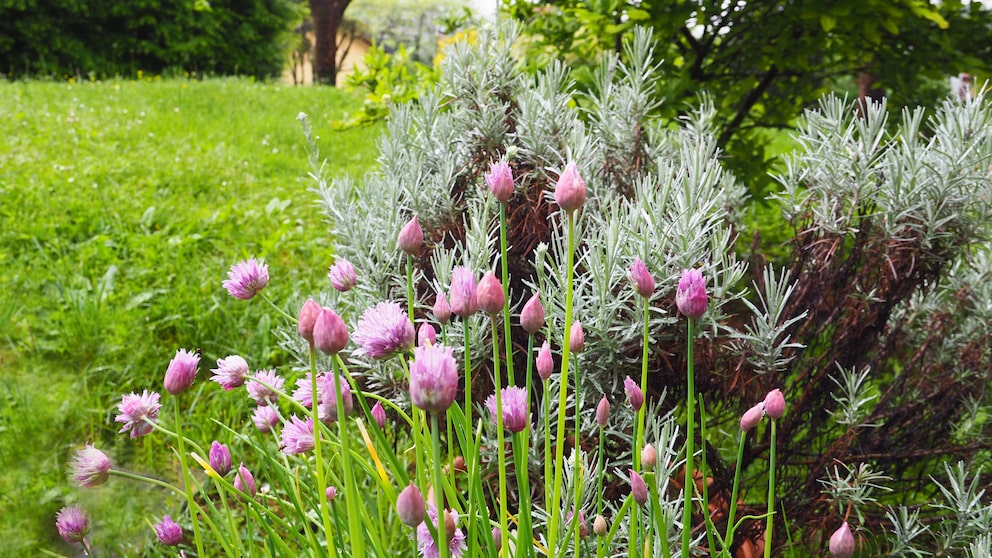
A lush green lawn requires a lot of maintenance, and a flower meadow often grows too tall–but there is an attractive alternative: An herb lawn combines floral beauty, resilience, and low maintenance. It not only looks beautiful but also provides food and habitat for insects. And the best part: The path to achieving it is easier than many think.
Herb Lawn: The Practical Blend of Green Space and Floral Diversity
If you’re tired of constantly weeding, aerating, or mowing the lawn, an herb lawn offers a sustainable solution. Unlike the traditional ornamental lawn, which usually consists of only a few grass species and lacks flowering plants, an herb lawn features wild herbs, grasses, and perennials growing together. This colorful mix not only promotes biodiversity but can also be walked on without damaging the plants–a clear difference from a tall flower meadow.
The German Federation for the Environment and Nature Conservation (BUND) explains how to bring such an herb lawn into your own garden. Basically, there are two ways: You can convert the existing lawn or create a completely new herb lawn.

How Often You Should Mow the Lawn in Summer

Tips for a Low-Maintenance Garden
Gradually Transform Existing Lawn
If you want to convert your existing lawn into an herb lawn, you must first do less rather than more. The first step is to “impoverish” the lawn: Stop fertilizing, weeding, watering, and mow only occasionally.
Since grass growth is heavily dependent on weather conditions, BUND suggests the following rule of thumb: Mow only when the lawn is about 20 centimeters high–and do so with the highest cutting height of the lawnmower. This way, as many flowering plants as possible are preserved.
Once the area is prepared, you can start planting specific wild herbs such as daisies, clover, ground ivy, primroses, or bellflowers. Early bloomers like winter aconites, crocuses, or Siberian squill can also be added to make the lawn bloom as early as spring.
An important note: If the area has been regularly fertilized in the past, patience is required, as nutrient-rich soils delay the transition. For those who want quicker results, a completely new herb lawn can be established instead.
Establish a Completely New Herb Lawn
If you opt for a fresh start, first remove the old lawn entirely. Then, thoroughly loosen the soil and clear it of stones and root debris. This creates an ideal base for the new seeds.
When selecting seeds, BUND advises using regional seeds. These are optimally adapted to local soil conditions and climate. To ensure even distribution, mix the seeds with sand and spread them crosswise–first lengthwise, then crosswise. Afterward, gently press the area with a board to achieve good soil contact.
In the first weeks after sowing, regular watering is crucial to allow the seeds to germinate. Again, avoid fertilizers and pesticides, as a nutrient-poor soil is the best foundation for native flowering plants.
No matter which option you choose, a well-established herb lawn impresses with its longevity, low maintenance, and valuable contribution to biodiversity–and it turns the garden into a paradise for bees, butterflies, and other insects.
With material from dpa