


March 4, 2026, 4:03 pm | Read time: 4 minutes
Suddenly, the leaves turn brown, shoots die off, and the boxwood appears bare and sickly within weeks. Many garden owners experience this and stand helplessly before their boxwood. Often, the culprit is the so-called boxwood blight, more specifically: boxwood dieback. The fungus is considered one of the main reasons why the classic boxwood is increasingly disappearing from many gardens. myHOMEBOOK reveals how to recognize and effectively treat boxwood blight early.
Overview
- What Is Boxwood Blight?
- Why Is Boxwood Blight Spreading So Rapidly Today?
- Are All Boxwoods Equally Susceptible?
- Typical Symptoms of Boxwood Blight–How to Recognize the Infestation
- How Does the Fungus Spread?
- What to Do in Case of Infestation?
- Can Boxwood Blight Be Prevented?
- Replacing Boxwood–These Alternatives Prove Themselves
What Is Boxwood Blight?
Boxwood blight is an aggressive leaf and shoot fungus that almost exclusively affects boxwood (Buxus). Particularly problematic: It spreads quickly and can severely damage even old, long-healthy plants in a short time.
The fungus thrives in moist conditions and moderate temperatures. Extended rainy periods, tightly trimmed hedges with little air circulation, or wet leaves significantly promote infection.
Why Is Boxwood Blight Spreading So Rapidly Today?
There are several reasons why boxwood blight is so prevalent today. One is climate change. Milder winters allow fungal spores to survive better, while moist, warmer summers create ideal conditions for infections. Additionally, boxwoods have been planted very densely for decades, especially as borders or hedges. In these compact arrangements, leaves dry slowly after rain, providing the fungus with perfect starting conditions.
Moreover, boxwood was long considered an “uncomplicated standard plant.” Location, soil, and air circulation often played a secondary role. But this oversight is now proving costly.
Are All Boxwoods Equally Susceptible?
In general, no variety is resistant to boxwood blight. However, there are differences in susceptibility. The classic Buxus sempervirens, which has been the most commonly planted for decades, is particularly affected.
Small-leaved varieties or slow-growing types are considered somewhat more robust, as they develop less dense foliage. However, this does not mean they are permanently spared. They usually become infected later or less severely. Anyone planting boxwood today should be aware of this residual risk.
Typical Symptoms of Boxwood Blight–How to Recognize the Infestation
An infestation with boxwood dieback is not gradual but rather sudden. Typical signs include:
- Brown to dark brown spots on the leaves
- Black streaks on young shoots
- Rapid leaf drop, often within a few days
- Entire plant parts appear “burned”
- The boxwood dies from the inside out
Important: The damage is often mistaken for drought or frost damage. A clear warning sign, however, is the black shoot discoloration combined with wet weather.
How Does the Fungus Spread?
Boxwood blight spreads through spores carried by rain, splash water, wind, garden tools, or even shoes. Once in the garden, it can persist for years in the soil or on plant debris. These factors can promote infection:
- Densely planted boxwood hedges
- Shady, poorly ventilated locations
- Regular overhead watering
What to Do in Case of Infestation?
Once the fungus is detected, quick action is necessary.
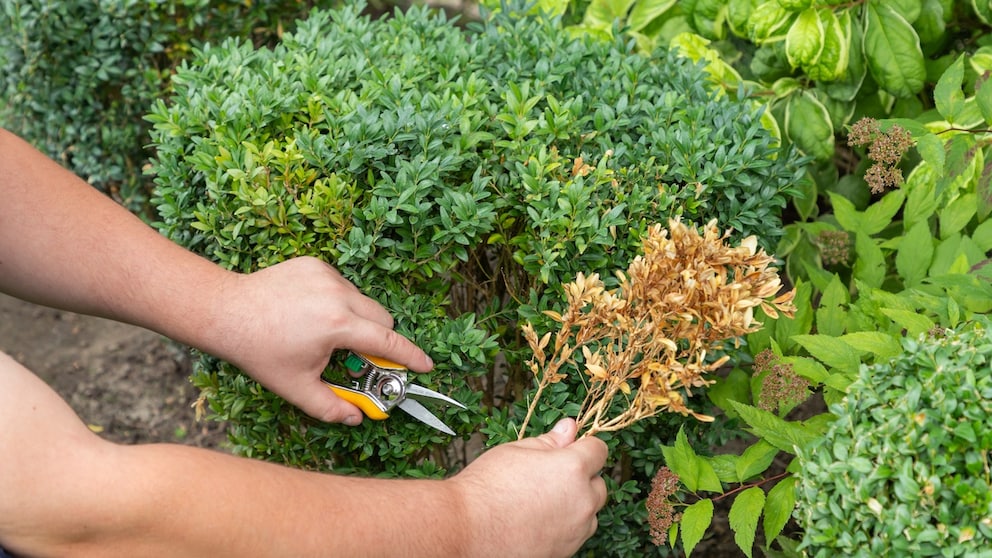
- Generously cut back heavily infested plant parts to healthy wood.
- Do not compost clippings; dispose of them in household waste.
- Thoroughly disinfect garden shears and tools.
- Keep affected plants as dry as possible.
Chemical fungicides have limited effectiveness and are controversial in home gardens. While they may temporarily slow the infestation, boxwood rarely becomes permanently fungus-free.
Brown Spots on Tomatoes? What Disease Could Be Behind It
The 5 Most Common Tomato Diseases and How to Combat Them
Can Boxwood Blight Be Prevented?
There is no absolute certainty, but these measures help reduce the risk:
- Plant boxwood only in airy, sunny locations
- Avoid wetting leaves when watering
- Do not trim hedges in wet weather
- Regularly inspect plants
- Opt for more robust boxwood varieties (they are not resistant but somewhat more resilient)
Replacing Boxwood–These Alternatives Prove Themselves
Many garden owners are now consciously choosing against new boxwood. Suitable replacements include:
- Ilex crenata (Japanese holly)
- Lonicera nitida (box honeysuckle)
- Euonymus (spindle tree)
- Small, structured perennial hedges as a modern alternative
They offer similar benefits but are significantly less susceptible.

Boxwood Blight is Changing Garden Design
“The loss of boxwood has prompted a rethink in many gardens—and therein lies an opportunity. Instead of strict borders, loosely structured beds, mixed hedges, or clear edges of perennials and grasses are emerging today. These are not only more robust but also ecologically much more valuable. A bit more “wild” often means more hiding places for birds, insects, and other small creatures.”