

August 27, 2021, 11:19 am | Read time: 2 minutes
Whether it’s the small or large cabbage white butterfly, its caterpillars love to munch through the cabbage in the vegetable garden. Here’s an overview of how to gently get rid of these little pests.
Most people know the cabbage white butterfly primarily as a pretty white butterfly fluttering from flower to flower in the garden. But like other butterflies, it was once a caterpillar. In this stage, it feeds on cabbage and becomes a real nuisance for diligent hobby gardeners. myHOMEBOOK explains how to prevent, identify, and gently combat this pest.
The Differences Between Large and Small Cabbage White Butterflies
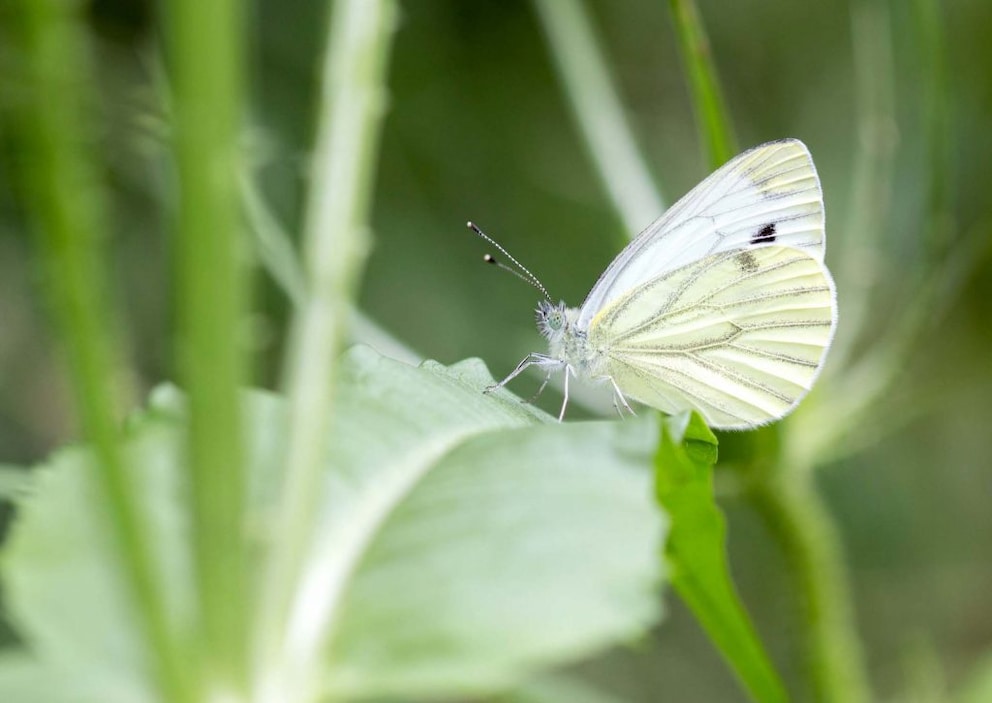
The large and small cabbage white butterflies mainly differ in size. While the large butterfly has a wingspan of 60 millimeters, the small one has only 40 to 50 millimeters. The large cabbage white has black spots on its wings, and the small one has gray patches. Otherwise, the wings tend to be white.
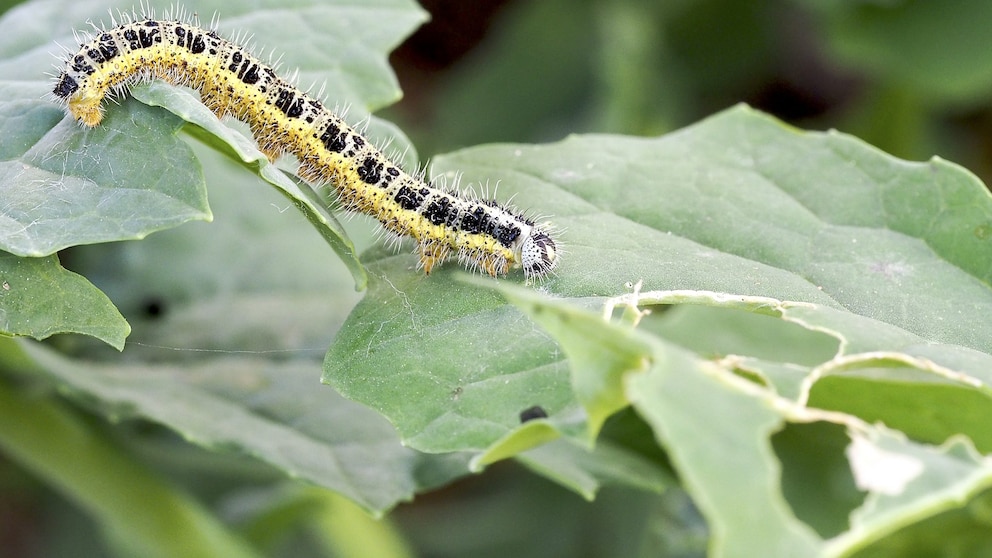
The large cabbage white often lays its eggs in groups of up to 20 from May to June. In contrast, the small cabbage white lays its eggs individually in April and July. The caterpillars of the large cabbage white are black-spotted, while those of the small butterfly are light green. The caterpillars of the small pest even bore into the heart of the cabbage plant. In any case, they cause significant damage. The excrement they leave behind causes the plants to rot.
Once the caterpillars pupate, they leave the plants and find a spot on a wall or fence. In summer, the butterflies emerge from the pupae.
Also interesting: What to Do During a Caterpillar Invasion
Cabbage White Butterflies: Prevention and Control
Prevention: To prevent the butterflies from laying their eggs, you can try protecting the beds with nets. Regularly check the undersides of leaves for yellow eggs or already hatched caterpillars. You can simply crush the eggs and collect the caterpillars.
Biological Methods: Biological control methods are available in stores. The natural bacterium Bacillus thuringiensis is very effective. It is harmless to other insects and is usually just sprayed on.