


August 4, 2026, 3:04 pm | Read time: 3 minutes
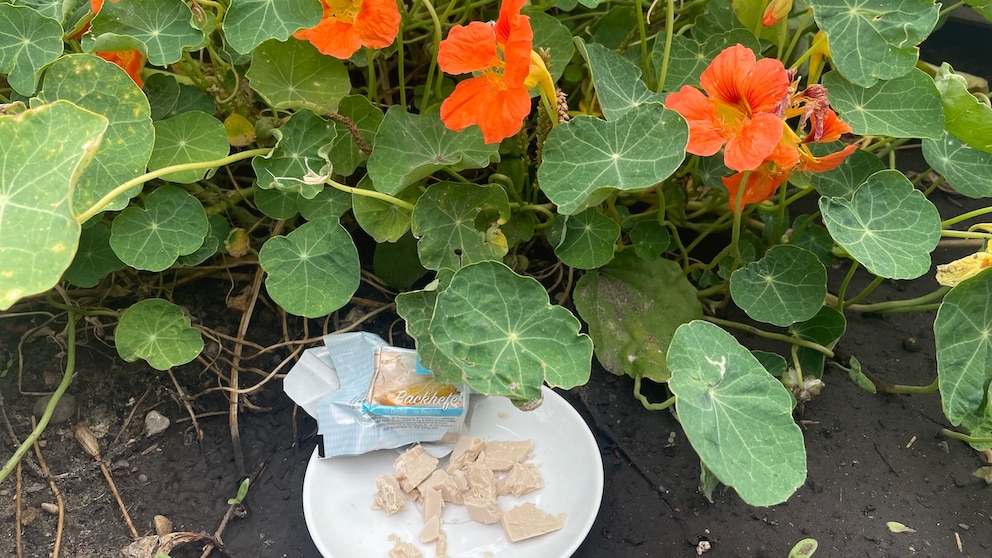
Anyone who regularly searches for gardening tips on social media quickly encounters an unusual suggestion: Instead of using traditional fertilizer, hobby gardeners are advised to nourish their plants with a mixture of water and yeast. The purported effect: stronger growth and more abundant harvests. myHOMEBOOK gardening expert Franka Kruse-Gering explains whether this trick actually works.
Why Yeast Is Considered a Home Remedy in Gardening
The idea that yeast is a gardening aid is not unfounded. In numerous guides, the baking ingredient is recommended as a natural home remedy intended to support processes in the soil. The concept behind it: yeast fungi promote the activity of microorganisms that break down organic material and release nutrients in the process. But does this mean yeast is suitable as a fertilizer?
Yeast Is More of a Soil Activator Than a Fertilizer
“Yeast is more of a soil activator than a fertilizer and is naturally available to plants,” explains Isabell van Groeningen from the Royal Garden Academy in a previous interview with myHOMEBOOK.
The difference is crucial. A fertilizer directly supplies plants with the nutrients they need for growth, primarily nitrogen, phosphorus, and potassium. These nutrients are considered the foundation for healthy growth and the formation of leaves, flowers, and fruits. However, yeast does not fulfill this role. Instead, it can influence processes in the soil related to the breakdown of organic materials.
A Healthy Soil Usually Doesn’t Need Additional Yeast
According to the expert, it is primarily the microorganisms in the soil that benefit from organic material. They ensure that dead plant remains and other organic substances are gradually converted into nutrients available to plants.
“The more organic material available, the better the microorganisms in the soil can process the material,” says van Groeningen.
If the soil is already well-supplied with compost, humus, or other organic components, these processes occur naturally. Additional yeast is generally not necessary.
Why the Effect Is Hard to Assess
The expert sees another problem in that the effect of yeast is difficult for hobby gardeners to evaluate.
“It is challenging to determine how much to use and how long it lasts. The activity might last only a few days or perhaps a few weeks. For an untrained eye, it can be difficult to assess whether and when it is necessary to fertilize the plant.”
Even if yeast temporarily influences biological processes in the soil, this does not automatically mean that plants are optimally nourished.
Fertilizing Zucchini: Top Tips for a Bountiful Harvest

What to Consider When Choosing Universal Fertilizer for Houseplants
Can Yeast Be Harmful?
Those who occasionally use yeast in the garden usually do not need to fear negative consequences. However, as a substitute for a balanced nutrient supply, this home remedy is not suitable. For healthy growth, plants primarily need sufficient nitrogen, phosphorus, and potassium. Yeast does not provide these essential nutrients in the quantities necessary for long-term supply. To keep plants healthy in the long run, one should continue to rely on compost, organic fertilizers, or other suitable nutrient sources. Yeast can play a supplementary role at best but does not replace appropriate fertilization.
Yeast May Be More Useful on the Compost
Those who want to use leftover yeast are often better off putting it on the compost rather than in the garden bed. There, it can act as a soil activator and support the microorganisms that decompose plant remains and other organic materials. The benefit lies not in additional nutrients but in supporting natural decomposition processes. Thus, yeast often fits better in the compost than in the watering can.