

November 3, 2026, 3:31 pm | Read time: 5 minutes
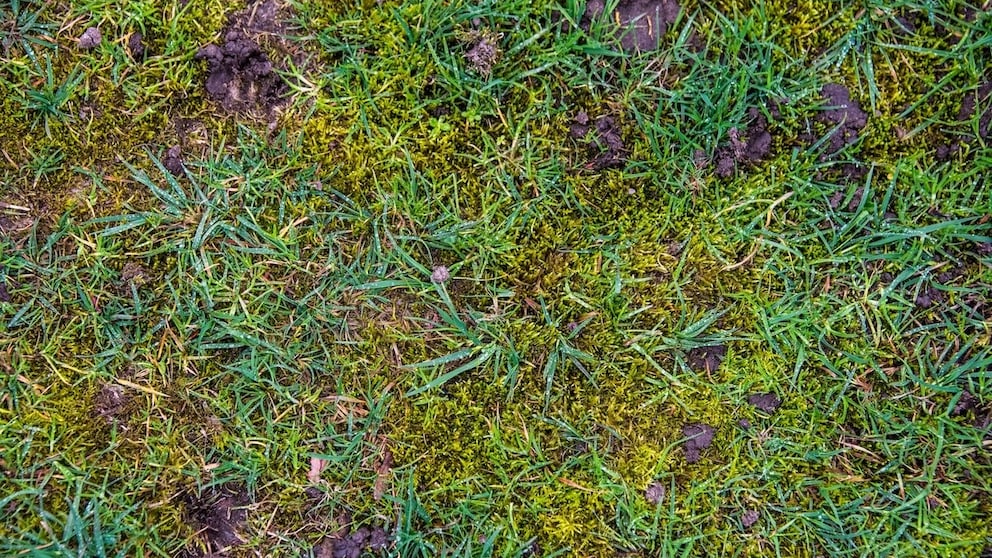
A lush, dense lawn is the dream of many garden owners. However, in the fall, a different picture often emerges: Green mosses spread between the blades of grass, gradually taking over larger areas. But why does moss thrive so well in lawns? And can the unwanted growth still be effectively combated in the fall? myHOMEBOOK spoke with an expert about this.
Why does moss spread in lawns?
Mosses are particularly hardy plants. Unlike lawn grasses, mosses do not develop pronounced roots. Instead, they have structures called rhizoids that anchor them to the ground. Mosses primarily absorb water and nutrients through their above-ground parts. This allows them to grow even where other plants struggle. “In patchy or less competitive lawns, they quickly colonize the gaps,” says Dr. Harald Nonn, former chairman of the German Lawn Society, in an interview with myHOMEBOOK. Additionally, they spread through spores carried by wind and water, allowing the green growth to expand rapidly.
Mosses thrive particularly well in moist and shady locations. While lawn grasses need sufficient light, mosses can manage with much less. “They take advantage of this especially in the cooler and darker months (late fall to spring) to spread,” Nonn explains. Moist soils, limited sunlight, and weakened grass create the perfect combination for further spread.
Measures to take against moss in the fall
If you discover moss in your lawn in the fall, don’t immediately reach for the scarifier. Overseeding is no longer an option due to the advanced season. However, with minor infestations, iron-containing fertilizers or moss killers can be used to damage the moss and slow its growth, according to the expert.
Additionally, a potassium-rich fall fertilization can be beneficial. It strengthens the grasses for winter and “increases their competitiveness against moss,” Nonn explains. A dense, robust lawn makes it difficult for moss to establish and spread further.
The situation is different with larger moss patches. If they are removed now, gaps remain in the lawn that cannot be closed due to the lack of grass growth. This allows moss to quickly spread again. With more severe infestations, it’s best to wait until the next growing season and then address the underlying causes.
Home remedies like baking soda or acidic liquids should be avoided. According to the expert, they are not reliably effective against moss and can even harm the grasses in the worst case.
Are mosses in the lawn always a sign of acidic soil?
The belief persists that moss automatically indicates a low soil pH. Therefore, many garden owners quickly reach for lime spreaders when moss appears. But it’s not that simple. “Even lime-rich soils with high pH values are colonized by mosses,” Nonn notes.
The expert points out that mosses can even contribute to soil acidification themselves. They release acid-forming ions (H+), which can lead to soil acidification over time. This is problematic for lawn grasses, as overly acidic soil can impair the availability of essential nutrients. Mosses, however, cope much better with these conditions.
Also interesting: When to mow the lawn one last time before winter

Dandelions in the Lawn: What This Indicator Plant Reveals About Your Garden

Best Tips for Fighting Weeds in Your Lawn
Which soils can favor moss growth
Not every garden soil offers lawn grasses the same growing conditions. Moss is particularly common on heavy, clay- and silt-rich loam soils. These soils can retain a lot of water, dry out relatively slowly, and tend to compact under pressure. This reduces air reaching the grass roots while moisture remains in the soil longer.
However, sandy soils are not entirely protected from moss infestation. While they usually allow water to drain faster, they have a relatively low nutrient reserve. If lawn grasses are not adequately supplied with nutrients, they lose vigor and cannot reliably fill open spaces. Soil compaction can also become a problem on sandy substrates.
How to find the cause of moss in the lawn
Before garden owners begin combating moss, they should determine why moss was able to spread in the first place. Only by knowing the causes can a recurrence be prevented in the long term.
A first clue is the location. If moss grows mainly under trees, along hedges, or on the north side of the garden, a lack of sunlight may be the cause. Persistently damp spots also indicate unfavorable soil conditions. If water remains on the lawn for a long time after rain, the soil may be too dense or poorly permeable.
Further clues are provided by the condition of the grasses and nutrient supply. A weakly growing, patchy lawn offers moss little competition. A soil test can help determine both the pH level and nutrient supply more precisely.
Therefore, it’s not just about removing the visible moss. Those who want a dense lawn in the long term should primarily improve the conditions that weaken the grasses–such as lack of light, waterlogging, soil compaction, or insufficient nutrient supply.