

October 13, 2022, 3:16 am | Read time: 4 minutes
There isn’t just one planting tip for a bird-friendly garden. Just as diverse as the birds themselves are, so are their favorite fruits and seeds.
Songbirds in the garden not only provide a morning open-air concert, but they also help regulate pest populations. With a year-round balanced diet of seeds, berries, and fruits, birds feel at home in the garden.
Seeds of Native Species for Birds in the Garden
But especially in winter, birds have a great need for food, says Martin Rümmler, bird protection expert at the German Nature Conservation Association (NABU). Then, the animals need energy-rich food–especially oilseeds, but also ripe fruits.
Ideally, birds can harvest berries and seeds from garden plants–and not just one type. Different feathered residents have their favorite foods, which are usually native plant species. These are adapted to the needs of the bird world–and vice versa.
Ornithologist’s Tip: Low Veronica
A good example is this tip from ornithologist Peter Berthold. The Low Veronica is a small, herbaceous plant that blooms in mild weather from January. “The serin collects the small seeds in their milky stage to feed them to the young in the nest in spring,” says the emeritus professor of ornithology.
But every rule has exceptions–including with non-native plant species. For example, evening primroses, originally from North America, are indeed a food source for native birds. And a very valuable one at that.
They don’t release all their seeds at once but open their pods in stages, explains ornithologist Peter Berthold. “Even in June of the following year, pods can still open.” Therefore, evening primroses are like an everlasting birdseed dispenser for the bird expert.
Also interesting: How to Identify 5 Popular Songbirds in the Garden
Leave Sunflower Blooms Standing
According to the expert, non-native mulleins, telekias, and elecampane also provide sought-after seeds. Just like a plant whose seeds are even found in many commercial birdseed mixes: the sunflower.
It already feels at home in our gardens–and with great benefit to the animals. Birds can pick the oil-rich seeds directly from the sunflower’s flower head in the fall after it blooms. So, you shouldn’t cut off the withered blooms right away.
By the way, Peter Berthold recommends letting weeds grow or stand in vegetable beds during the winter weeks. For two good reasons: The plants protect the soil, and the food supply for the birds is increased.
The many examples show: You should carefully consider which plants can offer something to birds. And even within a plant group, there can be differences you should be aware of if you want to do something good for birds in your own garden. An example of this is thistles.
Under this name, many different genera and species are grouped together–such as the decorative, tall cotton thistle, the beautiful woolly-headed thistle, and also the teasels. “The goldfinch loves to pick at the teasels,” says Peter Berthold.

8 Plants That Look Their Best After Blooming

4 Plants That Stay Green in Winter
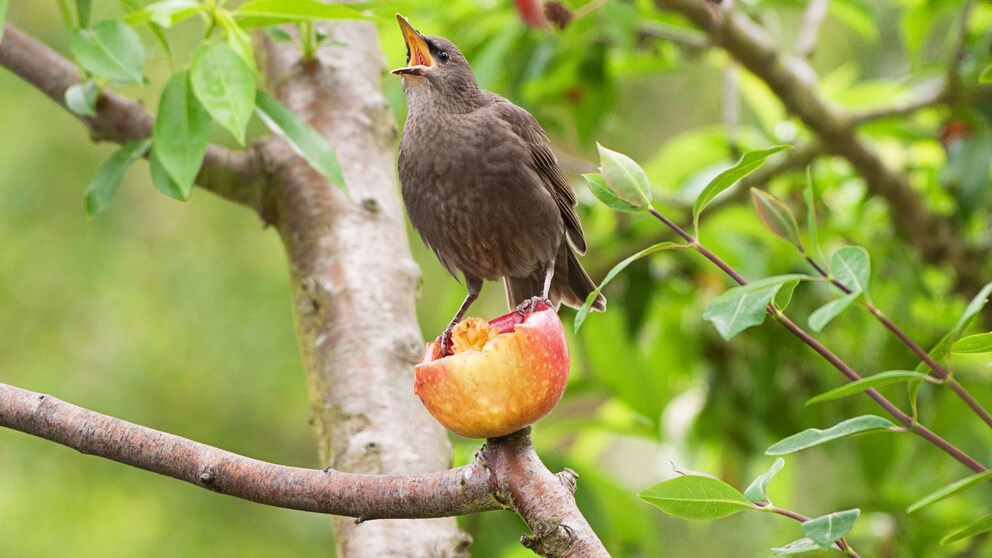
Leave Some Windfall Fruit for the Birds
Windfall fruit is also in demand, so you should leave some for the birds, advises NABU expert Martin Rümmler. But only healthy fruits, so the birds don’t suffer from diseases.
He also recommends planting wild shrubs like cornelian cherries, elderberries, and wild roses. And a “last resort” for the late winter days is ivy. The climbing plant blooms in late summer, so the berries only ripen in winter. By then, many supplies are already depleted, making the replenishment sought after by the birds.
Related: 6 Shrubs That Attract Birds to the Garden in Winter
Finches Prefer Birch, Hawfinches Like Cherries
But even among fruit-bearing bird plants, it often depends on which animals are specialized in which fruits: Finches like to harvest their food from alders, birches, and hazel bushes, while the hawfinch uses its thick beak to crack open cherry pits and pick out the seeds.
By the way: Birds not only need food in the garden but also shelters. A dense branch structure of trees and hedges offers the animals good protection from the weather.
And you should only prune plants that need trimming before the next growth spurt after winter–to preserve the seeds, but also to offer insects a place to overwinter in the stems of perennials. Because supporting them also supports the insect-eating birds. And a bird-friendly garden should also include a birdbath that is regularly filled–even in winter.