


November 12, 2022, 4:47 am | Read time: 4 minutes
If you like kiwis and want to enjoy them as a snack without the mess, you can opt for kiwi berries. These small fruits are not only delicious but also very healthy. myHOMEBOOK shows how to plant mini kiwis in your own garden in this article.
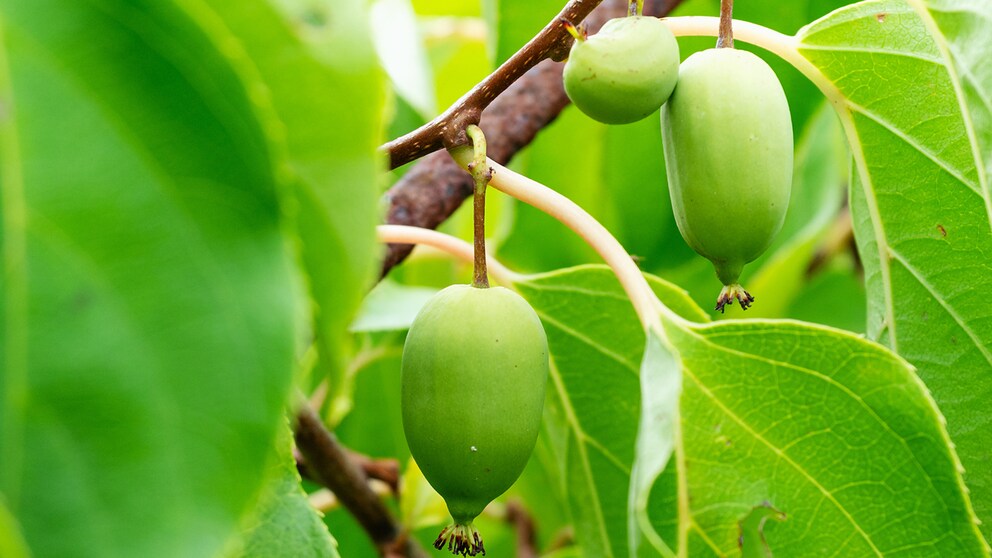
It’s no coincidence that kiwi berries (Actinidia arguta) look like small versions of regular kiwis. The two plants are closely related. However, the larger and hairier fruits are more well-known here than the mini kiwis. Yet, hobby gardeners can also plant the plant in their own garden.
Overview
Planting Kiwi Berries in Your Own Garden
For the mini kiwi, it’s best to choose a location where the fruits are in the sun and the roots are in partial shade. The more sun the fruits receive, the sweeter they become. The soil should be permeable, humus-rich, and cool–for this reason, the lower part of the plant should not get too much sun. The climbing plant is ideally suited for a pergola. Alternatively, a trellis can serve for the vines to climb. Before planting in the spring, prepare the soil with humus.
Ideally, cultivate the plant on a trellis. This way, the plant not only bears more fruit but is also easier to handle when pruning.

When you cut open the kiwi berry, you can see the similarity to the regular kiwi
Optimal Care
Watering
A layer of mulch helps prevent the soil from drying out too quickly and keeps the roots cool. The kiwi berry is a shallow-rooted plant, meaning its roots do not penetrate deeply into the soil. For hobby gardeners, this means regular watering. To avoid drought damage, provide the plant with sufficient water on hot days and during long dry periods.
Also interesting: How to Properly Grow Columnar Fruit on Balconies, Terraces, and in Gardens
Fertilization
Every spring, you can fertilize the small kiwis with horn meal or compost. However, do not over-fertilize the plant. Especially in the first year, the kiwi berry will otherwise produce many young shoots, which are susceptible to frost damage.
Pruning
You can prune the mini kiwi in both summer and fall. This is important because it is a vigorous plant that grows quickly. When maintaining the plant on a trellis, proceed as follows: Hobby gardeners should leave only the central main shoot. You can recognize it by its stronger growth compared to the other shoots.
Trim the main shoot to about 50 centimeters and guide it vertically up the trellis. On each horizontal wire of the trellis, leave two side shoots in the coming years. The fruiting shoots will grow on these. In summer, the fruits grow there. About four to five leaves behind the fruits, cut off the fruiting shoots. After harvesting, trim them back so that only two buds remain.
Also interesting: What to Consider with Berry Bushes in the Garden
Is the Kiwi Berry Hardy?
It’s hard to believe, but the kiwi berry withstands winter and the accompanying frosts well. Temperatures down to minus 35 degrees Celsius are no problem for the climbing plants. However, young plants should still be protected with a fleece in winter.
When to Harvest Kiwi Berries?
You can harvest the small fruits from September to the end of October. A ripe fruit can be identified by its reddish to light green soft skin.
The taste of the kiwi berry is comparable to that of golden kiwis. They have a sweet, mildly fruity flavor and are hardly sour. The berries contain a lot of fiber, so they are filling for a long time. Additionally, the fruit is rich in vitamins C and E. Unlike their larger relatives, you don’t need to peel the mini version. You can enjoy them with the skin. As a snack, in smoothies, salads, or as a topping for ice cream and muesli–the kiwi berry complements both breakfast and dessert.
Also interesting: Which Fruits Can I Collect Where?
How to Propagate Kiwi Berries?
The mini kiwi is best propagated through offshoots. To do this, guide a side shoot into the soil. Once it forms roots, you can separate it from the plant. This type of offshoot is known as true to type.
Related: The Kiwi Berry May Help Prevent Lung Cancer (via FITBOOK)
Diseases and Pests
The kiwi berry is generally considered very robust. Diseases and pests are rare. With one exception: the spotted wing drosophila can infest the climbing plant. Mushy fruits can be an indication of an infestation. The larvae of the fly grow inside the fruits. Such “fruit mummies” should be removed quickly.