

September 18, 2025, 3:40 am | Read time: 4 minutes
Plant Planning Made Easy
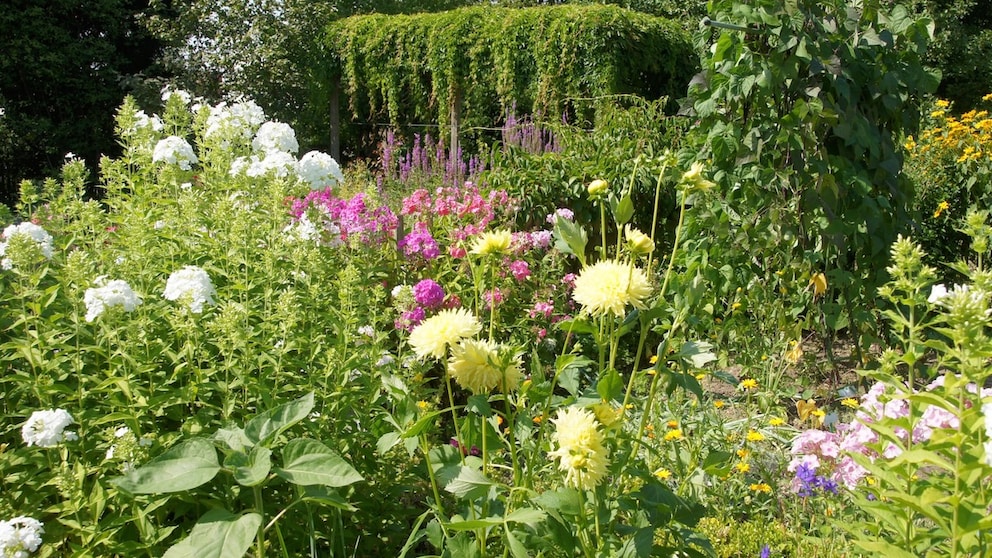
A continuously blooming flower bed actually requires precise planning and careful site analysis. However, with perennial mixes, the effort can be significantly reduced. These pre-designed mixtures contain a selection of perennials and bulb flowers that are coordinated in color, structure, and site requirements. This way, creating a diverse, low-maintenance bed can succeed even without a drawn planting plan.
The “Silver Summer” mix, for example, impresses with blue, white, and yellow flowers that harmoniously spread among silver-leaved species. The “Pink Paradise” concept combines various shades of pink with red leaves. In the shady garden area, the “Shade Shine” composition with glossy foliage and flowers in blue-violet, light green, and white provides interesting contrasts.
Diverse and Coordinated: The Advantages of Mixed Plantings
As explained by the Plant Use Working Group in the Association of German Perennial Gardeners, perennial mixes offer the simplest way to establish a diverse and dynamic perennial community. The plant packages are precisely tailored to different site conditions—whether sunny and dry or shady and moist.
The exact species composition and the required planting density per square meter are specified. This eliminates the need for detailed design planning. As a result, planting becomes not only easier but also quicker to implement.
Also interesting: 5 Tips to Propagate Perennials in Early Fall
Structure Through Diversity
Depending on the concept, the mixtures typically consist of 15 to 30 different species. According to the Plant Use Working Group, a typical mix is composed as follows:
- 5 to 15 percent so-called framework plants—tall perennials that shape the structure of the bed,
- 30 to 40 percent medium-height companion perennials,
- at least 50 percent low-growing ground covers.
The mixture is complemented by short-lived filler plants as well as bulbs and tubers. “This creates a well-structured height relief in the planting,” explains Philipp Schönfeld, a plant use consultant from Veitshöchheim. Despite the fixed species composition, the plant mixtures do not look the same everywhere. Because of the free distribution of plants and the influence of site conditions, each area develops individually.
Preparation Is Everything
A rigid planting plan is not used for perennial mixes. Instead, the plant categories—from framework plants to companion perennials to filler plants—are distributed across the area. However, selecting the right mix requires careful site analysis. Factors such as soil type, sun exposure, temperature patterns, precipitation, and winter hardiness play a crucial role.
The soil itself also needs preparation: According to Philipp Schönfeld, a moderately nutrient-rich, well-drained soil is ideal. The substrate can be moderately acidic to moderately alkaline, but it is crucial that water can drain well. Before planting, root weeds should be completely removed. Compacted soils should be mechanically loosened deeply.

The New Garden Aesthetic: How “New Perennial” Promotes Natural Beauty

What’s Behind the “Chaos Gardening” Trend?
Planting with a System–but Without a Plan
When planting, start with the framework plants, which are fewer in number, and then move on to the companion perennials and ground covers. “All perennials are laid out at equal distances,” explains Schönfeld. If desired, you can deliberately form groups, such as creating a band of taller species.
The ideal time for planting is in the spring or the fall. Fall offers particular advantages: Bulb plants can be incorporated directly, providing early splashes of color after winter—such as with tulips, daffodils, grape hyacinths, or crocuses.
For smaller bulb species, Philipp Schönfeld recommends a quantity of 20 bulbs of one variety per square meter. “Only at this quantity do they effectively stand out,” emphasizes the consultant. For larger species like tulips or daffodils, five to ten specimens per square meter are sufficient to achieve a visible effect.
Finally, mulching is done. In shady or fresh areas, nutrient-poor bark compost is suitable, while in dry, sunny locations, gravel or other mineral materials are preferable—care should be taken during application.
Care with Caution
During the first one to two growing seasons, the plants need additional watering during dry spells. Even later, watering should be done during prolonged droughts. Regular weed control is especially important—weeds should only be removed by pulling or digging, advises Philipp Schönfeld.
Pruning is done in late winter. To limit the spread of highly seeding species, pruning can be done earlier. Nevertheless, the mixtures are designed so that even the winter appearance has aesthetic appeal and simultaneously provides a safe habitat and winter refuge for all garden animals.
With material from dpa