


April 14, 2025, 8:45 am | Read time: 3 minutes
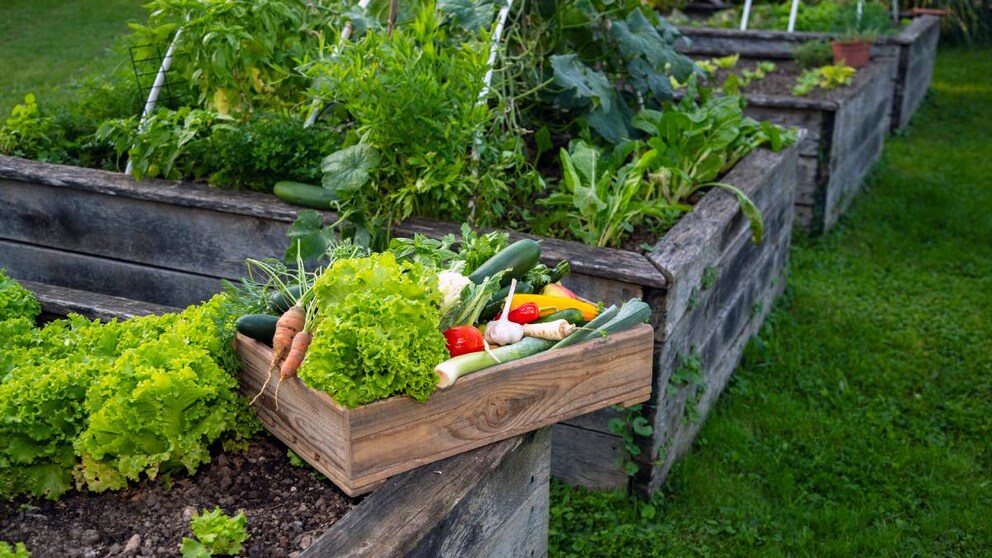
On the balcony and in the garden, a raised bed can be a useful addition. However, hobby gardeners should note that not every plant finds a suitable home there. myHOMEBOOK explains which plants are not suitable for a raised bed.
A raised bed quickly becomes an eye-catcher. The elevated design makes the plants growing in it stand out particularly well. It also allows for back-friendly gardening. To ensure long-lasting enjoyment of the raised bed, certain plants should be avoided.
1. Deep-rooting Plants
Visually, raised beds seem to offer enough space for particularly deep-rooting plants–but that’s a misconception. They are usually lined with foil inside and thus not deep enough for deep-rooters. Additionally, they lack the stability to safely support larger plants like apple trees, cherry trees, or elderberry bushes.
2. Perennials with Long Lifespans
Maintaining a raised bed involves regularly renewing the soil. Over time, the composting process progresses, and the substrate settles. The soil should then be turned over and enriched with fresh compost. For this reason, it is advisable not to plant perennial shrubs or vegetable varieties in the raised bed. Plants like asparagus, artichokes, or rhubarb would be disturbed by the renewal of the substrate.
Also interesting: When you can start planting the raised bed
3. Invasive Plants
Mint and Jerusalem artichoke have one thing in common: Both plants spread aggressively–both in a regular bed and in a raised bed. Whether at ground level or elevated, spreading plants quickly displace other varieties. To prevent this, they should be cultivated in pots, where they are easier to control.
7 Common Mistakes That Harm Tomatoes in Raised Beds
Fertilizing Zucchini: Top Tips for a Bountiful Harvest
4. Large Plants
Pumpkin, zucchini, and melon should also not be planted in a raised bed. They require a lot of space and spread their vines throughout the entire bed, displacing other plants.
If you still want to grow zucchini in a raised bed, you should choose a sufficiently large bed and ensure enough distance from other plants. Alternatively, pumpkins and similar plants can be placed next to the raised bed with a trellis.
5. Plants with Low Nutrient Needs
When setting up a raised bed, wood cuttings, compost, and soil are layered to create a particularly nutrient-rich substrate. This is ideal for growing vegetables that have a high nutrient demand. However, the situation is different for so-called light feeders. Beans, peas, and herbs like thyme and lavender require only a few nutrients to thrive. Therefore, they should not be planted in a raised bed.
In the first few years, the nutrient content in raised beds is particularly high. If plants with low nutrient needs are grown in them, there is a risk of over-fertilization. The result is plants that grow in unusual ways: They develop long, thin shoots, produce too many leaves, lose flavor, bear fewer fruits, are more susceptible to diseases, and generally have a shorter lifespan.