

July 23, 2026, 9:17 am | Read time: 5 minutes
When the dog days of summer begin, many plants reach their stress limits. Prolonged heat and drought affect them as much as intense sunlight. To help flowers, perennials, and vegetable plants survive this period unscathed, they need proper care. myHOMEBOOK explains when the dog days start and what hobby gardeners should pay special attention to now.
When Are the Dog Days?
Although the sun reaches its highest point in the Northern Hemisphere on June 20 or 21, it usually doesn’t get really hot until about a month later—during the so-called dog days, which last from July 23 to August 23. The reasons for this lie far above our heads: “Our atmosphere is sluggish. It takes about three to four weeks to react to the sun’s peak and the resulting heat,” explains Jörg Riemann, meteorologist and head of the Berlin Wettermanufaktur, in an interview with myHOMEBOOK.
During the dog days, there is usually a significant temperature increase. On average, temperatures reach 77 degrees Fahrenheit, with peaks of more than 86 degrees not uncommon. Depending on air pressure, drought can also occur. If rain falls, it often comes in the form of steady rain. “Typically, we also experience thunderstorms during the dog days. Before that, the air is humid and warm—like in a laundry room,” says Riemann.
How Can You Protect Your Plants from Heat and Drought?
Especially in hot weather, garden plants need a bit more attention to avoid succumbing to drought. Here’s what to keep in mind to help your plants get through the high summer dog days.
Watering Properly
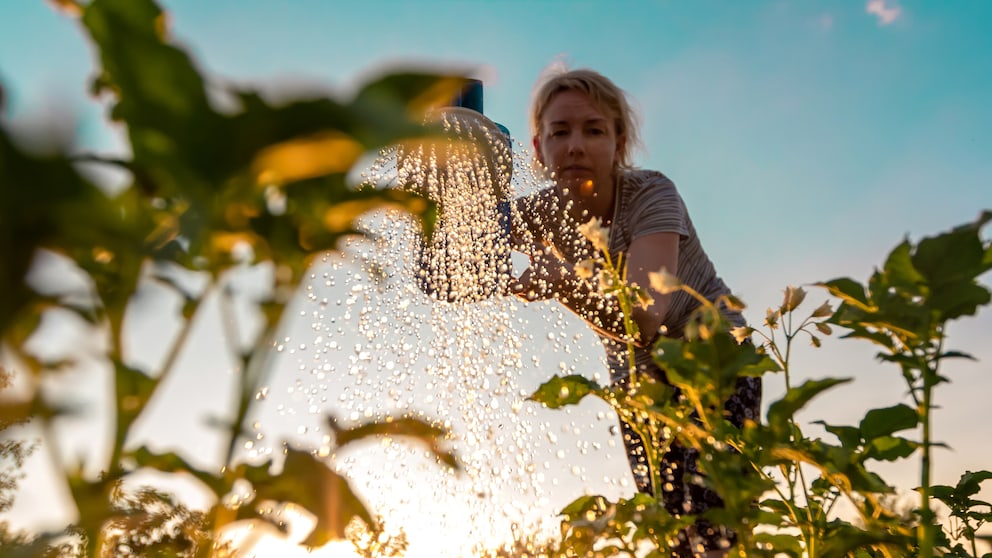
It’s no secret that plants need more water during intense heat phases than usual. Therefore, make sure to water them regularly and sufficiently. The timing is crucial. It’s most important to avoid watering when the sun is directly on the plants. Avoid the hours around midday.
If possible, water in the morning. The ground is still cool, and the water won’t evaporate as quickly. Also, ensure that flowers and leaves don’t get wet. Water droplets act like optical lenses and can cause burns on the plant surface by focusing incoming sunlight.
Provide Shade
Each plant reacts differently to heat and sunlight. Be cautious with sensitive potted and container plants: It’s best to place them in the shade. Sun sails and umbrellas can also help. A good alternative is so-called shade nets, which can easily cover plants. If using fabric cloths, ensure adequate air circulation.
Related: 3 Ways to Adapt the Garden to Drought
Cool with Evaporation
To support cooling, you can use the principle of evaporation. For example, during midday heat, wet the garden path, terrace, or balcony with water. The evaporated moisture slightly cools the surroundings.
How to Improve the Microclimate in Your Garden

The best tips against heat in the house and garden
What the Dog Days Will Be Like in 2026
The dog days are considered the hottest days of the year. Given the already high temperatures this year, some gardeners may worry about how to get their plants through the hot days. Regarding the dog days in 2026, Riemann says: “It currently looks like there will be alternating high-pressure and light low-pressure weather at the start of the dog days. Apart from northeastern Germany, precipitation will remain low, so drought will continue, especially in the west.” At the beginning of August, temperatures will rise further, which may occasionally lead to showers and thunderstorms, as the expert explains. This will remain consistent until mid-August.
For gardeners, this means that occasional light showers are possible, but Jörg Riemann clarifies: “Above all, widespread and more extensive continuous rainfalls are missing, which could compensate for the now accumulated large rainfall deficit.” So, until at least mid-August, ensure that the plants in the garden are sufficiently watered. How the dog days will continue remains open.
What Do the Dog Days Have to Do with Dogs?
The dog days have little to do with four-legged friends. They owe their name to the “Sirius” dog star in the “Great Dog” constellation, known since antiquity. The bright star in the morning sky was seen as the first harbinger of summer heat. Due to the switch to the Gregorian calendar in 1582, the dog star is now visible only from August 30 at the earliest.
However, the old tradition is maintained, and the hottest period of the year is still called the dog days. This means the dog days are not a meteorological but an astronomical event. Scientists believe that the dog days, or the appearance of the dog star, will occur in winter in about 13,000 years.
The heat is therefore not related to the constellation of the Great Dog. Rather, it’s a coincidence. In the summer months, it’s hot because during this phase, the Northern Hemisphere, including Germany, is particularly close to the sun. The sun is actually highest here in June. During this time, the land and water masses of the Earth warm up. In the following months—July and August—the heat is then released, causing temperatures to rise.