


July 4, 2023, 3:02 pm | Read time: 4 minutes
Powdery mildew is a fungal disease that often affects roses. It’s particularly frustrating when it also diminishes the beauty of the blooms. myHOMEBOOK explains how mildew develops on roses and how it can be treated.
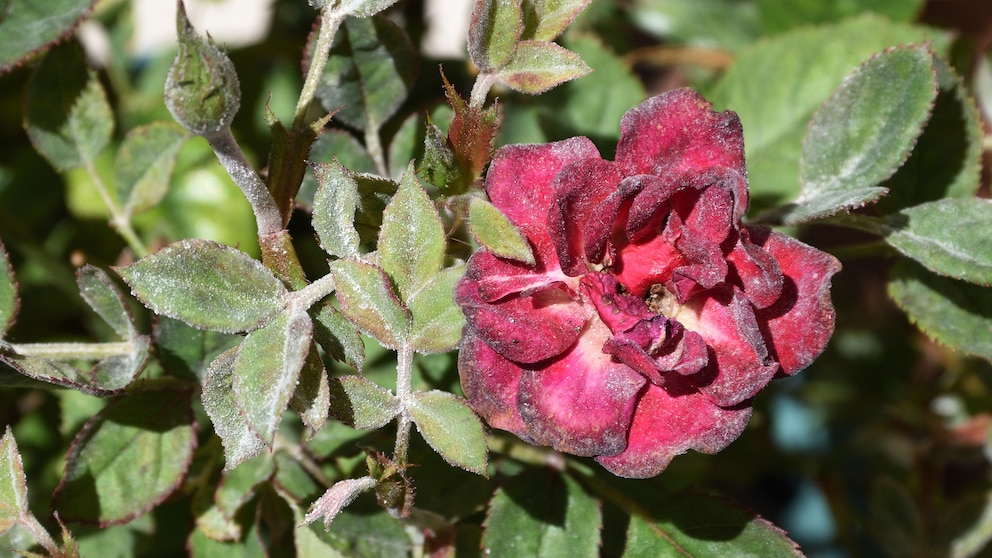
White, powdery coating that forms on the surfaces of leaves, stems, buds, and sometimes even flowers are typical symptoms of powdery mildew on roses. The coating can gradually spread and eventually cover the affected parts completely. Ultimately, powdery mildew can impair flower formation by hindering the development and opening of buds. Infected buds may be small and deformed or may not open at all. Those who tend to their roses year-round will be dismayed by the first signs of a powdery mildew infection. After all, the fragrant blooms of the rose are the reward for the often elaborate care of the plants.
How mildew develops on roses
Powdery mildew on roses is caused by the fungus Erysiphe necator. The fungal spores overwinter on various surfaces such as fallen leaves or infected plant parts and remain dormant until favorable conditions arise. Then they begin to multiply and spread. Favorable conditions for the harmful spread of mildew include:
- Humid and warm weather: Powdery mildew thrives particularly well at high temperatures (between 68 and 86 degrees Fahrenheit) and high humidity. That’s why mildew is also called a “fair-weather fungus.” These conditions promote the growth and spread of the fungus.
- Close planting: Planting roses too closely together reduces air circulation and creates a moist environment–ideal conditions for powdery mildew. Therefore, roses should never be planted too closely, and weeds and grasses should be removed from the soil area.
Also of interest: 5 reasons why roses don’t bloom
- Weak plants: Weakened rose plants, whether due to drought, nutrient deficiency, or other diseases and parasites, are more susceptible to mildew. Healthy and resilient plants have better defenses against fungal infections.
- Lack of sunlight: A location with too little sunlight promotes the development of mildew. Roses need several hours of sunlight per day.
- Sources of infection: Fungal spores can be transmitted by wind, contact with infected plant parts, or gardening tools from one plant to another. Therefore, it is important to remove infected plant parts and clean tools like pruning shears to contain the spread of the fungus.
Treating and preventing mildew on roses
Ideally, mildew on roses should not develop in the first place. Rose gardeners can prevent fungal infections through proper care. However, there are also solutions for treatment in the case of an acute infestation.
- Remove affected plant parts: Leaves, stems, or buds infected with the fungus must be removed and disposed of to prevent further spread of the fungus. However, the infected plant parts should never be composted. They should be disposed of in household waste. Otherwise, the fungal spores could spread again in the garden through the compost.
- Natural plant protection: There are various natural home remedies that help against mildew on roses. These include a mixture of water and neem oil, a solution of baking soda and water, or a mixture of milk and water. These solutions can be sprayed on affected plants, ideally once a week.
- Fungicides: In cases of severe mildew infestation, treatments with a fungicide from the garden center may be necessary. There are products available that are suitable for roses and specifically against mildew.
- Ventilation and sunlight: Too much moisture promotes the growth of powdery mildew. Therefore, all parts of the rose should receive adequate ventilation and sunlight. This prevents the formation of persistently moist plant parts that provide ideal growth conditions for fungi.
- Watering: Roses should always be watered only at the base around the root ball. If the plant is continuously watered with a sprinkler, for example, the leaves remain wet longer and again provide a breeding ground for fungal infestation. Additionally, the soil should be well-loosened so that irrigation water can quickly seep away and no waterlogging occurs.
- Resistant varieties: Those who choose very resistant rose varieties from the outset will have fewer problems with diseases like powdery mildew in the long run.
- Regular inspection: When watering or fertilizing, leaves should be regularly inspected from all sides for fungal infestation or pests. The earlier an infestation is detected, the easier it is to combat.