


September 2, 2026, 1:33 pm | Read time: 3 minutes
September marks the beginning of meteorological fall. After the strains of summer, the lawn now needs some attention to get through the cold season well. myHOMEBOOK spoke with an expert to explain what tasks are due in September.
Aerating
September is a good time to aerate the lawn, explains Dr. Nonn, former chairman of the German Lawn Society. Provided you haven’t already done this in the spring. “In September, there’s still enough time for the gaps that inevitably occur after aerating to close up before winter,” the expert explains. Ideally, the lawn should be as dense as possible before winter. Otherwise, there’s a risk that during this time, when the grasses are less competitive, other plants will settle in, which you’ll have to laboriously remove again in the spring.
More on this: How to Get Rid of Lawn Thatch Long-Term
Seeding
September is a good month for overseeding—especially if you’ve aerated beforehand, explains Dr. Nonn: “We have relatively warm soil, and if it rains naturally, it’s even better. Then there are ideal germination conditions, and by the end of October, a really nice and dense lawn will develop again.” There are special lawn mixtures that can be used for overseeding in September. By the way, a good overview of which mixtures are suitable can be found at the German Lawn Society.
Fertilizing
Fertilizing is not necessarily required, the expert explains. It’s important to take a close look at the lawn and then decide. “If it’s nice and green, then I don’t need to do anything regarding nutrient supply for now. But if it starts to show signs of hunger, I would fertilize again to ensure it grows dense, stays dense, or becomes denser.”
However, the expert recommends using a special fertilizer at this time of year: “I would go with a potassium-based fertilizer, so use a fall fertilizer in September to further strengthen the grasses.” The expert advises against nitrogen-rich fertilizers for the lawn in September. Using this fertilizer would support height growth, which is no longer relevant in the fall.

Expert Reveals How to Prepare Your Lawn for Winter

The Care Your Lawn Needs in June
Mowing
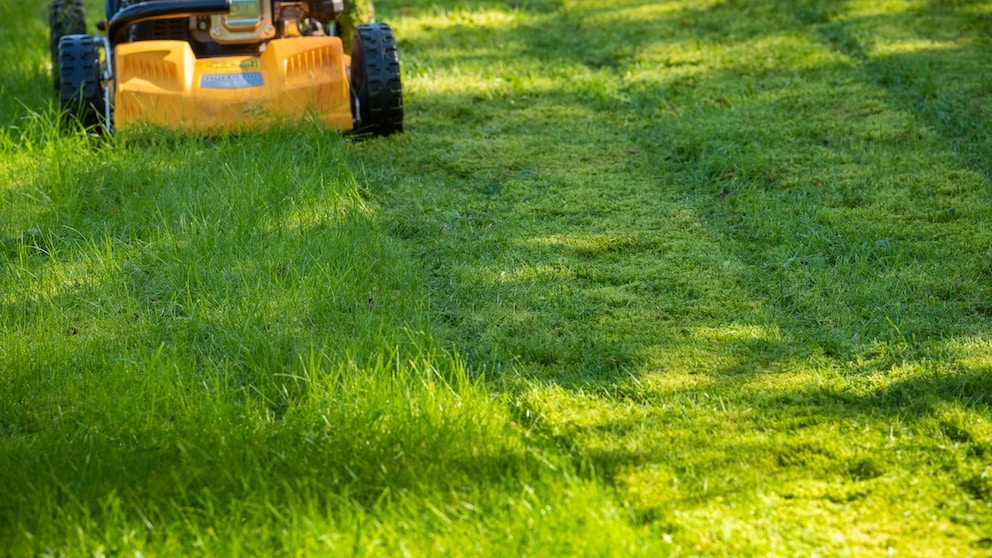
In September, the weather is rather unstable. In some places, there’s a lot of sunshine, while in others, there’s quite a bit of rain. Therefore, the lawn doesn’t grow evenly everywhere. Dr. Nonn recommends observing the lawn and only mowing when growth is visible and mowing is necessary.
Avoid Moisture on the Lawn and Prevent Fungal Diseases
In September, the days are usually still warm, but the nights are already cool. This causes dew to form on the lawn. These conditions are ideal for the development of fungal diseases, explains Dr. Nonn. “If you see dew on the lawn in the morning, you should sweep or brush it off. I do this with a broom. If there are two of you, you can simply lay a hose down and drag it across the lawn.”