


March 13, 2026, 10:42 am | Read time: 3 minutes
Sand can help the lawn grow dense, even, and healthy. A lawn expert explains on myHOMEBOOK when sanding is worthwhile and how to do it correctly.
Garden owners who want a dense, green, and well-maintained lawn must regularly perform certain care measures. In some cases, sanding the lawn is also part of the process. Dr. Harald Nonn from the German Lawn Society explains the benefits of this method and how to apply it correctly upon myHOMEBOOK’s request.
Overview
Why Should You Sand the Lawn?
Sanding the lawn promotes the well-being and development of grass plants in several ways. “Sand makes it permeable, even, and reduces lawn thatch,” says Dr. Nonn. So if you have an impermeable and thatched lawn, it might be worthwhile to apply sand to the area.
Related: How to Get Rid of Lawn Thatch Long-Term
How Much Sand Do You Need?
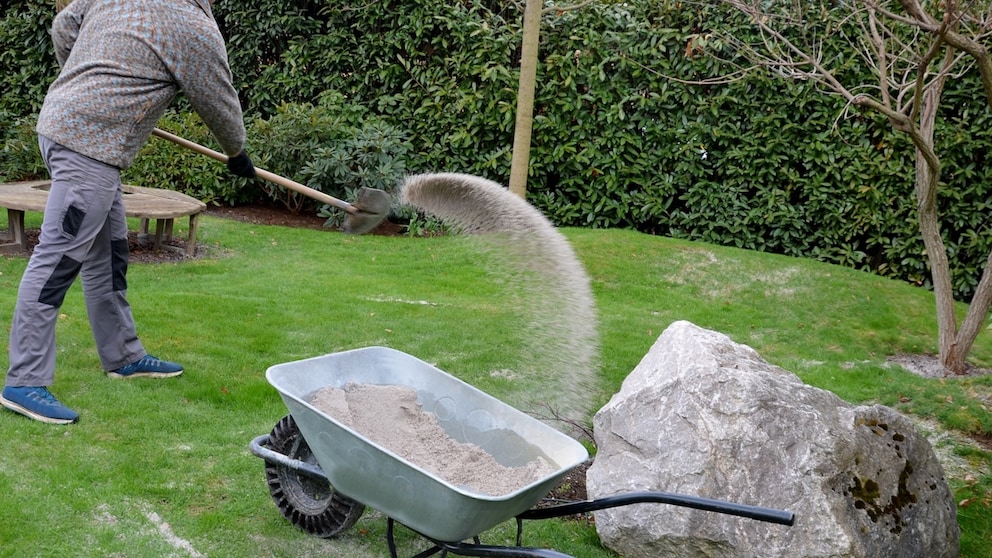
“You must not underestimate the effort,” says Dr. Nonn. The expert calculates an example: For a sand application of three millimeters, you would need a total of 600 liters of sand for an area of 200 square meters. That is roughly equivalent to one ton.
“The sand must also be evenly distributed,” adds Dr. Nonn. If the lawn is aerated and the holes are to be filled with sand, the amount would even double.
Which Sand Is Suitable for the Lawn?
When sanding, you should use washed quartz sand with a grain size of 0.2 to 0.4 millimeters. This prevents unwanted seeds from entering the soil. For a lawn area of ten square meters, you need about 100 liters of quartz sand.
Clarify Soil Condition and Lawn Quality
For a lush, green, and dense lawn, the soil quality and composition are particularly important. Only on the right soil can grass plants thrive optimally. The acidity and alkalinity levels, nutrient content, minerals, trace elements, and consistency (clayey, sandy) are crucial.
If you want to know precisely, you should take soil samples and have them analyzed in a specialized laboratory. Prices vary depending on the scope of the analysis, but they provide a good indication of optimal fertilization.
Should you scarify lawn in the fall? A professional explains
The Best Tips Against Lawn Thatch in the Garden
Prepare the Lawn Properly
To sand, you must prepare the lawn accordingly. First, remove wild herbs and weed them with the root. Dig out deep-rooted dandelions, then mow the lawn and thoroughly aerate it. This loosens the soil and removes thatch in the root system of grass plants as well as moss. The turf is better supplied with oxygen, benefiting the beneficial microorganisms in the soil.
Tip: Sand and Fertilize the Lawn Simultaneously
After aerating, two to five liters of washed quartz sand from the building materials trade are needed per square meter of lawn area. You can also apply fertilizer simultaneously. Depending on soil quality, add lime, horn shavings, compost, or special lawn fertilizers.
If you also sow grass seeds, you promote the density of the lawn. Simply mix the additives under the sand. With one operation, you have provided the lawn in multiple ways. Afterward, the lawn should be watered extensively.