


April 18, 2024, 3:26 pm | Read time: 2 minutes
Mulching is essential for garden plants. Many people don’t do it because they simply don’t know how. Yet, it’s not that complicated.
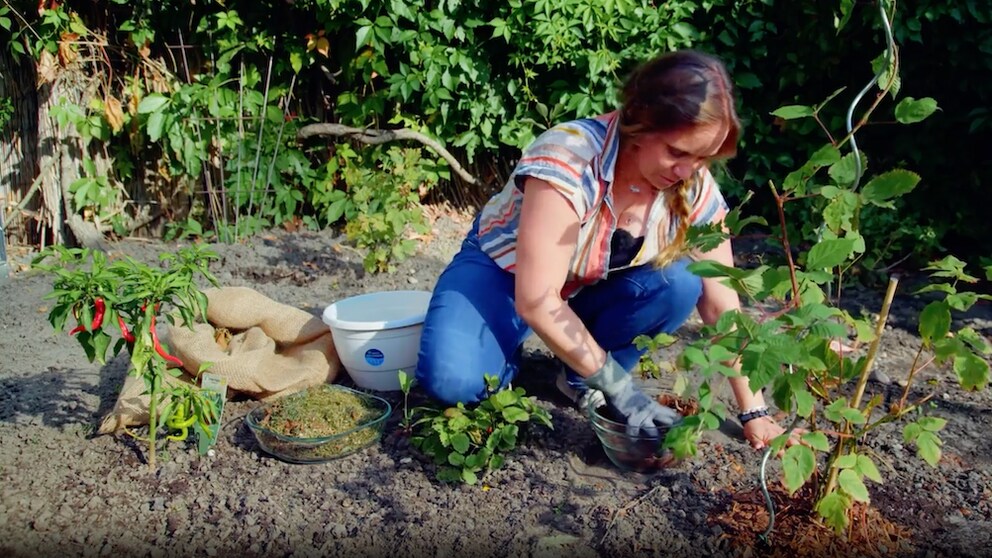
Almost anything you find as clippings in the garden can be used for mulching. Whether it’s mowed grass or hedge trimmings—anything leftover and healthy can be used. myHOMEBOOK editor Franka Kruse-Gering reveals in the video how to do it right and what to keep in mind.
Why Mulching Is So Important
You should consider mulching both in spring and fall, as it serves two important purposes. In spring, mulching prevents the increasingly strong sun from evaporating the plants’ water. This can save you a few rounds with the watering can or garden hose.
In fall, mulching makes plants winterproof. When snow and frost arrive in winter, the material protects the plants well against the cold and ice, acting like a warm blanket.
Also interesting: How Effective Is Mulch Made from Shells?

Beware of Late Frost: How to Protect Your Plants from the Cold

Why the Smell of Freshly Cut Grass Is a Warning Signal
How to Mulch Properly
Mulching is relatively simple. You only need suitable material and ideally gloves. The material is simply lightly piled around the plants.
By the way, mulching is also useful on balconies. You use a little less material and line the flower boxes with it.
What Can Be Used for Mulching?
Basically, you can use anything from the garden that is leftover from work. The most common mulching material is bark mulch, which can be purchased at garden centers or hardware stores.
Straw is also a good material. You can find it in the small animal section. However, there are cheaper options: Grass clippings are excellent for covering plants and beds. However, you should let the material dry a bit after mowing to prevent it from rotting. Leftover material from hedge trimming can also be chopped up and used for mulching.