


July 5, 2023, 1:59 pm | Read time: 3 minutes
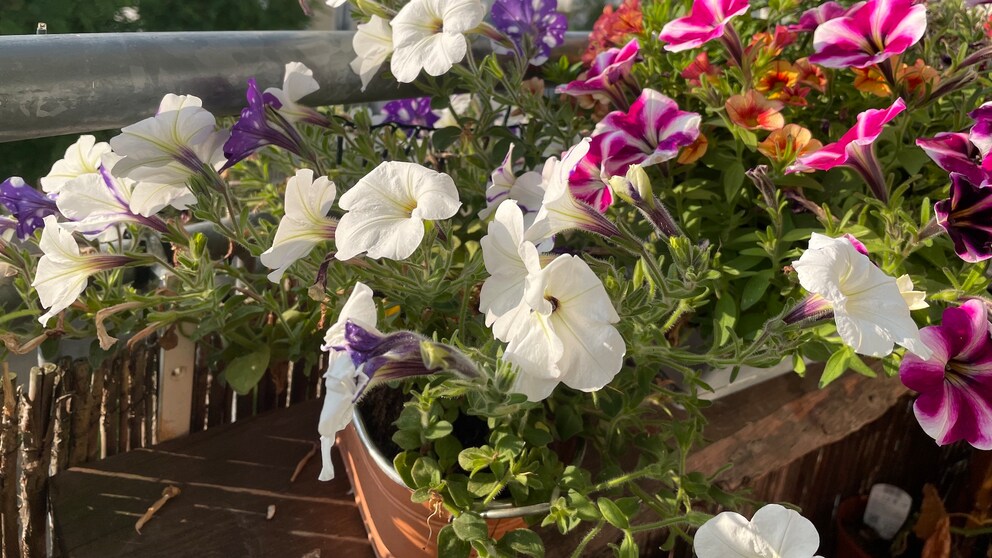
While strolling through the garden center, you spot them–bright blue petunias with small spots. They look like a starry sky. Quickly, they’re bought and planted on the balcony. But after a while, the disappointment sets in: The petunia loses its beautiful color.
A lot of money and effort has been invested in decorating the balcony, and then the petunias start to fade and lose their color. Whether they are trailing or non-trailing petunias doesn’t matter. Instead of bright blue, they turn white. What could be causing this, and what can be done about it? myHOMEBOOK consulted an expert.
Overview
Why is my petunia losing its color?
Nature can be puzzling. You buy a colorful petunia, and shortly after, it fades and completely loses its color. But there are reasons why the petunia has lost its color.
Petunia has too little light
A petunia losing its color might be due to an incorrect location. The best spot for a petunia is in the sun, according to plant doctor René Wadas in myHOMEBOOK: “If a bloom doesn’t get enough UV light or certain wavelengths are missing, some colors can’t develop.” If it’s a trailing petunia, it’s advisable to hang it in a place with plenty of sunlight and little wind.
The plant has too few nutrients
Petunias, like all balcony and bedding plants, are known as heavy feeders. This means they rely on regular fertilizer applications due to their high nutrient needs. Long-term fertilizers are not an option, says Wadas, as they wash out quickly. Instead, it’s better to use a good liquid fertilizer with a high iron content once a week. The choice of fertilizer is crucial. Avoid cheap products, the expert explains: “You don’t have to buy the most expensive fertilizer; mid-priced ones are sufficient. They have everything we need.” It’s important that it contains iron, as this mineral is particularly needed by petunias.
Overwatered
Watering is directly related to adequate fertilization. Especially on hot days, you might water your petunias more often, but this can also cause them to lose their color. The more you water your plants, the more nutrients are washed out of the soil, Wadas says. These need to be replenished.
Also interesting: Petunias and million bells are perfect partners in a pot
How else can you care for your petunias?
In addition to regular iron supplementation to prevent color loss, it’s important to keep an eye on your plant. “Petunias are always somewhat susceptible to aphids, so you should watch for that. If the petunia is infested with aphids, you can simply spray it with some black tea, which will prevent them from multiplying as much.”
Don’t forget to deadhead. “There are varieties that clean themselves, but these large-flowered ones need to be deadheaded occasionally,” the expert explains in his book “With the Plant Doctor Through the Gardening Year.” For deadheading, simply pinch off the unsightly blooms; scissors are not necessary. Scissors are only needed for a light pruning. Such pruning is also advisable during blooming, Wadas says: “[…] so they can sprout again, branch out, and then form new blooms.”