


July 27, 2026, 9:13 am | Read time: 3 minutes
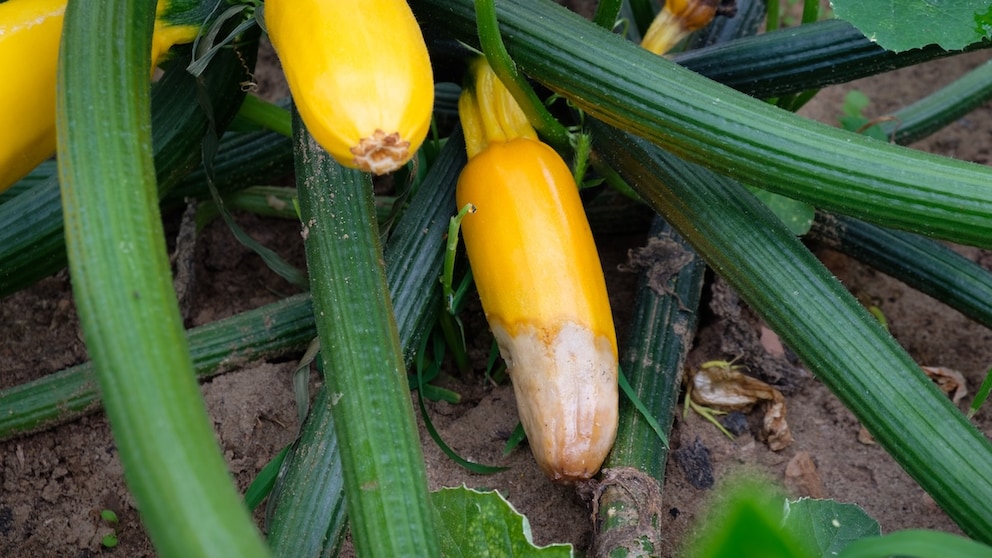
Zucchini is one of the most popular summer vegetables and can be easily grown in your own garden, not just bought at the supermarket. However, hobby gardeners know the problem: Either the harvest is particularly abundant, or the fruits spoil on the plant. If the zucchini rots at the tip, it is often due to what is known as blossom-end rot. The fruit becomes soft at the blossom end, discolors, and eventually begins to rot. MyHOMEBOOK explains which care mistakes can promote this problem and how to prevent blossom-end rot.
How Does Blossom-End Rot Occur in Zucchini?
Blossom-end rot is not caused by a fungus or pest. It is a physiological disorder that can be triggered by a calcium deficiency.
Calcium Deficiency
Calcium is essential for cell structure and the stability of cell walls, among other things. The nutrient is also important for water regulation in the plant. If the blossom end does not receive enough calcium, the cells become unstable and burst. This can be seen in black, sunken spots. Hobby gardeners should therefore ensure that zucchini is supplied with a balanced fertilizer.
Uneven Water Supply
Even if there is enough calcium in the soil, a deficiency can still occur. Water is necessary for calcium to reach the plant and be transported within it. An uneven water supply is a hindrance. Zucchini grows quickly. Especially during the growth phase, they should be regularly and evenly watered. If there is too little water, the tip suffers first.
Particularly during the growth phase and in hot weather, it is important to ensure that the plant receives enough water.
Root and Soil Problems
Too much water can also be harmful. If the roots remain in dense, wet soil for too long, it can lead to waterlogging and root rot. With damaged roots, the zucchini plant can absorb less water and nutrients. A possible consequence is that the zucchini rots at the tip.
Also interesting: 4 Reasons Why Zucchini Leaves Turn Yellow
Imbalance with Other Nutrients
A balanced fertilizer is essential for harvesting delicious, crunchy zucchini. An unbalanced fertilizer, such as one with too much potassium, magnesium, or ammonium, can block calcium absorption.
Overfertilization with Nitrogen
Nitrogen, like calcium, potassium, or magnesium, is an important plant nutrient. Zucchini should also receive enough nitrogen—it is important for the plant’s growth, among other things. However, too much can cause harm. An excess of nitrogen leads to unbalanced growth in most plants, including zucchini. This is also known as “leggy growth.”
Due to the excess nitrogen, the plant grows too quickly and invests a lot of energy in developing shoots and leaves. Fruit formation, on the other hand, is neglected. Less water and nutrients reach the fruits. As a result, the plant tissue becomes soft and more susceptible to diseases and rot.
Lack of Pollination
A lack of or insufficient pollination can also lead to rotting tips in zucchini. It can happen that a zucchini begins to grow even though it has not been pollinated or only partially pollinated. The fruit initially develops normally but then suddenly stops growing and begins to rot at the tip.
To prevent this, garden owners should create a bee- and insect-friendly garden. This includes planting flowering plants, avoiding chemical pesticides, and providing nesting sites and water sources. Alternatively, the plant can also be pollinated by hand.