


May 11, 2026, 4:19 am | Read time: 4 minutes
The goal of cleaning is usually not just to make surfaces and objects clean, but also to make them appear clean. However, when it comes to cleaning mirrors, the latter is not always achieved—often due to common mistakes that are frequently made.
Mirrors are indispensable not only in the bathroom, for example, for the morning grooming routine. When used correctly, they can also serve as a design element: They make rooms appear larger, reflect light, and brighten dark areas. However, a clean surface is essential for this. Streaks and spots can quickly become distracting and make the reflection appear unclean. myHOMEBOOK reveals which mistakes to avoid when cleaning mirrors.
1. Mistake: Too Much Cleaning Solution
Polishing until your arm gets tired because the streaks on the mirror just won’t disappear? One possible cause could be the amount of cleaning solution mixed into the cleaning water. While cleaning agents are supposed to make the mirror shine, using too much can leave residues and lead to streaks.
Often, no additional cleaning solution is needed to clean mirrors. A soft, slightly damp cloth is usually enough to clean the surface. Simply polish with a dry cloth afterward. Only for heavier dirt, such as in the bathroom, should you use a bit of dish soap. A common mistake is to dampen the cloth first and then apply the dish soap directly to it. This disrupts the water-to-cleaning solution ratio, and streaks are inevitable. Better: Add the dish soap to the cleaning water.
2. Mistake: Acidic and Abrasive Cleaners
A good, large mirror comes at a price. If you want to admire your reflection in it for a long time, you should be careful not to damage the mirror with faulty cleaning methods. Acidic or abrasive cleaners are particularly unsuitable. They attack and damage the surface, leading to what is known as mirror rot. This refers to the destruction of the protective silver layer. Corrosion is recognizable by dark and rusty spots that “eat” from the edge to the center of the mirror. In most cases, mirror rot is irreversible.
It’s all the more important to choose the right cleaning agents. Mirrors are among the areas in a home that rarely become a hygiene problem. Therefore, it is sufficient to clean mirrors with a little water. Bathroom mirrors are an exception. Here, cosmetic products and water splashes can quickly soil the surface. To remove more stubborn residues, you can add a bit of dish soap or curd soap to the cleaning water.

A Simple Trick Will Make Your Shower Shine Again

7 Common Window-Cleaning Mistakes and How to Avoid Them
3. Mistake: Rough and Scratchy Cleaning Cloths
If a mirror surface appears dull and matte over time, it’s worth taking a closer look. When you get close to the surface, you might discover many fine scratches. These can result from a mistake in cleaning mirrors, namely, using rough and scratchy cleaning tools. They act like sandpaper and leave micro-scratches on the mirror surface.
It’s better to use soft cleaning cloths to clean mirrors. However, even with them, you should ensure they are lint-free and clean.
4. Mistake: Spraying Mirrors Directly
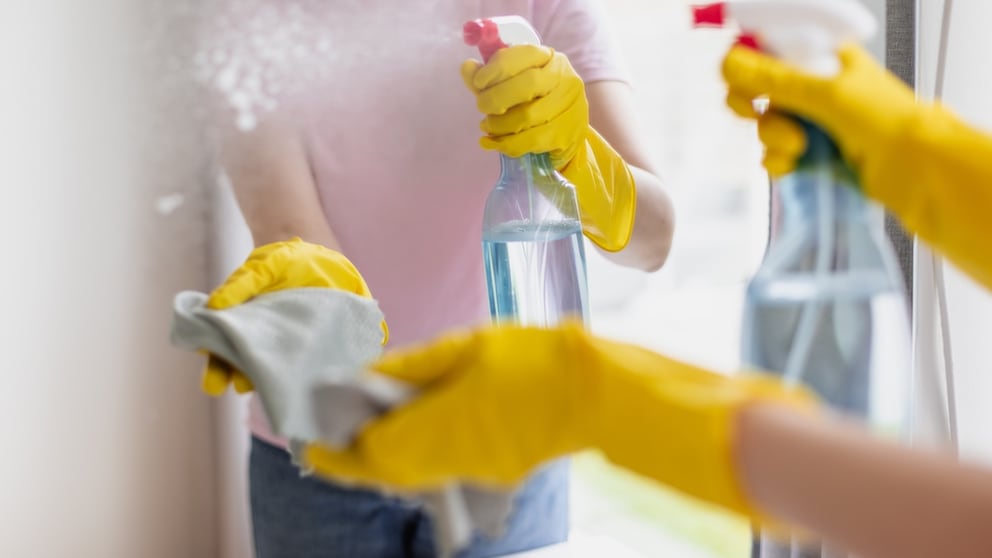
When cleaning mirrors, people often reach for special mirror cleaners in spray bottles. This is deceptive packaging, as it tempts you to spray the cleaner directly onto the surface. There are even two reasons against spraying mirrors directly. First, the liquid can run behind the silver layer and damage it, leading to mirror rot. Second, direct spraying can result in uneven drying, causing streaks.
It’s better to apply the cleaning solution—water with or without a cleaning agent—onto the cloth first.

Cleaning Mirrors Without Cleaning Agents
“Cleaning mirrors can be really frustrating when streaks don’t disappear even after long polishing. I used to feel the same way. Large full-length mirrors were especially a test of patience. Since I started cleaning my mirrors with just water, I no longer have this problem. It might sound unusual at first. But one should consider that mirrors are generally not touched or heavily soiled. Only for stubborn dirt do I use a little bit of soft soap (my preferred cleaning agent for almost everything in the household).”