

November 26, 2025, 9:48 am | Read time: 4 minutes
The weekly cleaning of your apartment or house is a routine for many. Besides the bathroom, living room, and bedroom, the kitchen should not be neglected. myHOMEBOOK shows you four things you should never forget in your weekly cleaning routine.
Admittedly, a lot accumulates in the household over a week. However, if you want to focus on the essentials while cleaning, you should regularly clean these areas in the kitchen. They make the biggest difference for cleanliness and hygiene.
1. Countertops
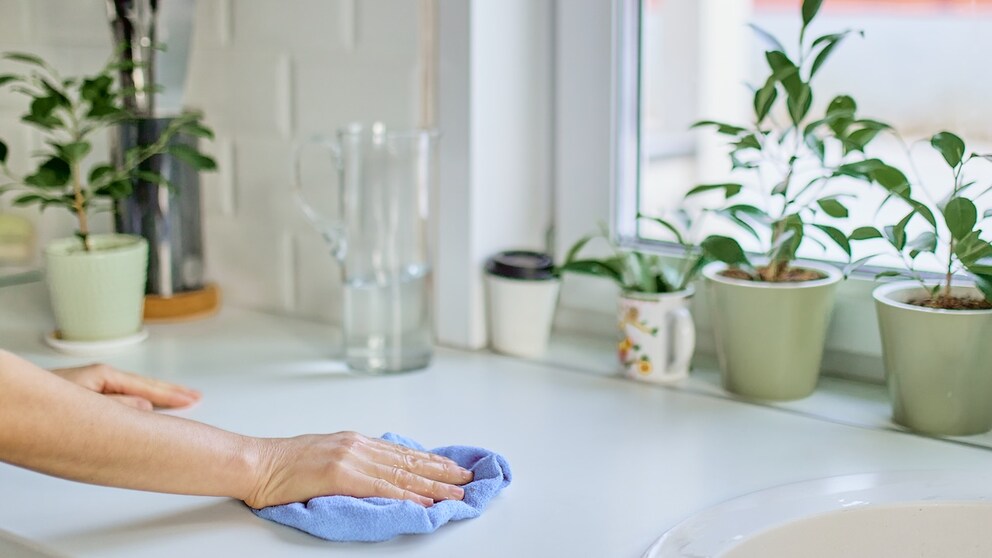
Whether for cutting, kneading, or as a storage area, when working in the kitchen, the countertop is sure to be used. Not only can food residues accumulate here, but also germs, especially when working with raw meat or fish. Therefore, the surface should be cleaned after each use, as it is one of the most sensitive areas in the kitchen when it comes to hygiene.
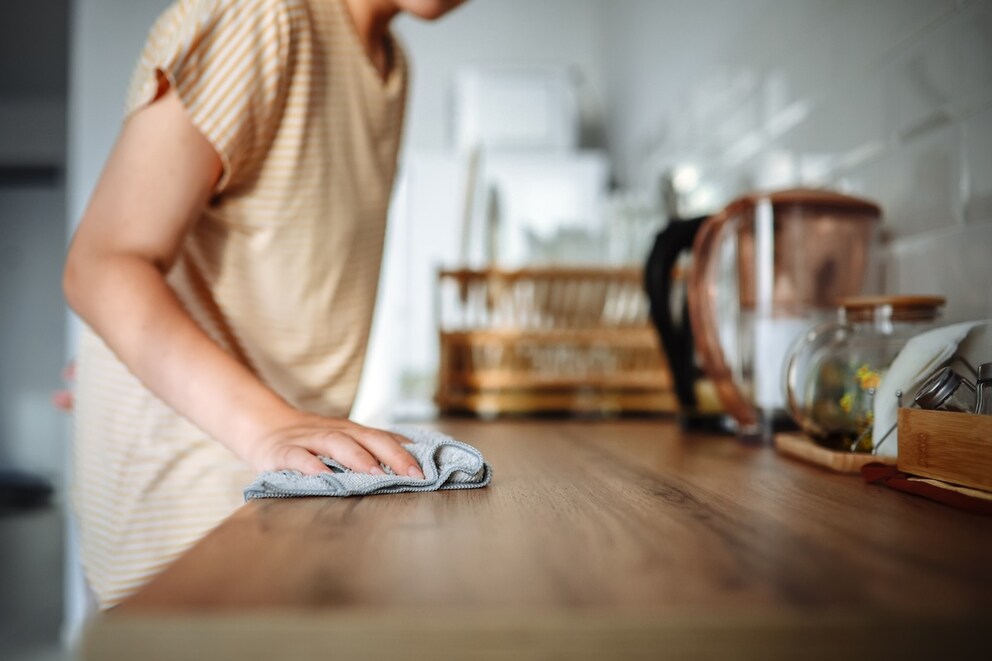
How the countertop should be maintained depends on the material. For wood, it is important that the surface has been treated with a special oil to prevent bacteria from settling. For daily cleaning, a damp, but not too wet, cloth is sufficient.
Countertops made of natural stone, such as granite or marble, are sensitive to acid, so acidic cleaners should be avoided. A mild cleaner and lukewarm water are better choices here. Plastic surfaces, on the other hand, can be easily wiped with vinegar or all-purpose cleaner.
2. Floor
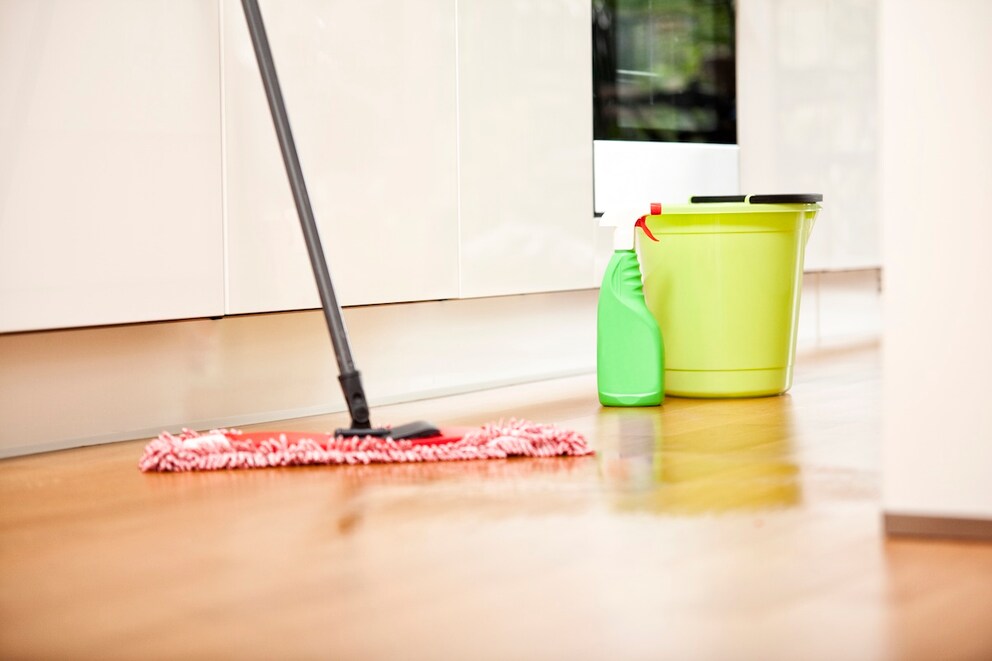
In the kitchen, crumbs, grease, or other food residues quickly end up on the floor. To prevent bacteria or unpleasant odors from forming, the kitchen floor should be thoroughly cleaned once a week.
It’s best to first remove loose dirt with a broom or vacuum cleaner and then wipe with a damp, but not too wet, cloth. A mild all-purpose cleaner or a little vinegar essence is completely sufficient. Special care should be taken with wood and laminate floors: Too much water can cause the material to swell and leave unsightly damage.

Expert Reveals How Often You Should Mop the Floor

Why You Should Regularly Blacken Old Stove Burners
3. Trash Can
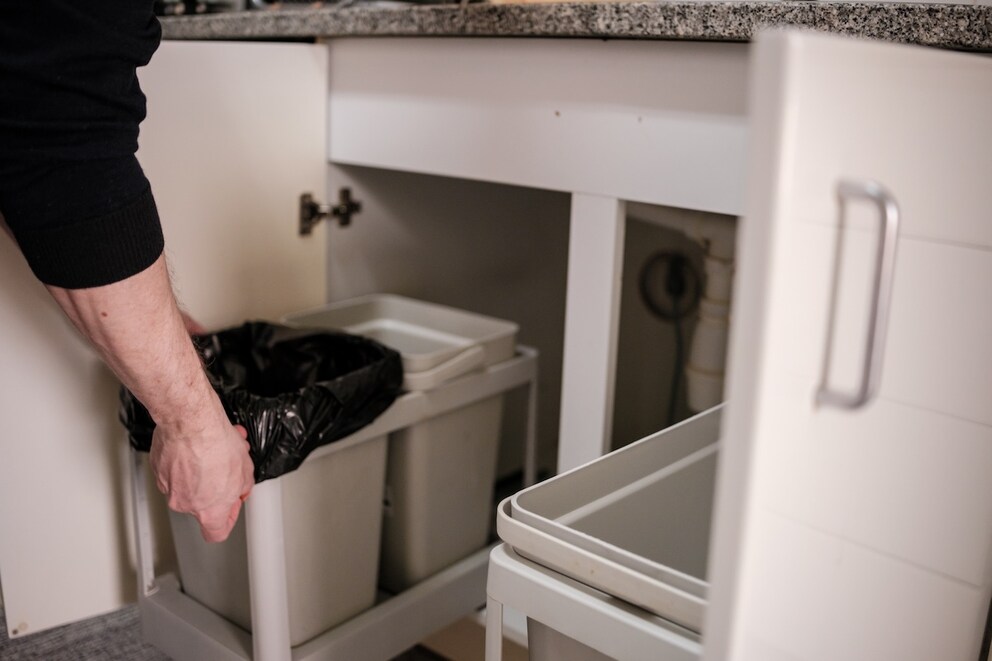
It’s hardly surprising that the trash can is one of the most used items in the kitchen. At the same time, it is also one of the biggest breeding grounds for bacteria, as not only packaging but also food scraps end up here. To prevent unpleasant odors, not only should the trash be regularly disposed of, but the can itself should also be thoroughly cleaned once a week.
Warm water with a little dish soap or an all-purpose cleaner is suitable for this. Before putting in a new bag, the can should be completely dry. Baking soda or citric acid can also help against stubborn odors, providing a fresh scent and additional hygiene.
Also interesting: 4 Things in the Kitchen You Don’t Need to Clean Weekly
4. Stove
Do the noodles boil over and the fat splatter while frying? Spills quickly occur on and around the stovetop while cooking, which can burn into the surface over time. Therefore, the stove should also be cleaned regularly, at least once a week.
It is important that the burners are completely cooled before cleaning. For ceramic cooktops, neither scouring powder nor sharp objects should be used, as they can damage the surface.
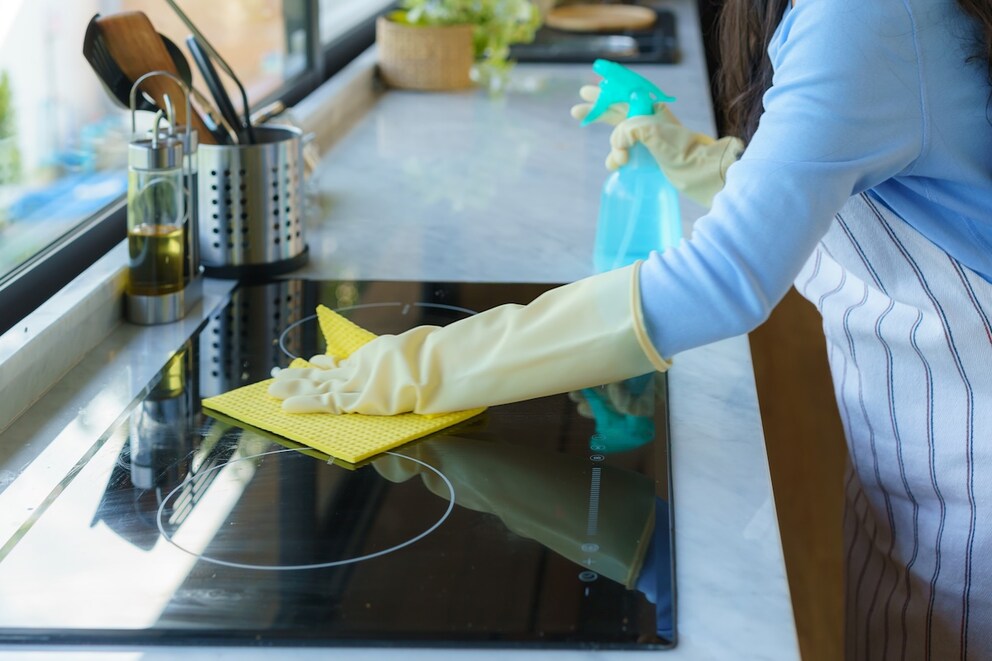
For light stains, it often helps to place a wet cloth on the cooled burner for a few minutes. The residues can then be easily wiped away with the cloth. For more stubborn dirt, home remedies like a mixture of baking soda and warm water can help loosen the residues and get the stove clean again.
Also important: Cleaning cloths and sponges should be regularly cleaned and replaced in the kitchen. The German Environment Agency recommends washing cleaning cloths at 140 degrees Fahrenheit in the washing machine and regularly replacing sponges. It is also important to thoroughly wash and dry all cleaning utensils after use to prevent germs from forming.