

August 30, 2026, 7:17 am | Read time: 4 minutes
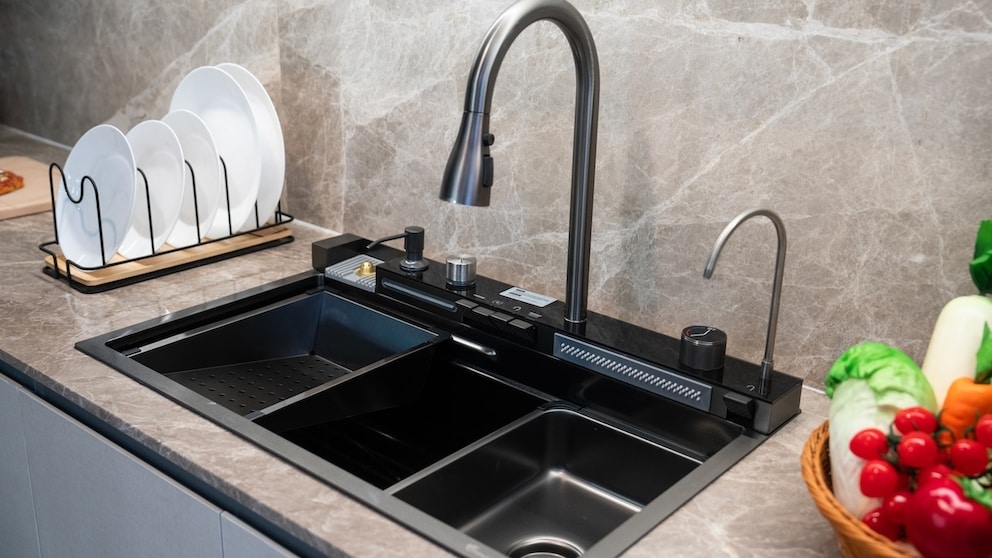
Black sinks look modern—at least as long as they are clean and stain-free. On dark surfaces, water spots and lime deposits are particularly noticeable. An unusual cleaning tip is said to help with this. Cockpit spray is supposed to help clean black sinks, making them shiny and water-repellent. But does it really work? myHOMEBOOK asked an expert.
Follow myHOMEBOOK on WhatsApp now
Why Black Sinks Look Stained So Quickly
Whether granite-look, mineral cast, or black stainless steel, water droplets left behind in black sinks are a common annoyance, and constant cleaning can quickly become tedious. As water evaporates, dissolved minerals can remain on the surface. In hard water, these are primarily lime components that appear as light rings or dull spots.
Additionally, a black surface highlights small residues more than a light sink. Even if the sink is hygienically clean, it can quickly appear unkempt.
Regularly wiping dry is the simplest way to avoid water spots. However, if you don’t want to reach for a cloth after every use, it’s understandable to look for a solution that keeps the surface shiny longer and as resistant as possible to new droplets.
How the Trick Is Supposed to Work
Before using the spray, the sink must be thoroughly cleaned. It’s best to use a cleaner suitable for the specific sink. Then, the entire sink should be dried with a clean, dry cloth. Now the spray comes into play. Spray it evenly on the sink from about 8 inches away and let it dry briefly.
Also interesting: Can a lemon remove dirt in the oven?
What Cockpit Spray Is Supposed to Do
Cockpit sprays are primarily used for maintaining plastic and leather surfaces in cars. Depending on the product, they can clean, refresh, and give the surface a shiny or matte look. These products often contain nourishing or film-forming components.
This effect is likely why the trick with cockpit spray sounds appealing. If a thin protective film forms on the surface, water droplets adhere less strongly. The sink initially appears smoother and shinier, and new water spots may be easier to remove.
Not Every Sink Can Handle the Product
Before reaching for cockpit spray, an important point should be considered. Black sinks are not all made from the same material. Depending on the model, stainless steel, composites, mineral cast, or other coated surfaces may be used.
A product developed for plastic or leather in car interiors is not automatically suitable for contact with a kitchen sink. “This means the product and material do not optimally match,” explains Elke Messerschmidt from the Competence Center for Home Economics.
Additionally, cockpit sprays differ significantly in their composition. Whether a specific product attacks or changes a surface over time cannot be generally answered.

This trick keeps the kitchen sink shining for a long time

Simple Trick Keeps Faucets Clean Longer
Expert Advises Against the Trick
To be on the safe side, you should follow the care instructions from the sink’s manufacturer. These recommendations are specifically tailored to the material.
Another point against the thoughtless use of cockpit spray in the kitchen is that different substances may be present depending on the product. Some sprays, for example, have UV protection. Messerschmidt points out that certain UV protection substances like benzotriazoles, HALS (Hindered Amine Light Stabilizers), or benzophenone can be harmful to the environment: “They dissolve and spread easily in water, are difficult to break down in sewage treatment plants, and can harm aquatic life.”
Moreover, aerosols are created when spraying. “All sprays produce aerosols during the spraying process, which can damage or at least irritate the respiratory tract (depending on the product),” says the expert.
Additionally, a kitchen sink regularly comes into contact with dishes and food. Therefore, you should not apply just any care product to the surface simply because it promises a nice visual effect. Messerschmidt advises ensuring that there is no contact between food and the sink when using cockpit spray.
What Usually Works Better for Black Sinks
Even though the trick sounds tempting, it’s better not to treat your sink with it. The simplest and most effective way is to clean sinks made of granite, ceramic, and stainless steel with dish soap, water, and a soft cloth, then dry them to counteract water and lime spots.
For stainless steel and ceramic sinks, lime and water spots can be treated with a mixture of citric acid and water, according to the expert. However, with a granite sink, caution is advised, as “a mixture that is too acidic can attack the material. Manufacturer instructions for the specific sink should definitely be followed. Some manufacturers recommend applying a thin layer of vegetable oil with kitchen paper after cleaning to seal the surface. Water beads off surfaces treated with oil,” advises the expert.