


April 30, 2026, 1:02 pm | Read time: 3 minutes
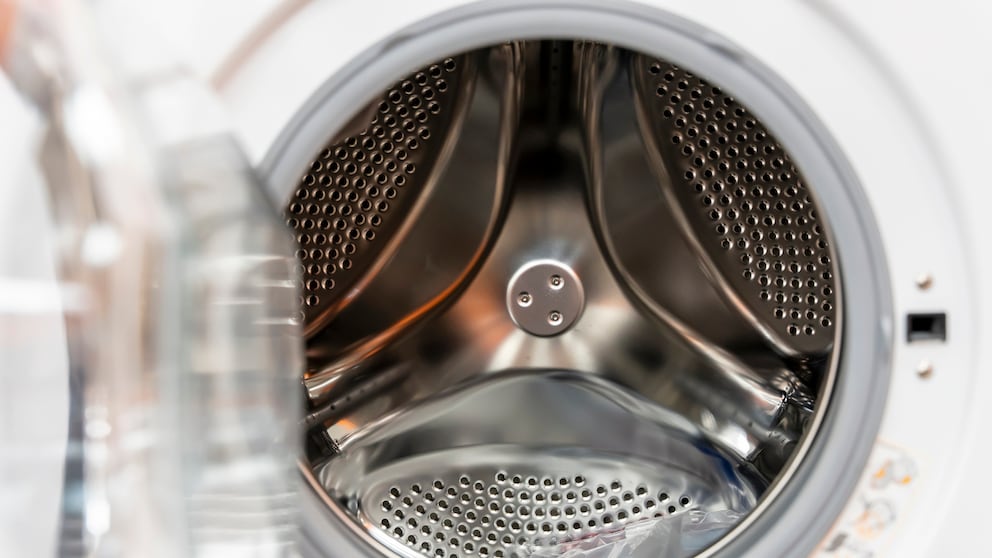
Over time and with regular use, residues can accumulate in the washing machine. This can even lead to clothes not getting properly clean. An internet life hack suggests simply placing a dishwasher tablet in the drum—supposedly making the machine clean again. myHOMEBOOK consulted an expert to evaluate this tip and determine if it is truly useful.
Overview
How Does the Washing Machine Trick Work?
The method of the life hack is simple: A dishwasher tablet is placed in the washing machine, followed by a wash cycle set to 90 degrees Celsius. In the end, you see brown sludge in the drum. The life hack seems to have worked. But is the machine really cleaner afterward? myHOMEBOOK put the trick to an expert test.

Glass Trick With Vinegar and Baking Soda Claims to Clean Dishwasher–Does It Work?

Why Black Laundry Often Smells Musty–and What Helps
What Does the Expert Say About It?
“We generally do not recommend using products contrary to their intended purpose,” says Bernd Glassl from the German Cosmetic, Toiletry, Perfumery and Detergent Association in response to a myHOMEBOOK inquiry. Because anyone who does so is always acting at their own risk. In this context, he also advises against using vinegar for cleaning in the washing machine. Manufacturers also warn against it, as “vinegar, being a volatile acid, can damage metal and plastic parts of washing machines.”
But what about using dishwasher tablets in the washing machine? Glassl sees no problem with running a cycle without textiles but with dishwasher tablets instead of detergent. Even the high temperature of 90 degrees Celsius is not an issue. “Even for the textiles washed afterward in the same machine, I see no problem,” says the expert.
Additionally, the various detergents (machine dishwashing detergents, full or universal detergents) in Germany often have the same components—namely, oxygen-based bleaching agents. However, there are significant differences in other ingredients: For example, fragrances in dishwashing detergents must not transfer to dishes and cutlery, as this would be disruptive when eating or drinking. “In contrast, with laundry detergents, it is usually desirable for the textiles to be scented,” the expert explains.
Where Does the Brown Sludge Come From?
During the cycle, the brown discoloration of the water after the dishwasher tablet wash cycle is clearly visible. Glassl comments: “How brown the water becomes depends, in my estimation, on how many residues were in the washing machine. If the detergent is always added according to the dosing instructions, then no brown sludge should occur.” By the way, the brown liquid is pumped out by the machine after the wash cycle.
The expert suspects another cause: If there is frequent under- or overdosing, it can lead to the accumulation of dirt or detergent residues, which could be responsible for the brown color. Here you can learn how to properly clean a washing machine—and how often to empty the lint filter.