


March 18, 2024, 10:11 am | Read time: 4 minutes
A cutting board is a must-have in any kitchen. It’s essential for cutting fruits, vegetables, meat, and fish without damaging the countertop. Over time, scratches and cuts appear on wooden and plastic boards, creating a haven for germs. Proper cleaning methods help reliably remove pathogens from cutting boards.
As a myHOMEBOOK germ test shows, numerous bacteria and germs thrive on cutting boards–especially those made of wood, which are unhygienic. It’s all the more important to clean the boards thoroughly after use. Here’s how to do it correctly and what mistakes to avoid when cleaning cutting boards.
Mistakes to Avoid When Cleaning a Cutting Board
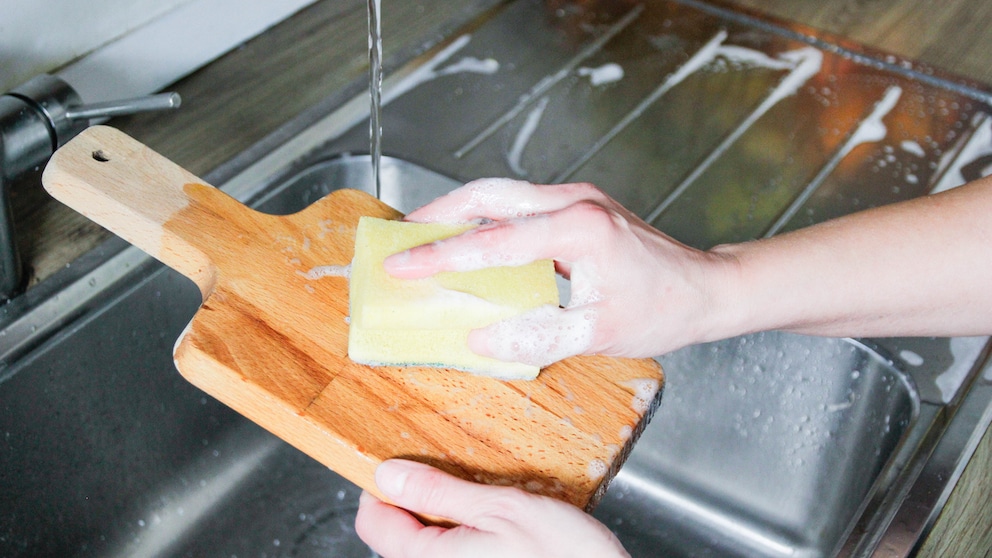
Should you clean a cutting board with a sponge or a brush? Surprisingly, one of these tools is not recommended. People often use whatever is handy, but in the future, you should consciously choose a brush. Microbiologist and household hygiene expert Prof. Dr. Markus Egert advises against using a dish sponge. “A cubic centimeter of sponge contains 54 billion germs.” Therefore, for daily cleaning, a brush with hot water and dish soap is more suitable.
Another mistake to avoid when cleaning a cutting board is not letting it dry properly afterward. To prevent bacteria growth, store the board in a well-ventilated, dry place.
Different Cutting Boards for Vegetables, Meat, and Bread
Different foods harbor different germs. Meat products are particularly concerning. When cutting raw meat on a cutting board, it’s crucial to clean it thoroughly to prevent potential pathogens from transferring to other foods. Despite cleaning, some germs may remain on the board. Therefore, it’s a mistake to cut vegetables, meat, bread, and cake on the same board.
To ensure that, for example, fecal germs from raw meat don’t transfer to a sandwich, use multiple cutting boards for different foods. One for fruits and vegetables, one for bread, and one for meat. The hygiene expert recommends cutting both meat and vegetables only on plastic boards. He would cut only bread and cake on wooden boards.
Related: How Many Germs Are on Wooden Cutting Boards
Tips for Cleaning a Cutting Board
Thoroughly cleaning cutting boards doesn’t require much. Simple household remedies can help remove pathogens. Hot water is particularly effective. At temperatures of 140 degrees Fahrenheit and above, germs and bacteria can be killed. It’s best to heat the water in a kettle and pour it over the cutting board. The water also penetrates any grooves and ridges where germs may reside.
Additionally, antibacterial household remedies aid in cleaning cutting boards. Besides vinegar, citric acid is particularly effective in eliminating germs and bacteria. To neutralize odors, baking soda can be used.
When cleaning and maintaining kitchen boards, pay attention to the material. For example, a plastic cutting board can be easily cleaned in the dishwasher. The water temperature reliably kills germs. However, wooden boards should not be placed in the dishwasher, as they would deteriorate over time. The same goes for marble boards, which are better cleaned with hot water and dish soap.
Tips For Buying and Caring for Wooden Kitchen Utensils
Common Household Hygiene Mistakes and How to Avoid Them
How Often Should You Oil Wooden Cutting Boards?
Regularly applying special wood care oils to wooden cutting boards can help protect the wood and kill bacteria. Oiling significantly contributes to extending the cutting board’s lifespan. In addition to special wood care oils, rapeseed, sunflower, or walnut oil can also be used. The latter gives the wooden cutting board a unique color.
Before applying the oil with a clean brush or cloth, thoroughly clean the board. Then, apply the nourishing oil evenly and let it soak in for about 20 minutes. Excess oil can be wiped off with a clean cloth. Let the cutting board dry in an airy place. This procedure can be repeated every six to eight weeks–or whenever the wood feels brittle.
Removing Stains from Cutting Boards
Stains on cutting boards can result from foods, spices, or dyes. To remove them, you can use the following household remedies:
- Lemon juice and salt: Rub the cutting board with half a lemon and sprinkle some salt on it. Let the mixture sit for a few minutes, then scrub the board with a brush. Rinse with clear water. This method also removes unpleasant odors and germs.
- Baking soda and water: Mix baking soda and water to form a paste. Apply it to the stained areas and let it sit for a few minutes. Clean the board with a brush and rinse with clear water.
- Vinegar solution: Treat the cutting board with a mixture of water and vinegar (1:1 ratio) and let it sit for a few minutes. Then rinse with clear water.