


October 6, 2026, 12:06 pm | Read time: 3 minutes
Leaving dish towels damp is common in many kitchens. After washing dishes, they often remain on the countertop or by the sink instead of being hung up to dry immediately. But does this make a difference from a hygiene perspective? A microbiologist explains the actual role moisture plays and what matters in everyday life.
Don’t Leave Dish Towels Damp
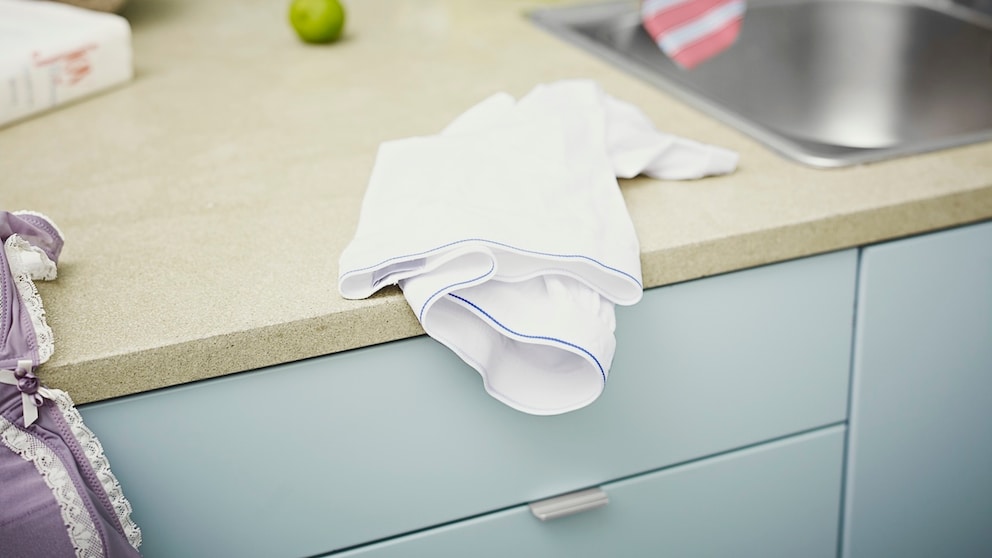
After washing dishes, the dish towel often ends up rolled up on the countertop or carelessly draped over the oven handle. However, from a hygiene standpoint, this is not a good idea. It’s better to ensure it dries quickly. In fact, numerous microorganisms can settle on dish towels. How significant the risk is remains scientifically limited, explains Prof. Dr. Dr. Andreas Podbielski in an interview with myHOMEBOOK. Most studies have only examined whether germs are present. Whether these actually impact human health is hardly researched.
The fact that microorganisms can settle on dish towels is shown by a recent study from China. Researchers examined kitchen towels used by twelve test subjects over ten weeks in daily life. They found so-called biofilms on all towels–communities of microorganisms that adhere to the fibers and are surrounded by a self-produced protective layer.
Also of interest: Every second person changes kitchen sponges too infrequently
6 Common Mistakes When Cleaning Towels
What Exactly Is Behind the 3-Second Rule?
Moisture Helps Some Germs Survive
Moisture indeed plays a role from a hygiene perspective. “Damp towels or dish towels are problematic from a hygiene standpoint because moist germs can survive in them,” says Podbielski. However, moisture alone is not sufficient for the proliferation of microorganisms. For the growth of bacteria, yeasts, or molds, moisture alone is not enough. The microorganisms also need nutrients.
“What’s important is what nutrients are present,” explains the microbiologist. Food residues, which can get into the towel from dishes or when wiping surfaces, can be particularly problematic. Using a dish towel as a cleaning cloth provides germs with significantly better conditions. The towel absorbs not only moisture but also food residues that can serve as nourishment for microorganisms.
Dish Towels Should Only Be Used for Clean Dishes
From a hygiene perspective, the expert recommends a clear separation of usage areas. “To keep a dish towel as germ-free as possible, it should really only be used for drying as clean dishes as possible.” Separate cleaning cloths are a better choice for countertops or spilled food residues. These should be changed and washed regularly. Also, drying hands with the dish towel increases the germ count on the fabric.