


August 24, 2026, 12:35 pm | Read time: 2 minutes
If an unpleasant odor is coming from the kitchen sink drain, it’s often due to deposits from food scraps, grease, and soap. To eliminate odors and clear minor clogs, a simple home remedy that is found in almost every household can help: salt.
Clearing a Clogged Drain with Salt
Cleaning the drain with salt is particularly easy and can be done in a few steps:
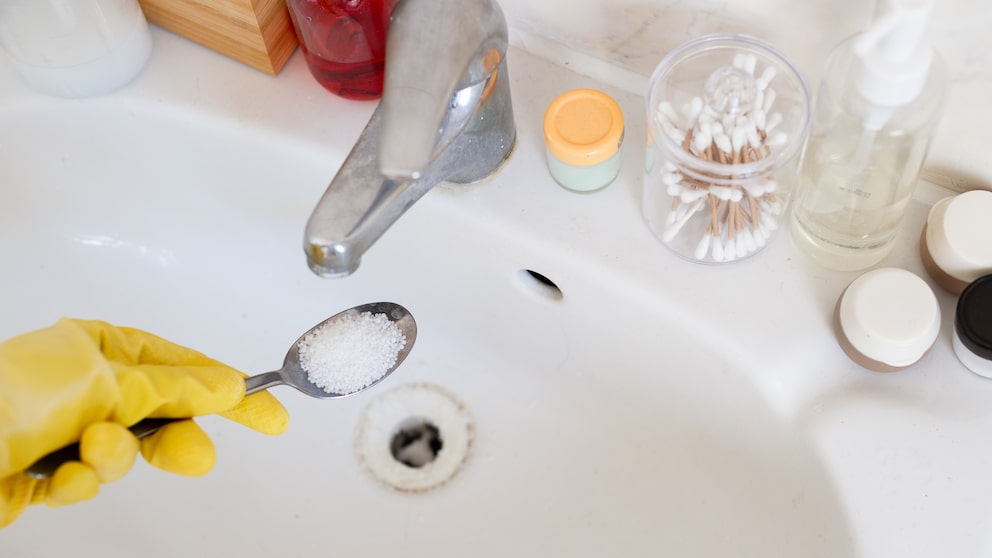
- First, pour about half a cup of coarse salt directly into the drain.
- Then, slowly pour hot, but not boiling, water. This triggers a chemical reaction that removes the deposits.
- Now, wait at least half an hour or better yet, overnight. The salt should be given enough time to work.
- Finally, rinse with hot water to remove all dissolved deposits.
By the way: For particularly stubborn deposits, you can combine salt with another effective home remedy. Simply pour some vinegar into the drain along with the salt and immediately close the sink with the stopper. Alternatively, you can mix salt with three tablespoons of baking soda or baking powder.
Also interesting: A Gurgling Drain Can Be a Warning Sign
Why Is Salt Effective Against Clogs in the Drain?
Salt is not only useful in cooking but also in household cleaning. It is known for effectively binding odors, whether in the refrigerator, shoe cabinet, or drain. The structure of salt crystals allows them to absorb and bind water particularly well. This is called hygroscopy. Moisture usually carries odor molecules. When salt absorbs the moisture, it also takes in and binds the odor molecules, neutralizing or at least significantly reducing the smell.
However, with a smelly, clogged drain, it’s not enough to just eliminate the odor. Salt can also help in removing the deposits in two ways. First, a chemical reaction occurs, which is enhanced by hot water. This can soften and dissolve the deposits.
Secondly, the crystal structure of salt consists of small, hard, and angular grains. These act abrasively, like a mild scouring agent, when they come into contact with surfaces or deposits. When you pour salt into the drain, the coarse grains can help mechanically scrub away dirt or deposits during rinsing, similar to a scouring pad, but on a much smaller scale.