


September 20, 2026, 10:41 am | Read time: 4 minutes
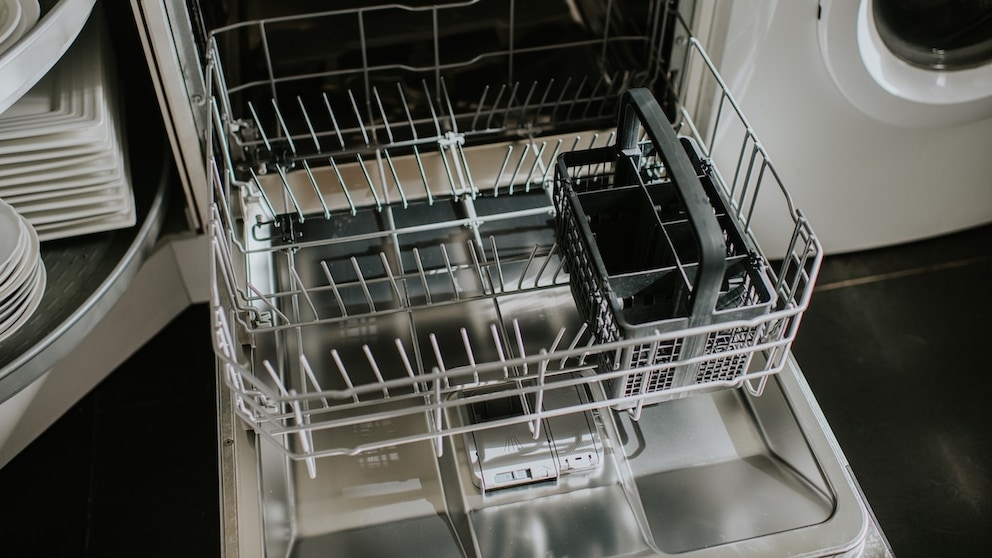
The filter in the dishwasher usually operates invisibly. It is located at the bottom of the appliance, beneath the lower dish rack, which is why it is often overlooked. This oversight can lead to problems over time. The dishes themselves are generally unaffected, but the machine’s functionality suffers. Neglecting to clean the filter can turn a minor issue into an expensive one, as myHOMEBOOK has discovered.
In the dishwasher, the filter has a single purpose: to prevent food particles from clogging the drain pump. If left uncleaned for weeks, grease and food residues form an unpleasant combination.
“Decomposing food residues and greasy dishwater in the filter start to smell extremely musty and foul,” explains Theresa Seitz, managing director of the ZVEI Association of Electrical Household Appliances when asked by myHOMEBOOK. This odor eventually spreads throughout the interior and transfers to the dishes.
At the same time, the washing performance decreases. During the wash cycle, the machine continuously circulates water through the interior. If the filter hasn’t been cleaned for a while, this water becomes heavily contaminated and full of particles, which then coat plates and glasses. In the end, a film of dirt remains on the dishes. Streaks and food residues are a clear sign that it’s time to clean the filter again.
When odors lead to technical damage
If the filter becomes completely clogged, an invisible problem arises: the water no longer drains properly. In the murky water at the bottom, other nuisances settle in. “For bacteria and mold, the moist, warm climate in the closed appliance is a perfect breeding ground,” Seitz clarifies. In addition to health consequences, technical problems can also occur.
The circulation pump eventually reaches its limit, trying to move the dirty water through the machine, even if the filter barely lets anything through. Due to the constant strain, the pump may eventually fail completely.
Also interesting: How and where does the brand Frosch produce?
This can become quite costly. A new circulation pump costs between 60 and 300 euros, depending on the manufacturer and whether it’s an original or a replacement part. The cost of a technician is not even included.
For comparison: A new dishwasher in the mid-price range currently costs between 580 and 700 euros. So, investing a few minutes regularly in cleaning the filter can save you from having to buy a new dishwasher in the end.

5 Things That Can Damage Your Dishwasher
Clean Your Dishwasher of Stubborn Dirt in 5 Steps
Cleaning once a month is enough
Because major damage can be avoided with little effort. As a rule of thumb, Seitz advises, “clean the filter about once a month to prevent grease and residues from settling in the first place.” She also recommends running a wash cycle at 60 degrees or higher at the same frequency. Heat dissolves deposits in pipes and the interior.
With the correct amount of detergent, cleaning the interior is unnecessary. Other areas that the wash water doesn’t reliably reach, such as door seals, should be cleaned by hand.
The spray arms also deserve regular attention: food residues often accumulate in the nozzles, which can reduce the machine’s cleaning performance over time. Instructions for cleaning the water outlet openings are usually found in the manufacturer’s manual.
Dirty or broken? Three signs provide clarity
Not every problem indicates a defect in the dishwasher. The following three signs initially suggest a dirty rather than a broken filter:
- The dishes are no longer getting clean or have a filmy residue.
- There is an unpleasant odor coming from the interior.
- The water doesn’t drain properly from the bottom after the wash cycle.
If a thorough cleaning doesn’t help, it likely indicates an actual defect. In that case, customer service should inspect the machine.
However, a replacement is rarely necessary, “because the filter is a durable component,” Seitz adds. Only in exceptional cases, such as holes, tears, or kinks in the metal or plastic mesh, is a new filter needed.