


August 6, 2025, 9:23 am | Read time: 2 minutes
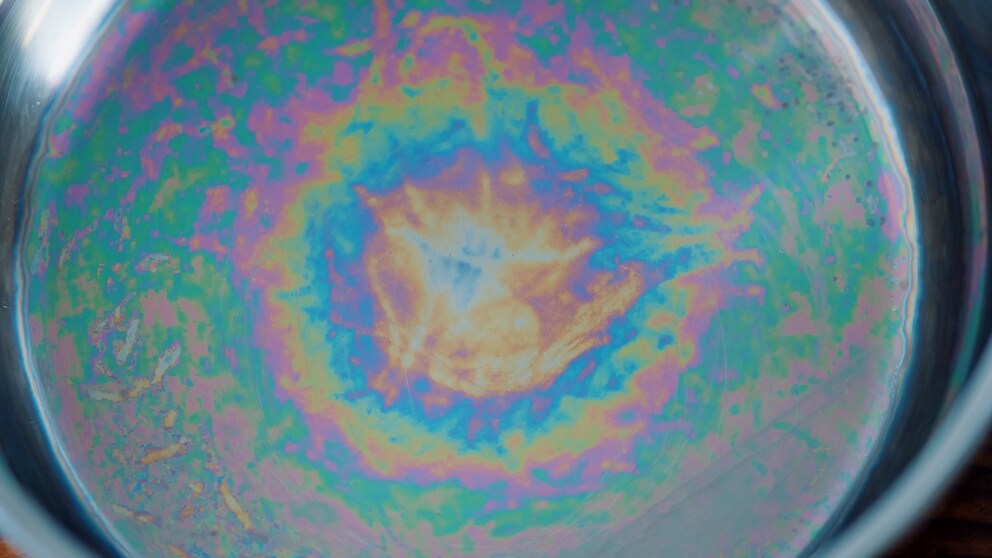
Stainless steel pots can develop a unique discoloration over time at the bottom. It shimmers in all the colors of the rainbow. Often, white spots accompany it. myHOMEBOOK explains where these rainbow discolorations in the pot come from and how to get rid of them.
Follow myHOMEBOOK on WhatsApp now
Easily Remove Rainbow Discoloration in Pots
Fortunately, the discolorations are completely harmless and do not affect the health or taste of the food. The rainbow discoloration also does not impact the pot’s functionality. It is merely a cosmetic flaw that can be easily removed. All you need is some vinegar. Pour a little into the pot, along with some water. The rainbow discolorations should disappear within seconds. Then rinse with clear water and dry. Besides vinegar, you can also use citric acid.
Also interesting: 5 Household Tricks to Save Time While Cleaning
These Home Remedies Are Said to Remove Dark Deposits from Pans
How to Remove Verdigris from Copper
How to Prevent Rainbow Discolorations in Pots
The rainbow streaks are not a sign of poor quality of the pot. They are normal signs of use that can also occur in pans or other stainless steel containers. The following tips can help prevent discolorations:
- Do not heat the pot when it is empty.
- Add salt only to boiling water, not when it is cold.
- After washing, dry the pots well to avoid water spots and residues.
How Does Discoloration Occur in Pots?
The shimmering colors are caused by what is known as temper color. The result of a chemical reaction: “The heating of the metal (of the pot) creates very thin layers of metal oxides,” explains Dr. Karin Schmitz from the German Chemical Society (GDCh) upon request from myHOMEBOOK. She adds, “They often have a different color than the metal itself.” The oxide layers are usually very thin, sometimes transparent, and sometimes they reflect light. “That’s why there is a shimmering effect similar to pearlescent pigments.”
This happens, for example, when the pot is heated without contents. But hard water, meaning water with a high lime content, can also be responsible for residue formation. Salty or acidic cooking ingredients can also trigger the chemical reaction at the bottom of the pot.