


May 4, 2026, 9:36 am | Read time: 3 minutes
Salt seasons food. However, reports circulating online claim that salt can do much more, such as removing limescale from toilets or acting as a natural dehumidifier to prevent mold. For this article, myHOMEBOOK spoke with an expert.
Salt Contains Chemistry
Elke Messerschmidt works in knowledge management at the Competence Center for Home Economics and initially clarifies: “Salt is not a cleaning agent in the traditional sense and certainly not chemical-free. Consumers do not perceive salt in the household as a chemical. However, it does contain chemistry, namely sodium or potassium chloride. Both substances act through chemical processes.”
Therefore, the claim in various online articles that salt is an alternative, natural cleaner is at least questionable. The use of road salt has long been prohibited in many municipalities for this reason. “Even in weed control, the use of sodium chloride as a herbicide is banned for environmental reasons,” adds Elke Messerschmidt.
Salt as a Stain Remover
The gentle use of salt for certain everyday mishaps is justified. “Since salt is a hygroscopic substance, it absorbs moisture from its immediate surroundings,” says the expert from the Competence Center for Home Economics. Therefore, it helps to contain fresh stains from coffee or red wine on carpets or sofas by adding salt. To do this, sprinkle some salt generously on the damp stain. However, be careful with the amount and do not rub, as this can damage the color of the underlying fabric.
Tip: Recently, various manufacturers have been promoting salt-based products as natural dehumidifiers. So why not use the original? At least it doesn’t hurt to place a container of salt in the bathroom. However, regular ventilation should not be neglected.

Can Yeast Really Clean a Toilet?
Common Household Hygiene Mistakes and How to Avoid Them
Salt Only Serves as a Process Accelerator
As an electrolyte, salt can also support the cleaning effect of individual substances. Messerschmidt cites two examples, such as “cleaning silver with aluminum foil or descaling water in the dishwasher.”
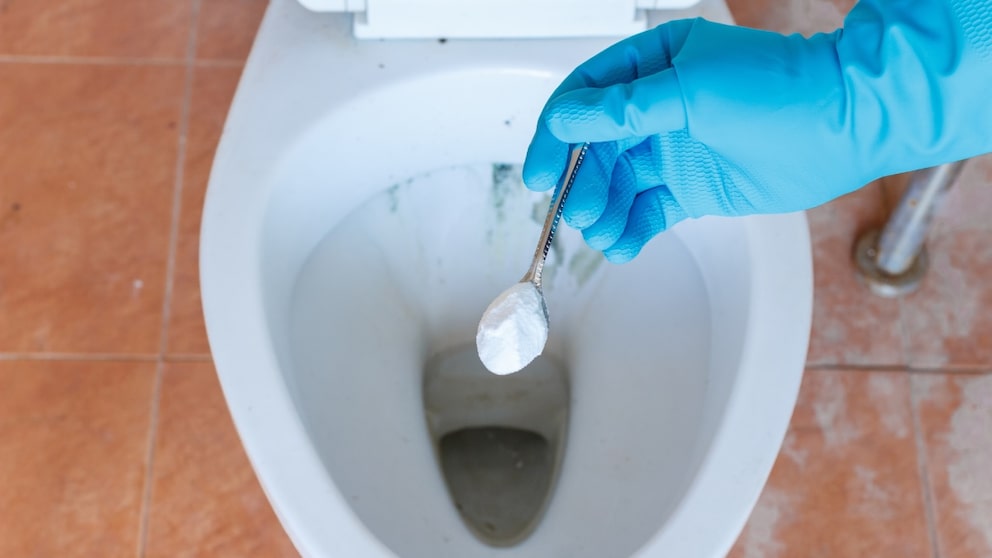
Online, there are tips to mix salt with other acidic substances to remove heavy limescale deposits in the toilet. First of all, salt serves more as a process accelerator here. The salt itself has no independent cleaning effect in such mixtures.
“As a general rule, for safety reasons, it is always advisable not to mix chemical substances in the household. Additionally, substances should never be mixed with hot water,” warns the home economics expert. This can sometimes produce fumes that can damage the respiratory tract.
Moreover, the regular use of a homemade salt-vinegar mixture can lead to rust when in contact with fixtures. Therefore, be cautious with online tips suggesting mixing salt with acid.
Regular Cleaning Helps Best
To prevent stubborn limescale deposits from forming in the first place, Elke Messerschmidt advises cleaning the relevant areas regularly. “Limescale deposits can be avoided by, for example, wiping out a sink with a dry cloth after use, squeegeeing shower cabins after showering, or treating the toilet weekly with a little citric acid,” explains the expert. So instead of relying on significantly more expensive homemade salt mixtures, it is worth trusting tried-and-true home remedies like citric acid as an alternative limescale remover.