


November 17, 2026, 5:00 pm | Read time: 3 minutes
Freshly washed bed linens provide a pleasant feeling and a clean sleeping environment. However, to ensure that duvet covers, sheets, and pillows are truly hygienically clean, proper care is essential. If you get the temperature, wash cycle, or detergent wrong, you risk not fully removing dirt and germs.
Washing bed linens might seem straightforward at first glance: put the laundry in the machine, add detergent, and start the appropriate program. But even with this everyday task, mistakes can easily occur. Small oversights not only affect hygiene but can also cause the material to wear out faster. myHOMEBOOK explains what to consider when washing bed linens.
1. Mistake: Washing bed linens too infrequently
Be honest: How often do you really change your bed linens–once a week, every two weeks, or just once a month? If it’s the latter, it’s time to revise your cleaning schedule. Experts recommend changing bed linens every two weeks. Sweat, skin flakes, and hair accumulate in bed linens, providing ideal conditions for mites. For a clean bed and restful sleep, you should wash your bed linens every 14 days.
By the way: If you sweat a lot, especially in the summer, you should change them even once a week.
Also interesting: These 6 things we often forget when cleaning the living room
2. Mistake: Washing bed linens at the wrong temperature
A common mistake when washing bed linens is choosing the wrong temperature. If it’s too low, germs and mites aren’t killed; if it’s too high, delicate fabrics can be damaged. Satin and blended fabrics are particularly sensitive to high temperatures. The solution: Always check the care label. If specific instructions are missing, you can generally wash bed linens at 140 degrees Fahrenheit (60 degrees Celsius).
3. Mistake: Overloading the washing machine
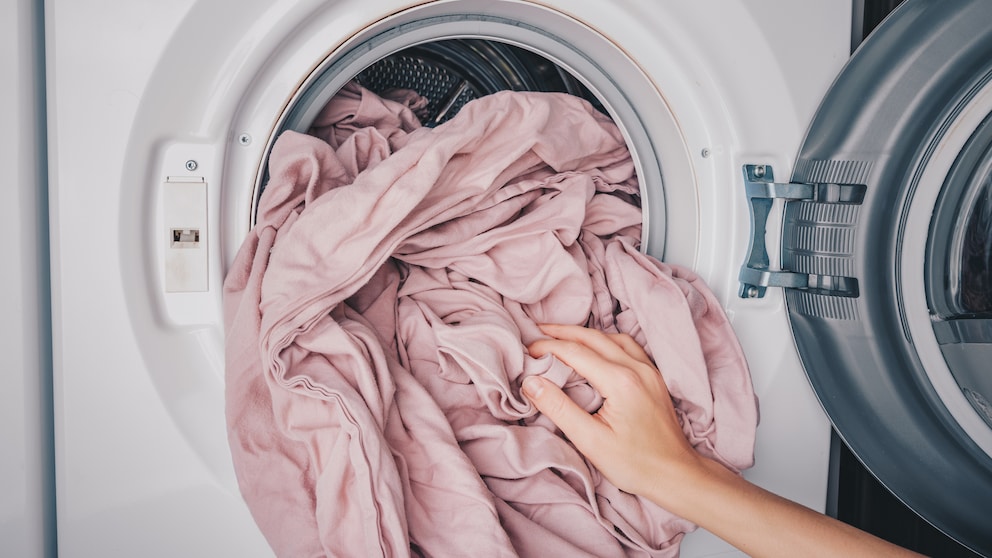
When making the bed, a large pile of laundry quickly forms: sheets, duvet, and pillow covers–sometimes even double. But when washing, the drum size is crucial. You should fill the washing machine to a maximum of three-quarters full so that the bed linens can move freely and be thoroughly cleaned. If the drum is too small for the entire load, it’s better to split the laundry into two wash cycles.

7 Common Mistakes When Loading and Operating the Washing Machine

4 Tips for Washing Tights Properly
4. Mistake: Not paying attention to the material
As with clothing, you should also pay attention to the material of bed linens. Different materials react differently to wash temperatures, detergents, and drying methods. Ignoring these requirements can lead to deformation, color loss, or damage. Materials like silk, satin, or linen are particularly sensitive. They require mild detergents and low temperatures between 86 and 104 degrees Fahrenheit (30 and 40 degrees Celsius).
Microfiber bed linens, on the other hand, should be washed without fabric softener, as it can clog the fibers and impair the function of the linens. A mild detergent is a better choice here. Cotton bed linens are much more robust and can be cleaned at temperatures between 140 and 194 degrees Fahrenheit (60 and 90 degrees Celsius) without any problems.
5. Mistake: Not turning and closing bed linens before washing
If you miss a sock after washing, it’s worth checking the duvet cover–smaller clothing items often hide there. To avoid this, always close the bed linens before washing. This not only prevents lost clothing items but also protects against damage to open zippers or buttons and prevents other textiles from being damaged during the wash cycle. Additionally, you should turn the bed linens inside out. This preserves colors and patterns and makes it easier to put on pillows and duvets later.