


March 3, 2026, 2:36 pm | Read time: 3 minutes
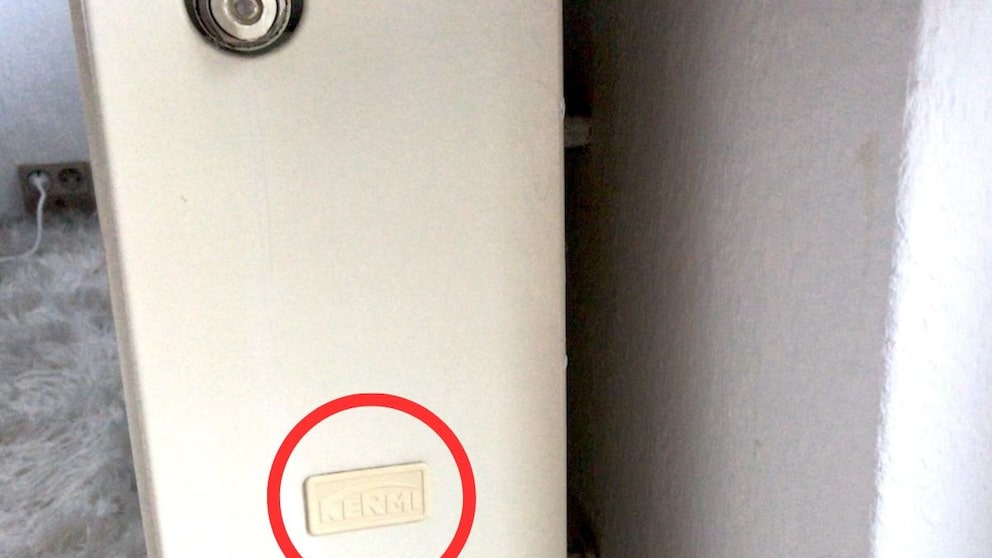
Winter is the heating season. To keep rooms cozy and warm on cold days, radiators should be dusted at least once a year, ideally twice. Some radiators have a discreet white cap on the side that can help with this. To find out what’s behind it, myHOMEBOOK removed the cap.
What’s Behind the Cap on Panel Radiators
Radiators come in various shapes and sizes. Two types are particularly common in most apartments and houses:
- Steel or cast-iron radiators originated in the 19th century. These sectional radiators are mainly found in older buildings.
- Panel radiators are more modern, significantly more compact, and have fins inside.
The focus here is on panel radiators. These flat heaters have a cover grille on top and a side panel. There’s a white cap there, often with the manufacturer’s name. Most people don’t pay much attention to this cap, thinking it’s just a cleverly placed advertisement.
But there’s more to it. This cap can be removed, and that’s a good thing. Due to the fins, panel radiators tend to attract dust and never let it go. This is a persistent problem because dust reduces heating efficiency.
Therefore, these panel radiators should be thoroughly cleaned before the heating season begins. It’s a task often postponed because cleaning the fins is quite tedious.
Important: Never pour water over the fins. Since the fins are usually made of sheet steel and lack a protective coating, rust can develop over time. This will eventually destroy the entire radiator. So, keep water away from cleaning.
White Cap Is More Than a Brand Label
Instead, the white cap comes into play. It can be removed from the side panel with a pointed object. Then the secret of the cap is revealed: It’s a cleverly disguised twist lock. The cap is connected to the head of an internal screw and can be easily unscrewed.
Next, lift the side panel slightly to detach it from the radiator. Usually, the top cover grille, which protects the fins, can be removed at the same time. Now the fins are freely accessible and can be cleaned somewhat more easily. It’s still a fiddly task.
Large dust bunnies can now be removed with a vacuum cleaner nozzle. For the spaces between the fins, there are special radiator brushes available at hardware stores.
With some DIY skills, you can also make a cleaning tool yourself. A microfiber cloth and a thin, long stick or branch are all you need. Simply attach the microfiber cloth to one end of the stick or branch, and you have a homemade fin cleaning device.
Once all dust bunnies and lint are removed from the spaces between the fins, place the cover grille back on top and snap it into place, then gently press the side panel back. Finally, close everything again with the white cap.