


July 15, 2026, 8:22 am | Read time: 3 minutes
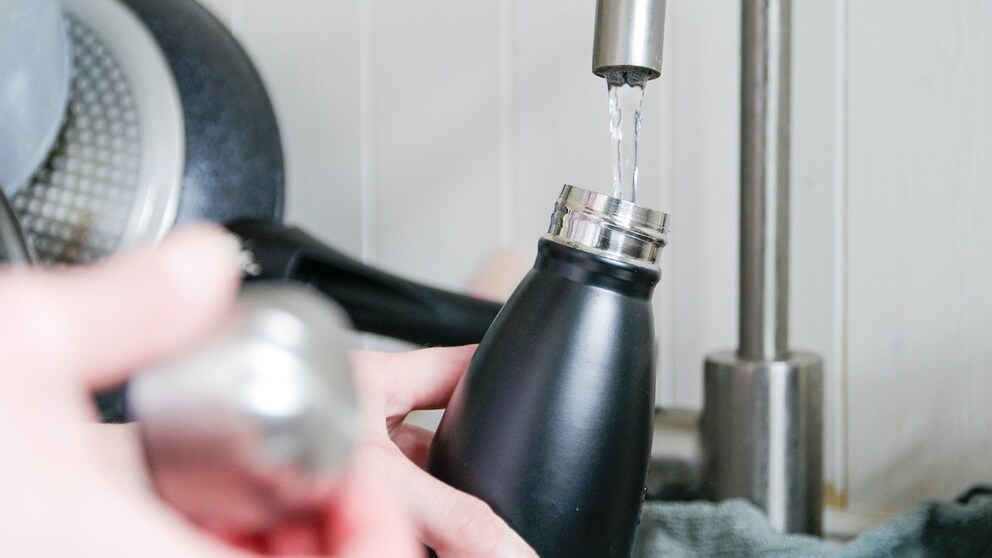
Cleaning water bottles can be quite a hassle: Even with slim hands, you can’t reach every part of the bottle’s interior through the narrow neck. If the water bottle isn’t thoroughly cleaned, you might ingest harmful germs through the liquid when drinking.
Reusable water bottles are extremely practical. They allow you to fill and carry a beverage of your choice. This saves money and also protects the environment. However, when it’s empty, simply rinsing it with clear water isn’t enough.
Water bottles are real germ carriers because moisture and bacteria introduced while drinking create ideal conditions for germs, explains hygiene doctor Georg-Christian Zinn in an MDR interview. According to the hygiene expert, a laboratory test of water bottles found a very high number of germs. Among them were various harmful bacteria that can lead to infections.
How often should you clean water bottles?
After each use, the bottle should be thoroughly cleaned. This applies even if it was only filled with water. So, if the water bottle is used daily, it should also be washed daily.
Common Mistakes When Cleaning Cutting Boards

7 home textiles washed far too rarely
Properly cleaning water bottles and removing germs
Ridges, rubber seals, and narrow necks make cleaning water bottles significantly more difficult. Due to the design of the bottles, areas are either forgotten or harder to reach.
The dishwasher is ideal for freeing bottles from germs. A wash cycle at 140 degrees Fahrenheit kills the bacteria. Important: Disassemble the bottle–place the lid, seal, and bottle body separately in the dishwasher rack. It’s crucial that all parts dry well before reassembling.
If you don’t have a dishwasher, you can sterilize the bottles with hot water from a kettle. Alternatively, boil the bottles in a water bath. However, pay attention to the manufacturer’s instructions during cleaning. Depending on the material, you should not exceed a temperature of 140 degrees Fahrenheit. Plastic bottles, in particular, are more sensitive in this regard. Metal and glass bottles are generally considered more robust against high temperatures.
Removing deposits
To manually remove deposits, a special bottle brush can be useful. Unlike conventional dish brushes, these are shaped to reach and clean the inside of the bottle–including the bottom. Dish soap and warm water should suffice to clean the bottle with the tool.
Alternative: A clever trick to clean water bottles is to use rice. Pour some uncooked rice into the bottle. Add warm water and a cleaning agent, such as dish soap. Then, tightly close the bottle and shake vigorously. The rice acts like an abrasive. By shaking, it rubs against the inside and removes deposits, residues, and biofilm. Rinse the bottle with clear water and let it dry.
If unsightly lime deposits form over time due to hard water, you can remove them with baking soda or vinegar essence. Pour water with one of these home remedies into the bottle, seal it with the lid, and shake to mix. Let it sit for a few hours, then rinse and let it dry upside down.