

April 7, 2026, 10:09 am | Read time: 2 minutes
What is the actual difference between a passion fruit and a maracuja? Few people know that the two fruits are not the same, but how exactly can they be distinguished? myHOMEBOOK editor Laura Kästner explains the meanings behind the names and how the fruits actually differ.
Follow myHOMEBOOK on WhatsApp now
Are Passion Fruit and Maracuja the Same?
Yes and no. While the two fruits differ in general characteristics, they both belong to the “Passiflora edulis”—a type of passionflower. The “edulis” are the fruits that are edible, and both maracuja and passion fruit fall into this category.
And they share another similarity: According to the Consumer Center Bavaria, unripe fruits can be stored at room temperature for a few days until they reach the desired ripeness. Once fully ripe, the fruits can be kept in the refrigerator’s vegetable drawer for one to two weeks.
The Difference Between Maracuja and Passion Fruit
While both belong to the same species, maracuja and passion fruit differ in color, taste, size, and the texture of their skin.
How to Recognize Maracuja
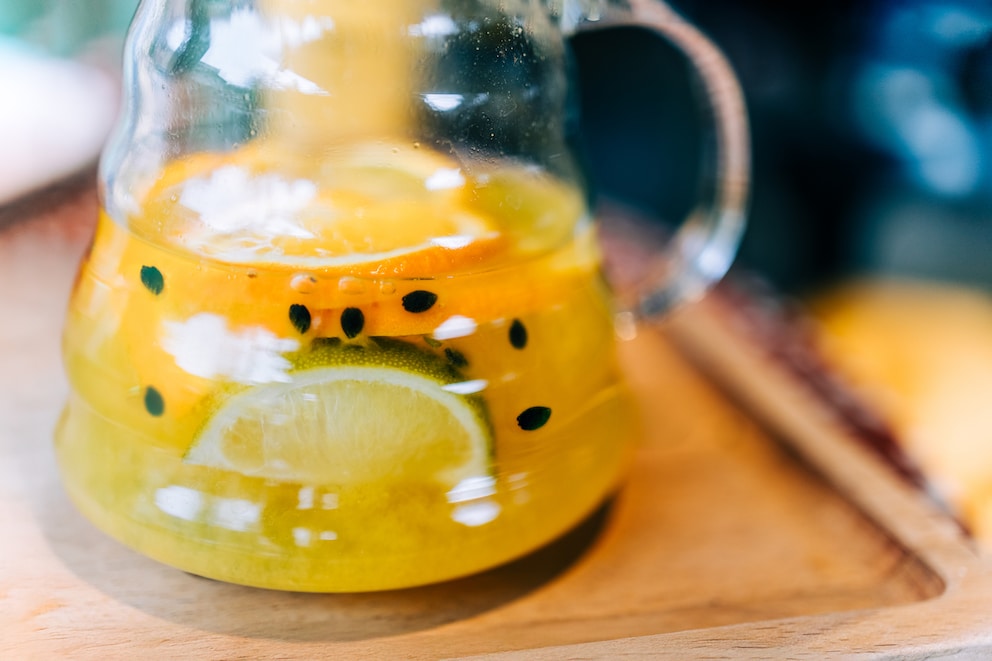
Maracuja is mainly recognized by its greenish to yellow exterior and smooth skin. Compared to passion fruit, it is not only larger but also heavier. Thanks to its very acidic pulp, maracuja is often used in juice production, though its acidity makes it less suitable as a simple snack.
By the way: A ripe maracuja can be identified by its skin, which should give slightly under pressure but not be too mushy.
What Are the Characteristics of Passion Fruit?
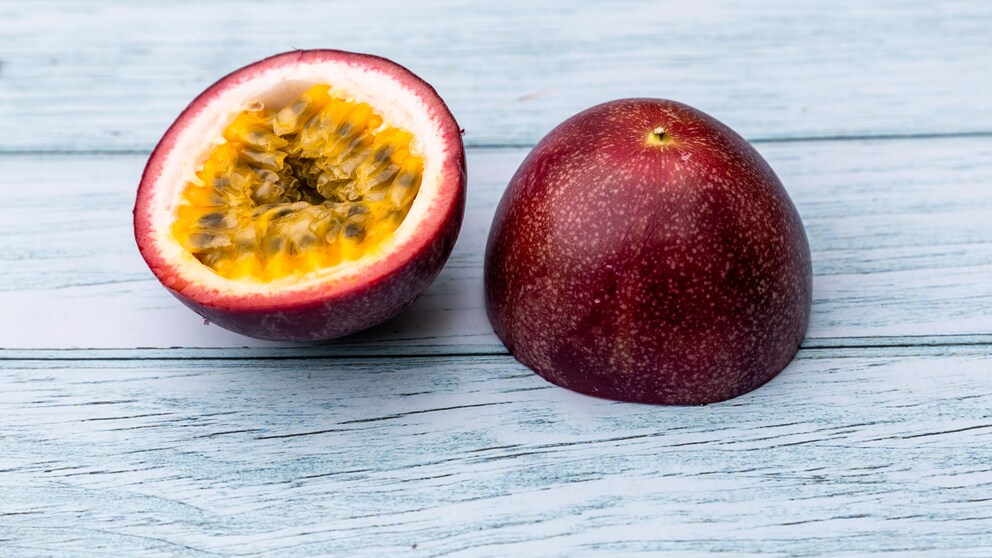
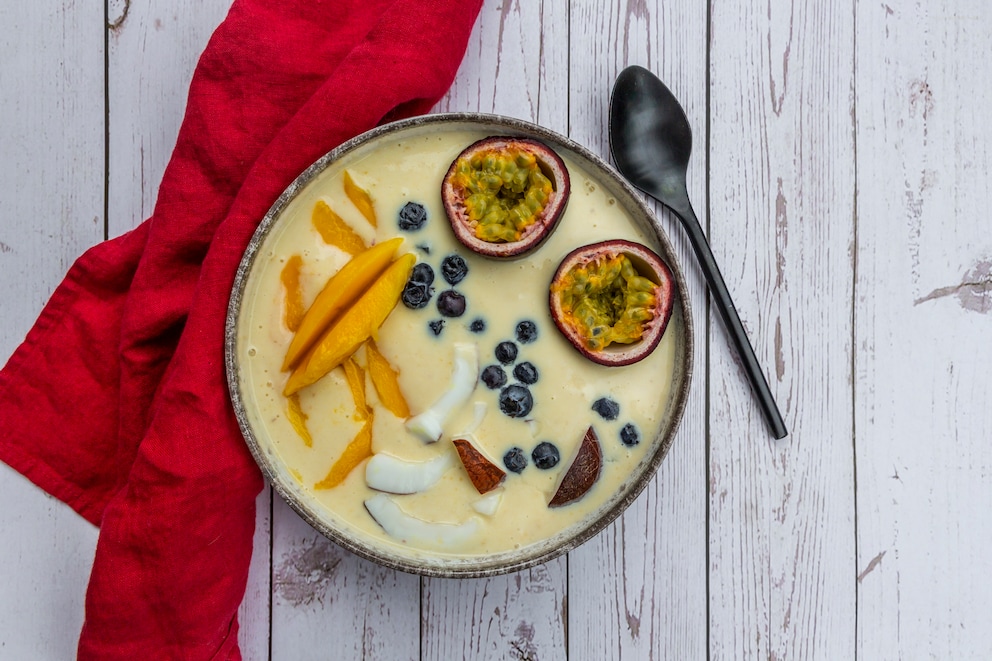
Passion fruit, on the other hand, is often mistakenly referred to as maracuja, but it is clearly distinguishable by its purple skin. Additionally, the fruit is significantly smaller, and the skin is less smooth, appearing more “wrinkled.” Thanks to its very sweet pulp, passion fruit is not only popular as a snack but also as a topping for yogurts or an ingredient in salad dressings.
By the way: There are also yellow passion fruits. While the purple ones are ripe when the skin is as wrinkled as possible, the golden yellow passion fruits should have only slightly wrinkled skin.