

October 21, 2026, 10:21 am | Read time: 3 minutes
When it comes to terry and terrycloth fabrics, many think of them as the same. However, what we commonly refer to as a “terry towel” is technically terrycloth. The key difference lies in their production, which affects their structure, volume, and absorbency.
The Key Difference Between Terry and Terrycloth
The main difference is in the manufacturing process. Terry is a flat weave, with its characteristic structure created by a special effect yarn. In contrast, terrycloth has an additional thread system that forms loops during weaving.
Terrycloth consists of three thread systems:
- a tightly stretched base warp,
- a loose loop or pile warp, and
- the weft.
The loops protrude from the base fabric and can be on one or both sides. In terry, the surface structure is created by an effect yarn, resulting in a comparatively flatter and less voluminous fabric.
Also interesting: What does dark decor do to the human brain?
Are Towels Made of Terry or Terrycloth?
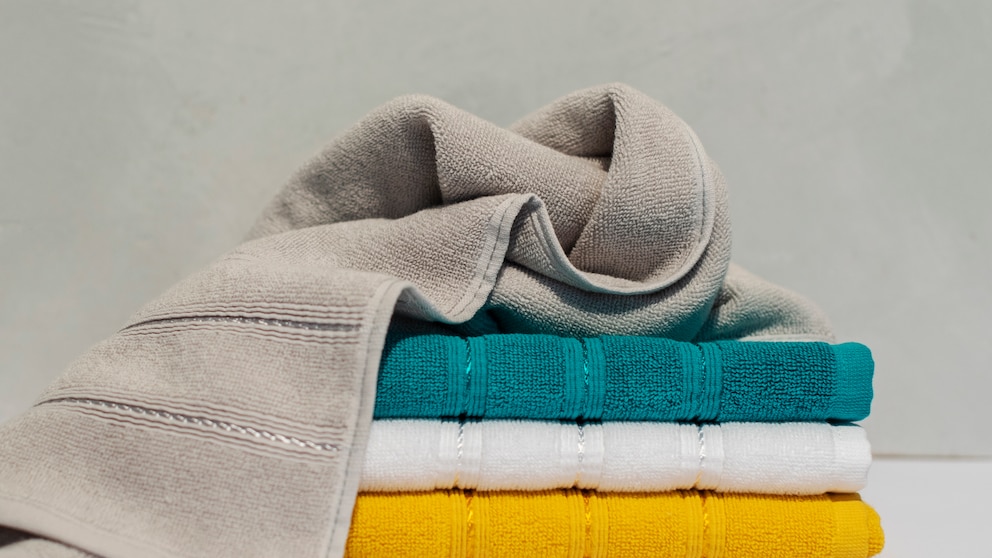
In everyday language, it’s almost always called a “terry towel.” However, for classic fluffy towels, one should refer to them as terrycloth towels. The reason is the many small loops that can be seen upon close inspection of a towel. They increase the fabric’s surface area, allowing for good moisture absorption. The dense loop structure also ensures that terrycloth can be voluminous and, depending on the design, soft or firm.
Why Terrycloth Absorbs Water So Well
The structure plays a crucial role in water absorption. The numerous loops increase the textile surface, enabling terrycloth to absorb a lot of moisture. At the same time, the loop structure gives a towel its typical volume.
How a terrycloth fabric feels depends partly on its processing. For example, a short, dense pile can create a massage effect, while a longer pile feels particularly soft. However, thicker does not automatically mean better. The yarn used and the processing also influence the quality.

Simple Trick to Dry Laundry Faster in Winter

The Story Behind the Popular Teddy Plush Fabric
Types of Terrycloth
Terrycloth is not all the same. Depending on the yarn and manufacturing process, fabrics with different properties are produced.
- Walk Terrycloth: Walk terrycloth has a soft and full feel. Single-thread yarns are used for the pile warp, allowing the material to absorb moisture particularly well.
- Twist Terrycloth: Twist terrycloth uses twisted yarns. Its upright loops give the material a firmer or more robust feel.
- Velour Terrycloth: Here, the loops are cut or sheared, creating a particularly smooth and velvety-soft surface. However, velour terrycloth does not absorb moisture as well as other types of terrycloth.
- Knit Terrycloth: Knit terrycloth is unique. Unlike classic terrycloth, it is not woven but produced on a knitting machine.
Also interesting: How to make cloudy glasses shine again
Is Terry or Terrycloth More Advantageous?
For a classic towel, terrycloth has clear practical advantages. The material is voluminous due to its loop structure and can absorb a lot of moisture. Terrycloth is usually more durable than terry, which does not imply a lower quality fabric. Rather, it is a different construction that may be suitable for other purposes. For example, terry is also used in clothing.
So, if you’re looking for an absorbent, fluffy towel for the bathroom, don’t be misled by the colloquial term. The classic “terry towel” is technically often just a terrycloth towel.