


April 28, 2026, 3:58 am | Read time: 4 minutes
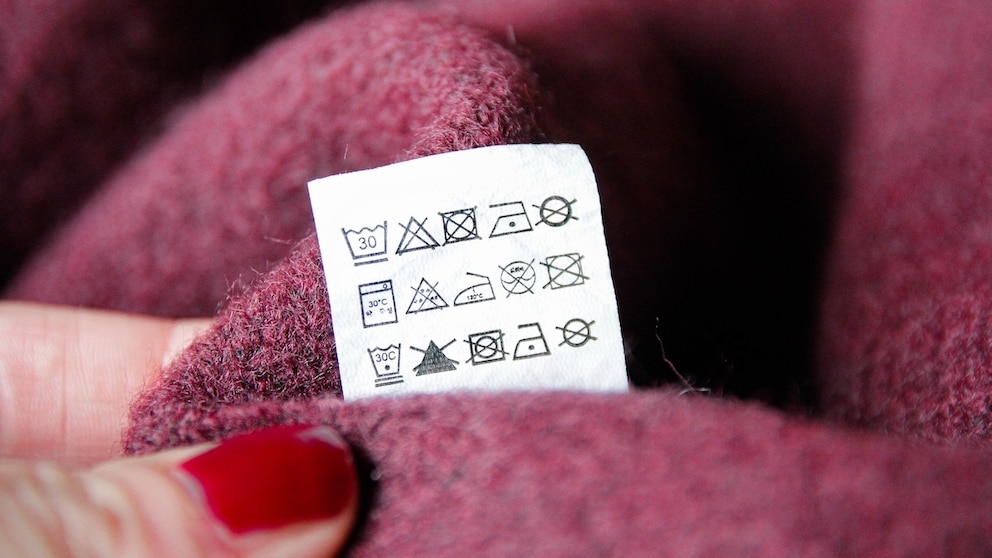
A glance at the care label is enough, and suddenly your favorite blouse seems like a puzzle. Small symbols, cryptic signs, and strings of numbers determine whether the garment stays beautiful for a long time or loses its shape after the first wash. But don’t worry: Knowing the most important washing symbols significantly extends the lifespan of your clothing.
Follow myHOMEBOOK on WhatsApp now
Why Washing Symbols Are So Important
Washing symbols are not just random pictograms. They provide precise instructions on how textiles should be treated—from washing to drying to ironing or professional cleaning. Proper care is crucial, especially for delicate fabrics like silk, wool, or functional materials. Ignoring the symbols risks shrinking sweaters, discolored fabrics, or damaged fibers.
The Basis of Every Care Routine
Washing
The most well-known washing symbol is the stylized wash tub. It indicates whether and at what temperature a garment can be washed. A number in the tub—such as 30, 40, or 60—represents the maximum washing temperature in degrees Celsius. However, a number isn’t always present. Sometimes there are just one, two, or three dots. These also indicate the temperature at which the garment can be washed. One dot stands for washing at a maximum of 30 degrees, two dots for a maximum of 60 degrees, and three dots for a maximum of 90 degrees.
A hand in the tub signals: hand wash only. If the wash tub is crossed out, you should keep the garment away from water entirely and opt for professional cleaning.
Spinning
The tub symbol often appears with one or two lines underneath. One line under the tub indicates a gentle wash cycle, while two lines mean the garment is not suitable for spinning.
Dry Cleaning–A Job for Professionals
In washing symbols, the circle stands for dry cleaning. Letters inside provide the cleaner with information on suitable solvents. If the circle is crossed out, the garment should not be dry or wet cleaned—special caution is advised here. The letters “A” and “P” inside the circle indicate which substances can be used to clean the respective garments.
Also interesting: Which textiles should be washed at 60 degrees—and which should not

How to Wash Hand-Wash Items in the Machine

How to Properly Clean a Yoga Mat to Keep It Hygienic and Intact
What Comes After Washing
The dryer symbol is a square with a circle inside. It indicates whether a garment can be put in the dryer. Dots inside show the temperature: one dot for low, two for normal, and three for high temperature drying. If the dryer symbol is crossed out, it means the garment should be air-dried instead.
Natural drying can also be represented by a symbol. A square with a horizontal line stands for flat drying, while vertical lines symbolize line drying. A small but significant difference that can be crucial for delicate fabrics like wool.
Ironing Without Unpleasant Surprises
The iron symbol shows whether and how hot you can iron your clothes. The dots in the iron indicate the temperature level: one dot for low heat (such as for synthetics), two dots for medium (like for wool), and three dots for high temperatures (for cotton or linen). A crossed-out iron means you should not iron the garment, as the material could be damaged.
Bleaching
The triangle stands for bleaching. An empty triangle means bleaching is allowed. Two diagonal lines in the triangle indicate that only oxygen bleach should be used. If the triangle is crossed out, you should avoid bleach entirely to prevent unsightly discolorations.
Small Symbols, Big Impact
What seems complicated at first glance quickly becomes routine with a little practice. Knowing the most important washing symbols automatically leads to better care decisions. The result is clothing that stays beautiful longer, colors that shine, and fabrics that retain their shape. A quick look at the label is always worthwhile and aligns with a conscious and sustainable approach to your clothing.