



January 19, 2025, 12:06 pm | Read time: 3 minutes
Whether in the kitchen or bathroom, marble surfaces are back in vogue. However, the stone is delicate and not easy to clean. Find out here how to best deal with lime stains.
Marble instantly makes rooms look more upscale and elegant. The stone is particularly striking in the kitchen as a countertop or in the bathroom on the walls and floors. The fact that marble is back in style is demonstrated by fashion blogger and influencer Jessie Weiß on her Instagram channel. However, the delicate stone is not as easy to clean as other surfaces. Lime, in particular, must be removed from marble with care.
Caution with Marble and Lime
When cleaning marble and removing lime, caution is advised. The reason is the material itself. As Bernd Glassl from the German Cosmetic, Toiletry, Perfumery and Detergent Association (IKW) explains: “Both unwanted lime deposits and high-quality marble surfaces are chemically composed of the same material: calcium carbonate.”
And that’s the problem. Calcium carbonate, also known as calcium carbonate, is dissolved by acids. This means marble surfaces become dull and lose their appealing appearance when exposed to acids. According to the expert, vinegar and citric acid are unsuitable cleaning agents in this case. Baking soda is also ineffective against lime.
Wipe Marble Surfaces Dry Immediately
There is also an alternative solution, but it must be implemented immediately. “If you don’t have soft tap water, it’s best to wipe wet marble surfaces dry right away,” advises Glassl. This way, unwanted lime cannot settle in the first place.
If lime does deposit on the marble, the expert suggests trying something else at your own risk. Light lime deposits can be removed mechanically and with an alkaline cleaner, such as an all-purpose cleaner. According to Glassl, alkaline cleaning agents available in specialty stores can dissolve lime through complexing agents.
If dealing with glossy polished marble, you should first try using a non-scratch scouring pad very carefully. If that doesn’t help, fine steel wool can be used–again, at your own risk. However, Glassl strongly advises: “It is highly recommended to first test in an inconspicuous area to see if the method is gentle enough!” For large-scale lime deposits on floors, it’s better to consult professionals.

How to Easily Make Your Own Cleaning Products
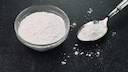
The differences between baking powder, baking soda, and soda ash
Alternatives to Marble
The German Natural Stone Association states that for marble and limestone in splash zones, an impregnation is recommended. This can reduce moisture absorption. The impregnation protects against discoloration, but it is not an acid protection.
If you have the choice, it’s advised to opt for more robust alternatives in the bathroom and kitchen. One example is quartzite. Due to its acid resistance, it is significantly better suited for these areas and indistinguishable from marble to the layperson, according to the association.
Extreme Caution When Cleaning Marble
But it’s not just lime stains that need to be removed from marble surfaces with care. All other dirt must also be cleaned with caution. The cleaning agent must never be acidic. The pH value should never be below 7, and the agent should not contain surfactants or soaps. Find out what else to consider when cleaning marble here.
With material from dpa