


September 10, 2026, 3:35 am | Read time: 2 minutes
Clothespins are indispensable in many households. They keep T-shirts, towels, and bed linens on the line and prevent a gust of wind from blowing freshly washed clothes through the garden or off the balcony. But if you take a closer look at a classic clothespin, you might wonder what the two differently sized openings are for.
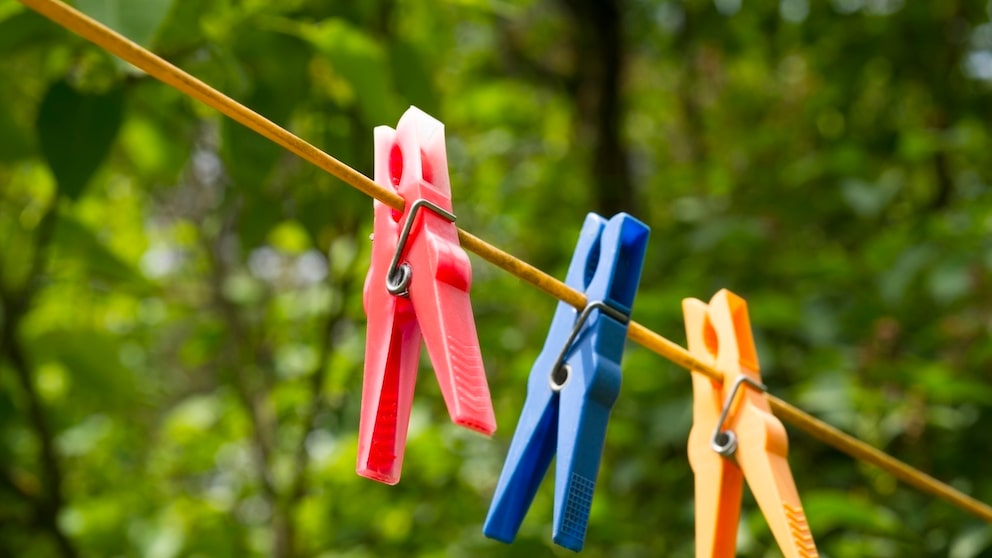
Many models feature two openings: a smaller one near the center and a significantly larger one at the outer end. What initially appears to be a simple design element actually serves an important purpose.
Follow myHOMEBOOK on WhatsApp now
Openings Serve Different Purposes
The secret is easy to understand when you look at the clothespin opened. The smaller opening is designed to accommodate the clothesline or the rod of a drying rack.
The larger opening, on the other hand, is intended for the fabric. When a garment is secured with the pin, the line and textile can be positioned at different points on the pin.
Also interesting: Want a color change? Tips for dyeing upholstered furniture
This separation is crucial for functionality. Instead of simply squeezing the line and fabric together between two clamping surfaces, the design guides both elements into their designated areas.

How to Wash Hand-Wash Items in the Machine

Washing Laundry on Vacation? Here’s How to Do It Without a Machine
That’s Why the Laundry Holds Better
The advantage is immediately apparent when hanging clothes. The clothespin can securely fix the fabric to the line without having to squeeze both at the exact same spot. The special arrangement of the openings creates a different pressure distribution, avoiding pressure marks on the clothing. This also allows the pin to grip more securely and prevent the garment from slipping easily due to movement or wind.
How to Avoid Marks on Clothing
The clever design of the clothespin doesn’t mean it leaves no trace on every fabric. Especially with delicate or dark clothing, pin marks can become visible. Therefore, it’s worth paying closer attention when hanging clothes. For delicate tops, the pin can be placed on a less noticeable spot. Seams or hems are often better suited than highly visible fabric areas.
For heavy items like jeans or towels, it’s advisable to distribute the weight across multiple pins. This way, a single pin doesn’t have to bear the entire load. Jeans can also be turned inside out and hung by the ends of the legs.