

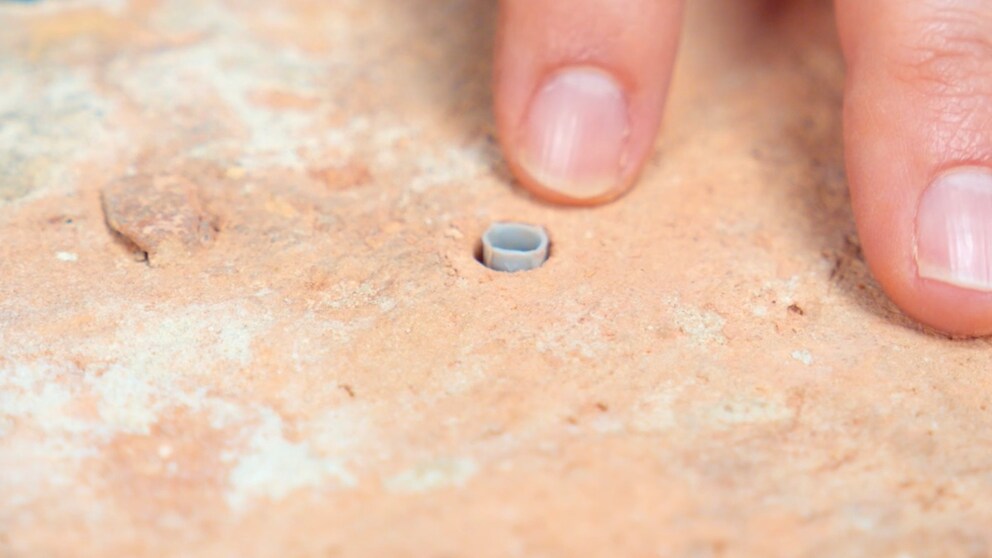

October 17, 2024, 1:01 pm | Read time: 4 minutes
To screw something into the wall, an anchor is necessary. Depending on the wall’s composition, there are different types. However, they sometimes hold so well in the wall that they can’t be easily removed. myHOMEBOOK editorial director Felix Mildner presents some methods on “Easy DIY” for getting the anchor out again.
If an anchor was set incorrectly, is damaged, or is no longer needed, it must be removed from the wall. This can also be relevant when moving, such as when pictures are taken down and the drill holes remain. But what to do if the anchor is so firmly in the wall that it can’t be easily removed by hand? If painting over or filling it isn’t a solution, there are a few simple tricks to easily remove conventional plastic universal anchors.
1. Pull the Anchor Out of the Wall with Pliers
Removing a stuck anchor from the wall with flat, needle-nose, or combination pliers is probably the most common method. However, this only works if the screw has already been unscrewed and the end of the anchor is accessible with the pliers. The anchor must not be too deep in the wall.
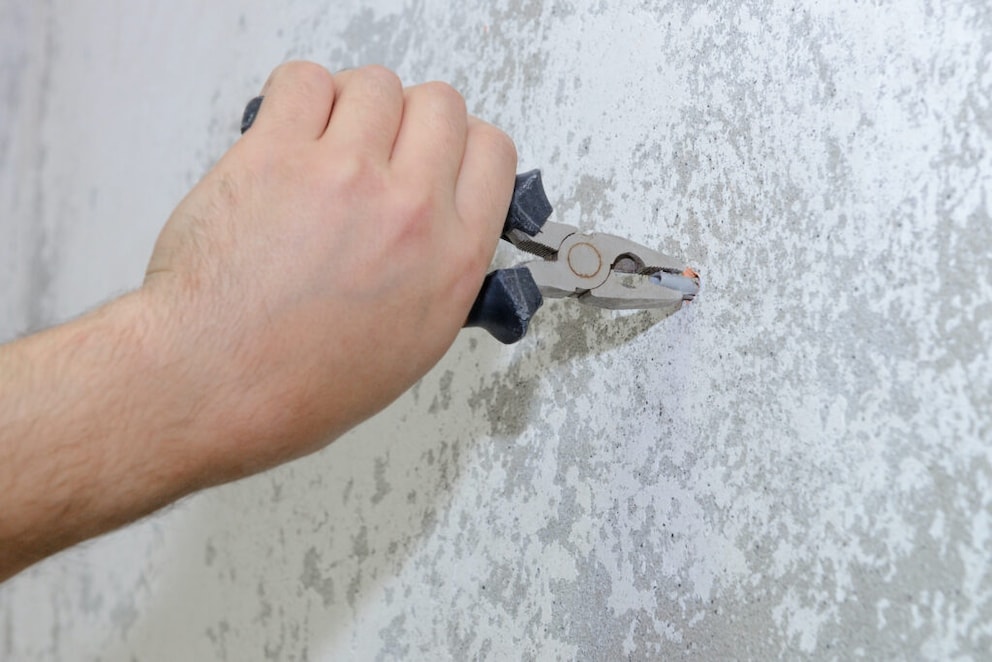
Tip: If you make a slight twisting motion with the pliers, it works better and the hole only gets minimally larger.
Also interesting: How to drill correctly in 5 steps
2. Remove the Anchor from the Wall with a Corkscrew
A corkscrew is likely found in most households. It is not only suitable for opening wine bottles but also for removing anchors. Many pocket knives also have the small spiral helper. Carefully twist the corkscrew into the drill hole with the stuck anchor. It’s enough to twist the corkscrew into the wall until it sits firmly. Then you can slowly loosen and remove the anchor from the wall. The drill hole may enlarge slightly, and dust may fall out. Once the hole is cleaned, it can be sealed with some filler.
Also interesting: What material is my wall made of?
3. Loosen the Anchor from the Wall with a Screw
You can also remove firmly seated plastic anchors from the wall with a regular screw. The screw should be large enough to fit well into the anchor. Turn the screw with a screwdriver until it holds. Usually, a few millimeters are enough. The anchor should not be spread further, or it won’t move at all. Once the screw is in place, pull it out of the wall along with the anchor–preferably twisting with pliers.
Also interesting: Save oversized drill holes with a simple trick
Tip: A screw hook can also be suitable for removing anchors if you have one on hand. You can easily lever the anchor out of the wall with the hook.
4. Drill Out the Anchor in the Wall
This rather brute method is used when other attempts have failed. The anchor is not removed from the wall but destroyed with a cordless drill. Proceed carefully to prevent the drill hole from tearing further. The chipped remains of the anchor can be vacuumed out of the hole, and then it can be filled.
Also interesting: How to drill correctly in tiles in 4 steps

Patch Holes in the Wall in 6 Steps

What to Consider Before Drilling
Leave the Anchor in the Wall and Fill It in an Emergency
This trick doesn’t really solve the problem but hides the problem area on the wall. However, the next tenant might be annoyed if they want to drill a hole in the same spot. In some cases, the stubborn anchor may also show through the filler. Therefore, you should cut the anchor end with a sharp cutter or drive the anchor further into the wall with a hammer.
Note: Be sure to watch your fingers when working with the utility knife! It’s best to wear protective gloves.
What to Do with Special Anchors?
In addition to the usual plastic universal anchors, there are other special anchors, such as for drywall. These are made of metal and are screwed into the panel. They can also be unscrewed in the same way. Often, a tool or matching bit is already included with the anchor sets, which can be used to remove the anchors from the wall. Besides drywall anchors, there are these other types of special anchors:
- Aerated concrete anchors
- Cavity anchors
- Toggle anchors
- Insulation anchors
- Heavy-duty anchors
Usually, special anchors can be removed in the reverse way they were installed. Afterward, the hole can be neatly covered with some filler.