


January 6, 2021, 3:54 pm | Read time: 3 minutes
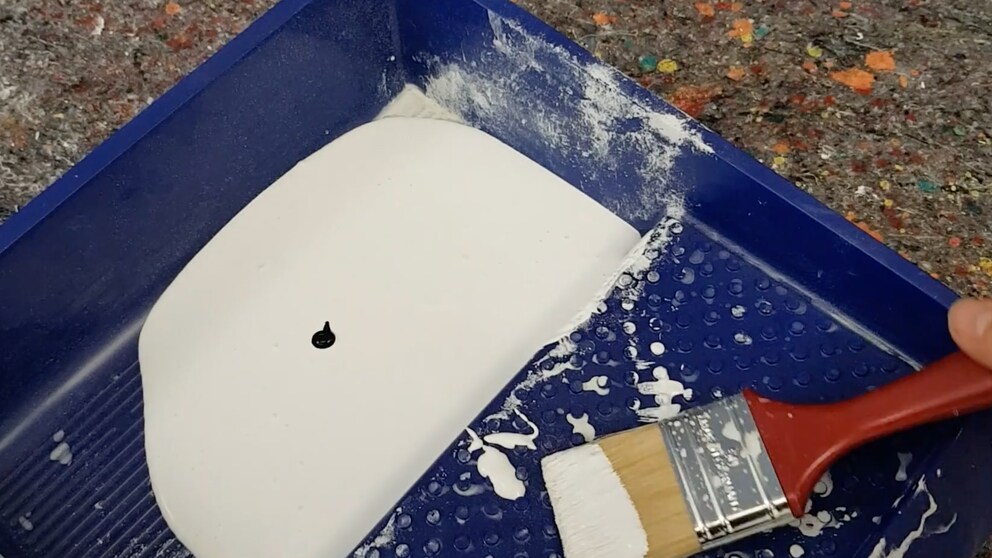
A supposed trick is circulating online that claims you can increase the opacity of white wall paint by adding a drop of black paint. This is said to be especially helpful when painting over dark walls. myHOMEBOOK tried it out–and also consulted an expert.
What sounds somewhat absurd is recommended in some DIY forums online–especially when painting a dark wall: The new white wall paint is supposed to become more opaque with a drop of black paint. The color tone is allegedly not visibly changed, at least with the right mixing ratio. In a practical test, myHOMEBOOK tested this hack and had it evaluated by an expert.
Painting a Dark Wall–Does a Drop of Black Paint Help?
When you want to paint over a dark wall–for example, black or, as in our case, dark blue–more than one coat is often necessary. A DIY trick is supposed to help, where you simply mix a drop of black paint into the white wall paint.
Related: How Wall Colors Affect the Ambiance of a Home
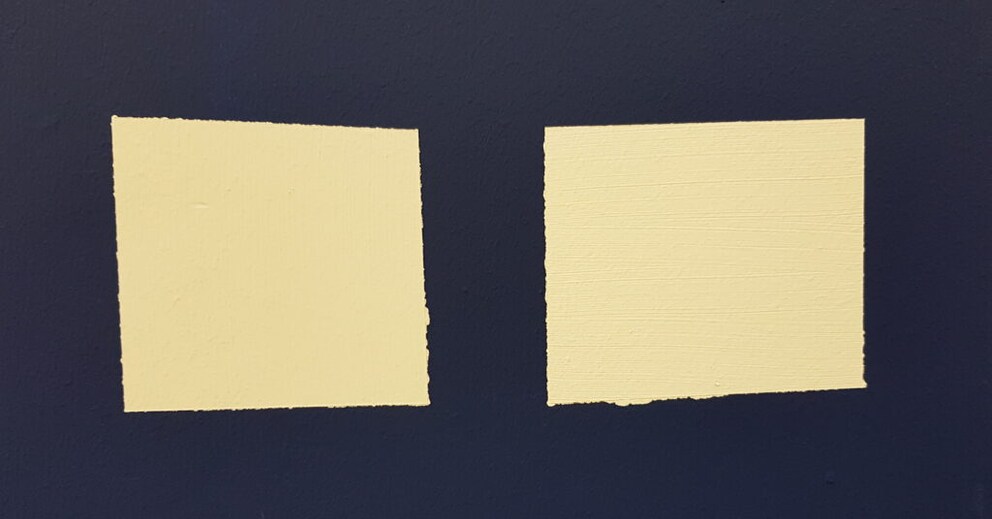
In the practical test, we painted two test areas on a blue wall, once with standard wall paint (opacity class 2 with a yield of 6 liters per m2) and once with minimally tinted paint. The result: No visible difference in opacity. Rather, you risk changing the color tone with the wrong mixing ratio. This hack is therefore not useful.
Expert Confirms the myHOMEBOOK Test
Dr. Oliver Nicolai from the Federal Association of Color Design and Building Protection also dismisses the trick and advises against it. In his opinion, it will “objectively show no measurable effect.” If you want to paint a dark wall, he recommends using a wall paint with high opacity. “For good coverage, use a class 1 paint,” says the color expert.
Related: How to Paint Walls Correctly–6 Tips to Avoid Streaks
Experts refer to the opacity of wall paints as the “contrast ratio,” which is divided into four classes. The first class has the highest opacity. The yield of each class is also crucial; one liter of class 1 paint covers about seven square meters, depending on the manufacturer’s specifications.
- Class 1: Contrast ratio of more than 99.5
- Class 2: Contrast ratio between 98 and 99.5
- Class 3: Contrast ratio between 95 and 98
- Class 4: Contrast ratio under 95
“Good products have, for example, opacity class 1 with a yield of 8 m2/liter,” explains Nicolai. With paints of lower opacity, you need to apply “thicker” coats, possibly multiple times, on colored backgrounds to prevent show-through. Additionally, with a wall paint of lower yield, you need more paint for the same result.