


November 14, 2022, 12:22 pm | Read time: 3 minutes
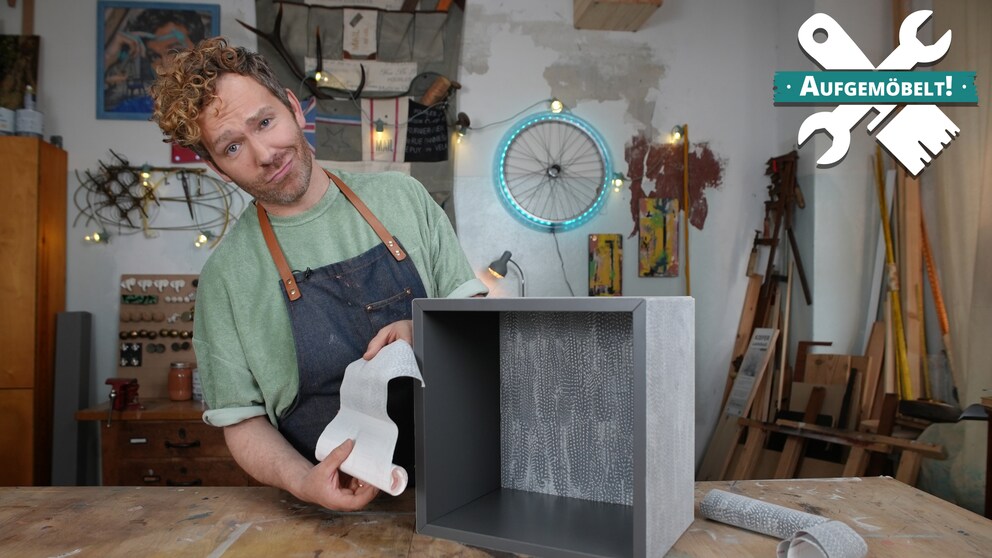
Make old furniture look like new again or give it a completely new look–that’s what the myHOMEBOOK series “Revamped” is all about. DIY expert Thomas Klotz explains in this video how to apply furniture film.
Old wooden furniture can be upgraded using various methods. However, not everyone has only wooden furniture at home–often they are also veneered with plastic. These are durable and easy to maintain, but they also age and don’t look as nice anymore. Repainting them is possible but much more labor-intensive than with wooden furniture. That’s why DIY expert Thomas Klotz, together with myHOMEBOOK, shows how to use furniture films and reapply them.
What You Need to Apply Furniture Film
If you want to reapply film to your furniture, you don’t need much. Conveniently, the films usually have a grid on the back, so you don’t need a ruler or a set square. Here’s what you need:
- Furniture film (you can choose from various patterns and colors)
- Folding rule
- Scissors
- Utility knife
- Squeegee
How to Apply Furniture Film
Before applying the furniture film, make sure the surface is really clean, dust-free, and grease-free. This ensures the film adheres better and lasts longer. Here’s how to do it:
- First, measure the area you want to cover with film.
- Then cut the film–either with scissors or a utility knife. However, don’t cut it to the exact millimeter; leave a little extra film. This way, you won’t risk the cut film not fitting perfectly.
- Peel the film away from the plastic backing that protects the adhesive at one spot. But be careful: Don’t remove the entire protective film yet, as this makes application unnecessarily complicated.
- Then place the film on the furniture piece to stick it on the side. After that, you can gradually peel off the protective film. Don’t worry, you can always reposition the film if it doesn’t fit perfectly.
- When applying, small air bubbles often form. Therefore, always carefully smooth the film with your hand–from the inside out, so the air can escape. You can also use a squeegee as a tool. However, if the film is very delicate, it’s better to work with your hands.
- Finally, remove the excess furniture film. To do this, cut along the furniture piece with a utility knife to remove all the remnants. By the way, small bubbles can also be pricked with a needle. Done!
You can also see the detailed tips in the video!
Also in “Revamped”:
- How to properly stain or glaze wood
- How to give old wooden furniture a new finish
- Shabby Chic! How to make new furniture look old
- Reupholster a stool in just 5 steps
- From washing machine drum to illuminated side table
- Turn a tree slice into a designer side table in a few steps
- What you can still make from an old suitcase
- How to build an herb garden from an old chair